
At its heart, a color-by-number butterfly printable is a simple guided art project. Each section of a butterfly illustration is marked with a number, and each number corresponds to a specific color in a key. Think of it as part art, part puzzle.
It’s the perfect screen-free activity, combining the simple joy of coloring with a clear goal. This structure helps kids develop focus, exercise their creativity, and build foundational skills like number recognition, all while having fun. For example, by matching the number '5' to the color 'blue' over and over, they reinforce that specific number-color pair without even realizing they're learning.
Why Kids and Parents Love Butterfly Coloring
There’s a special kind of magic that unfolds when a child gets lost in a color-by-number butterflies page. It’s more than just a way to fill an afternoon; it’s a quiet adventure that brings together the natural beauty of butterflies and the satisfying click of a puzzle falling into place. Every numbered spot on the wings is one small step toward a big, colorful reveal.
This clever blend of artistic freedom and logical structure is exactly why these printables are such a hit. They offer just enough guidance to boost a child's confidence, especially if they sometimes feel overwhelmed by a blank piece of paper. Instead of worrying about which colors to pick, they can focus on the soothing act of coloring itself, strengthening their fine motor skills and patience with every crayon stroke.
A Powerful Tool for Playful Learning
And it’s not just the kids who are fans. Parents and educators love these printables because they are simple, effective, and sneak in a surprising amount of learning. They effortlessly reinforce several key skills without any pressure.
- Number Recognition: Kids have to find the numbers on the page and match them to the color key, making number practice feel like a game. Actionable Tip: Call out a number and have your child find all the sections with that number before they start coloring it in.
- Color Matching: This seemingly simple task helps sharpen a child’s ability to tell different shades and hues apart.
- Following Instructions: To get the final picture right, they need to follow the key from start to finish—a great lesson in paying attention to details.
The secret ingredient here is predictability. A child knows that if they just follow the numbers, they are guaranteed to create something beautiful. That sense of accomplishment does wonders for their artistic confidence.
The demand for these kinds of structured, creative outlets is bigger than you might think. The entire color-by-number book market is booming, with search terms like 'color by numbers for' hitting 9,888 searches a month. It’s clear parents are actively looking for activities that mix art with early learning. You can dig into this growing trend over on BookBolt.io.
Ultimately, this simple printable can turn a quiet afternoon into a vibrant, hands-on learning experience.
Building Essential Skills With Every Color
At first glance, a color by number butterflies page might just look like a fun way to pass the time. But if you look closer, you'll see that each numbered shape is a tiny workout station for a child's developing brain. It’s a powerful, playful activity that sneakily builds a solid foundation for all sorts of future learning.
The most obvious win here is the connection it builds between numbers and colors. Every time a child scans the page for the number ‘4’ and then matches it to ‘blue’ on the color key, they’re doing something really important. This constant back-and-forth reinforces number and color recognition without feeling like a drill.
A Workout for Hands and Minds
Beyond the brainy stuff, the simple act of coloring is a huge deal for physical development. Carefully filling in all those little butterfly wing segments is a fantastic exercise for fine motor skills. Gripping a crayon or pencil correctly builds up hand strength and dexterity—the exact same muscles they’ll need to start writing their name.
This also hones their hand-eye coordination. They have to train their eyes and hands to work together to stay inside the lines. Each little section they color in is a tiny success story, prepping them for more complex tasks later on.
Think of it like putting training wheels on a bike. The numbered guide provides just enough structure to build confidence, letting kids focus on one part of the task—like holding the crayon steady—before they're ready to create something from a blank page.
And just like a physical workout builds stamina, this kind of focused activity boosts mental endurance. To see that finished butterfly, a child has to concentrate, follow the steps in order, and see the project through to the end.
This process quietly strengthens some major life skills:
- Enhanced Concentration: Focusing on finding the right numbers and staying in the lines teaches them to tune out distractions and pay close attention to detail.
- Patience and Persistence: Finishing a whole picture, especially a tricky one, gives them that amazing feeling of accomplishment that comes from sticking with something.
- Problem-Solving Skills: What happens if they can't find a number or grab the wrong color? They learn to pause, double-check the key, and fix it. That's problem-solving in its simplest, most effective form.
The Power of a Finished Picture
Finally, never underestimate the magic of a finished piece of art. A blank page can be intimidating for some kids, but a color-by-number activity guarantees a great-looking result. When they’re done, they have a vibrant, colorful butterfly they made all by themselves.
That tangible outcome is a massive boost to their self-esteem and artistic confidence. It shows them that they can create something beautiful, inspiring them to take on their next creative project. Every finished butterfly isn't just a pretty picture to hang on the fridge; it's proof of their focus, effort, and amazing new skills.
Setting Up Your Coloring Station For Success
A little bit of prep work can make all the difference between a frustrating mess and a fantastic coloring session. When you set up a dedicated space for your color by number butterflies, you're clearing the way for your child to jump right into the creative fun without any hiccups. Think of it as creating an inviting little art studio.
First things first, find a spot with good light. A table near a window is perfect, but a decent lamp works just as well. Good lighting is a game-changer; it helps kids see those tiny numbers and lines clearly and cuts down on eye strain. Make sure the table and chair are a good fit for their size to keep them comfortable and focused.
Now, let's talk paper. Your standard printer paper will do in a pinch, but if you can, grab some slightly thicker paper like cardstock. It stands up much better to enthusiastic coloring, and more importantly, it stops markers from bleeding through and making a mess on your table.
Choosing Your Coloring Tools
Picking the right tools for the job is key. Crayons are a classic for little hands because they're tough to break and easy to hold. For older kids tackling intricate butterfly wings, colored pencils offer the precision they need. And markers? They deliver those bright, punchy colors but do require a steady hand.
This is where the magic happens. The simple act of matching a number to a color and trying to stay in the lines builds up foundational skills like coordination, focus, and number sense.
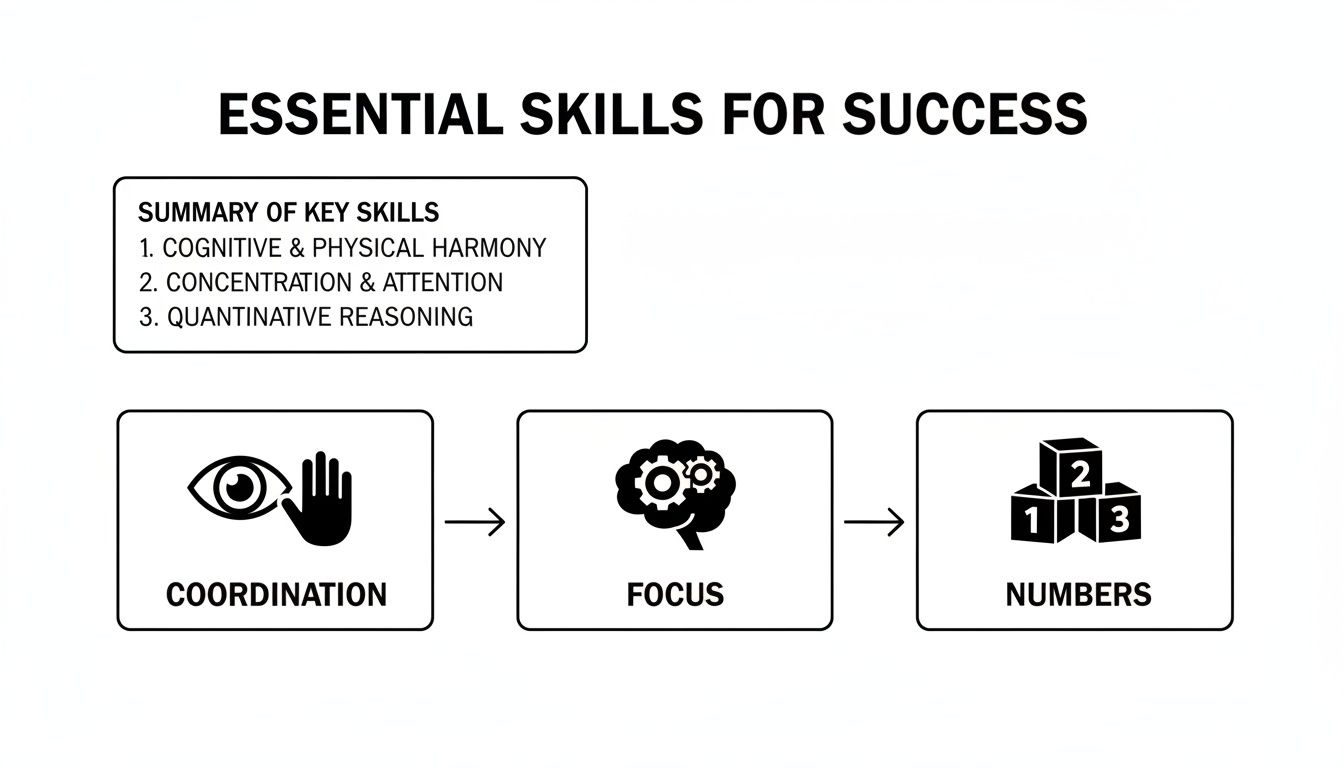
Every little section they color in is a tiny victory that reinforces these crucial developmental abilities.
Not sure what to use? Every tool has its strengths. This table breaks down the most common options to help you pick the perfect one for your child's age and the specific butterfly printable you're working on.
Choosing The Right Coloring Tools For Your Butterfly Pages
| Coloring Tool | Best For Ages | Pros | Cons (Tips to Overcome) |
|---|---|---|---|
| Crayons | 3-5 | Durable, easy to grip, wide color range | Waxy finish can be hard to layer. (Tip: Use firm, even pressure for a bolder color.) |
| Colored Pencils | 6-8+ | Great for details, easy to blend | Can break easily under pressure. (Tip: Teach kids to sharpen gently and color softly.) |
| Markers | 5-7 | Vibrant, bold colors, smooth application | Can bleed through paper, dry out if uncapped. (Tip: Use thicker paper and always recap.) |
No matter which tool you choose, the right one is simply the one that makes the activity enjoyable and successful for your child.
Here's a pro-tip I swear by: before they even start, look at the color key on the butterfly page and pull out only the specific crayons or markers needed. Placing just those few colors on the table cuts down on decision fatigue and helps kids stay on track.
By taking a few minutes to create a comfy, well-lit space with the right paper and a curated set of tools, you're paving the way for a smooth and rewarding coloring adventure. A little setup goes a long way.
Simple Techniques For Stunning Butterflies
Ready to help your little artist turn a simple printable into a vibrant masterpiece? It really just takes a few easy tricks to elevate their coloring and make those color by number butterflies truly pop off the page. These simple but effective techniques add a layer of intention to their coloring, making the whole process feel even more rewarding.
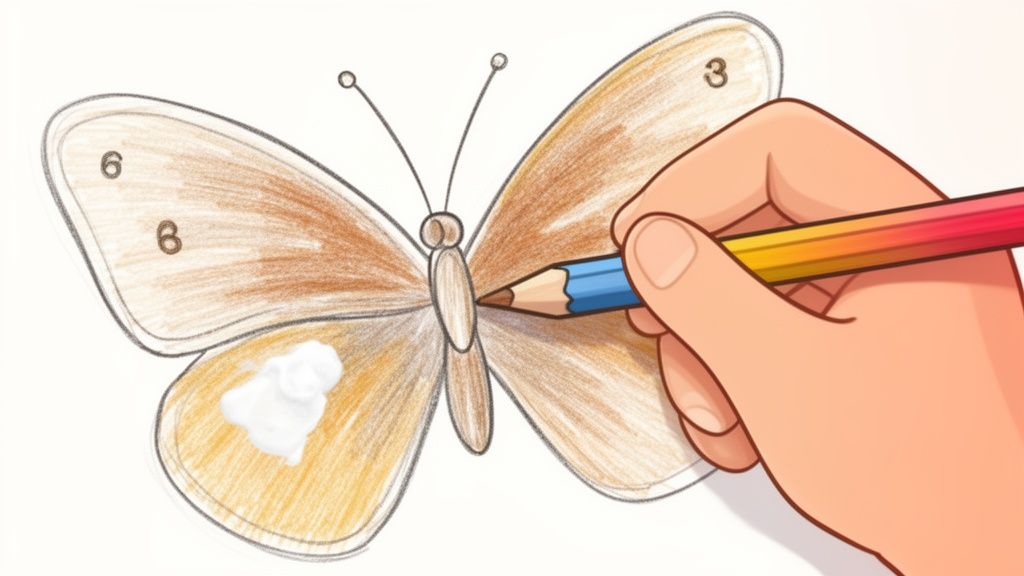
One of the best habits for any budding artist is to trace the edges of a section before filling it in. I like to tell kids to think of it as building a little "fence" around the area. This simple step creates a clear boundary, which makes it so much easier to stay within the lines and gives them a much cleaner, more polished final picture.
Mastering Your Coloring Strokes
The way you fill in a space really matters. Encourage your child to use consistent stroke directions inside each numbered section. Coloring all in one direction—whether it's up-and-down or side-to-side—creates a smooth, almost professional-looking texture. It’s a tiny change that makes a huge difference in how their butterfly looks in the end.
Here’s another pro tip: start with the lighter colors first. If your butterfly has sections of yellow, light blue, or pink, get those done before moving on to darker shades like navy or black. This simple strategy is a lifesaver for preventing accidental smudges and keeping those lighter areas bright and clean.
For example, if a butterfly wing has a yellow section (number 2) right next to a dark purple one (number 8), always color the yellow part first. That way, if their hand accidentally drags a bit of the darker crayon over, the mistake is way less noticeable.
Creative Coloring Ideas To Try
Feeling a little more adventurous? These fun techniques can add a truly magical touch to any butterfly page. They’re a great way to introduce new artistic concepts while still working within the color-by-number framework.
- Wax Resist Magic: Before coloring a section, have your child draw a fun pattern inside it with a white crayon. Think spots, stripes, or swirls. When they color over it with a marker or watercolor paint, the wax will resist the color, and their secret pattern will magically appear!
- Simple Gradient Blending: For larger numbered areas, you can create a beautiful gradient effect. If a section is marked "blue," they can use a dark blue on one edge and gradually shift to a lighter blue toward the middle. This adds a ton of depth and makes the butterfly’s wings look more realistic.
- Textured Strokes: Instead of just smooth, even strokes, why not experiment with different textures? They can try making small circles or even cross-hatching patterns within a numbered area. It’s a fantastic way to give the butterfly’s wings a unique and interesting look.
By introducing these simple methods, you’re doing more than just helping them finish a picture. You’re teaching them the foundational skills of an artist, transforming a fun little activity into a genuine lesson in technique and creativity.
Turning Art Time Into A Science Lesson
A color by number butterflies printable is so much more than just a way to keep the kids busy. It’s a launchpad for some incredible learning adventures. With just a little imagination, you can turn a quiet coloring session into a dynamic lesson that connects art with the wonders of the natural world.
Think of the butterfly on the page as the main character in a story. Before a single crayon touches the paper, you can spark curiosity with a simple question: "What kind of butterfly do you think this is?" Just like that, you've opened the door to a world of exploration, turning a simple craft into an engaging research project.
Exploring Butterfly Biology and Symmetry
One of the coolest concepts you can teach with a butterfly page is symmetry. Most of these printables are designed to be perfectly symmetrical, with the left wing being a mirror image of the right. This gives you a perfect visual to explain a fundamental principle of both nature and math.
Before the coloring starts, try folding the paper right down the middle of the butterfly’s body. You can point out how all the shapes and numbers on one side perfectly match the other. This simple action makes an abstract concept like symmetry totally tangible and easy for a child to grasp.
Take it a step further and ask, "What else can you think of that's symmetrical?" This little prompt encourages them to look for patterns everywhere—from their own bodies to the leaves on a tree.
Another fascinating topic to dive into is the butterfly life cycle. Use the coloring activity as a natural starting point to talk about the four stages: egg, larva (caterpillar), pupa (chrysalis), and finally, the adult butterfly. It's easy to find quick videos or simple diagrams online to show this incredible transformation, connecting their colorful creation to a real-life scientific process.
From Coloring To World Geography
Did you know every butterfly species comes from a specific part of the world? That means each printable is a potential geography lesson waiting to happen. If you’re coloring a Monarch, for instance, it's the perfect chance to talk about its amazing migration from Canada and the U.S. all the way down to Mexico.
This simple connection can really broaden a child's worldview. Pull up a map and trace the Monarch's incredible journey, showing them just how far these tiny creatures travel. Suddenly, the butterfly isn't just a drawing—it's a world traveler with an amazing story.
This global connection gets even more exciting when you explore the world's butterfly hotspots. For example, Colombia is a true butterfly paradise, home to a staggering 3,642 species—that’s about 20% of all known butterflies on Earth! This incredible biodiversity is why many color by number butterflies you'll find on sites like Colortada feature exotic patterns inspired by real species, from the bright whites of the Pieridae family to the vivid blues of the Lycaenidae. You can learn more about this incredible biodiversity and the efforts to protect these beautiful insects.
By tying a simple coloring page to real-world science and geography, you're doing more than just filling an afternoon. You're planting seeds of curiosity that can grow into a lifelong love for learning and a much deeper appreciation for the natural world around them.
Got Questions About Butterfly Coloring Pages? I've Got Answers.
Even with something as straightforward as a color-by-number butterfly, it’s natural for parents and teachers to have a few questions. Getting them sorted out is the key to making sure every coloring session is fun and rewarding for your little artist, not a source of frustration.
Think of this as your personal FAQ for troubleshooting the common hiccups and getting the most educational bang for your buck. From figuring out the right age to start, to managing those moments when the crayons just won't cooperate, I've got practical tips that actually work.
What’s the Best Age to Start Color by Number?
This is a great question, and the good news is, there’s no single right answer. These activities are incredibly flexible and can be adapted to just about any developmental stage.
For the youngest artists, like toddlers and preschoolers (ages 3-5), you'll want to start simple. Look for pages with big, chunky shapes and a very limited color key—maybe fewer than 10 colors. At this stage, it's all about introducing the basic idea of matching a number to a color in a playful, no-pressure way.
Once kids hit early elementary school (ages 6-8), they're usually ready for a bit more of a challenge. This is the perfect time to introduce butterfly designs with more intricate details and a wider spectrum of colors and numbers. The trick is to match the page's complexity to the child's skill level to keep it from feeling overwhelming. The goal is always to build confidence and have fun.
How Can I Sneak in Some Extra Learning?
You bet! A simple butterfly printable is a fantastic launchpad for all sorts of learning. One of my favorite tricks is to use the butterfly's wings to introduce the concept of symmetry. Before a single crayon touches the paper, point out how the pattern on one wing is a perfect mirror image of the other.
It’s also incredibly easy to turn this into a mini biology lesson. Why not take a few minutes to look up the type of butterfly on the page? Is it a Monarch? A Swallowtail? You can learn about its real-life colors, where it lives, and what kinds of flowers it likes to eat. This little step beautifully connects a creative project to real-world science.
My Child Gets So Frustrated Trying to Stay in the Lines. What Should I Do?
First off, know that this is completely normal! That frustration is actually a sign that they're being challenged, and that’s a huge part of how they learn and grow. The first thing to check is their tools. Chunky crayons or thicker markers are often much easier for little hands to grip and control than skinny colored pencils.
Here's a pro-tip I swear by: encourage them to trace the outline of a section first. This creates a small visual "fence" that makes it so much easier to fill in the middle without going over.
Above all, remember to praise their effort and their brilliant color choices, not their ability to be perfect. The goal here is practice and enjoyment. With every page they color, their fine motor skills are getting a workout and will naturally improve over time.
Where Can I Find Good, Free Butterfly Printables?
Your best bet is to look for websites that specialize in creative and educational activities for kids. You want to find a place that offers a good variety of high-quality, free printables that you can easily download and print right from home.
Here at Colortada, we’ve built a massive collection of coloring pages specifically designed to get kids excited about creating. You can easily find the perfect color by number butterflies among countless other themes to keep your little ones happily learning. Take a look at all our free printables over at https://www.colortada.com.