
Welcome to the wonderful world of printable coloring pages for kids! If you're looking for a simple, powerful way to spark creativity and fill an afternoon with educational fun, you've come to the right place. These aren't just a way to pass the time; they're a fantastic tool for development and a much-needed, calming break from screens.
This guide is your complete roadmap to finding activities that kids love, building skills without them even realizing it, and creating some really special family memories along the way.
Your Gateway to a World of Creative Fun
Printable coloring pages are one of the most accessible and amazing resources for parents, teachers, and anyone who cares for kids. Don't just think of them as entertainment—see them as a blank canvas for your child's growth. With just a few clicks, you have an endless supply of art that helps build fine motor skills, sharpens focus, and gives kids a voice for self-expression.
It’s amazing to see it in action. A toddler clutching a chunky crayon to fill in a big, simple apple is actually strengthening the exact hand muscles they’ll need for writing later on. An older kid who's totally absorbed in coloring a detailed superhero scene is practicing patience and attention to detail. This one simple activity meets kids right where they are, no matter their age, making it an incredibly versatile tool.
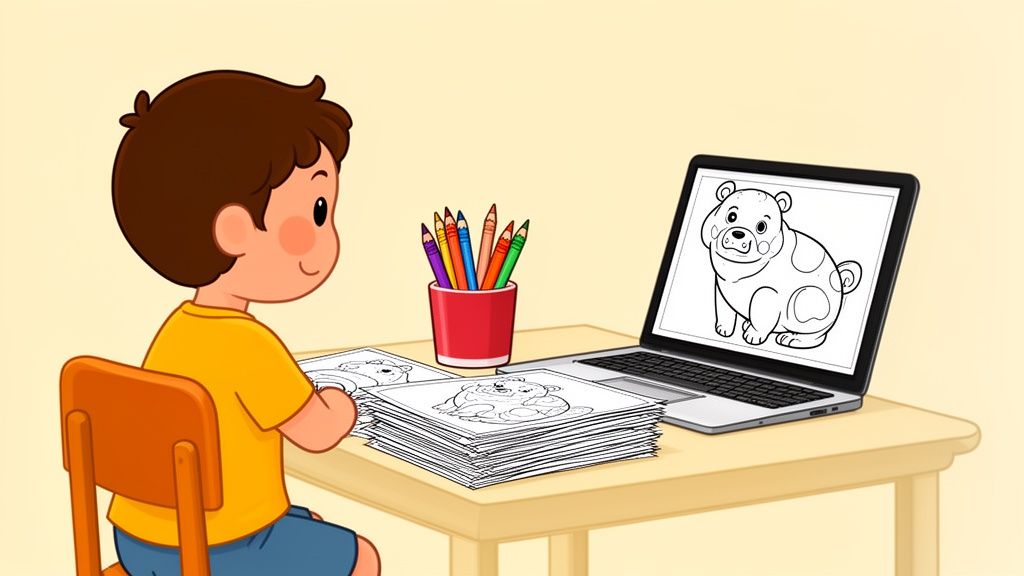
Actionable Coloring Advice for Young Artists
Want to make coloring time even more impactful? Try these easy, practical tips tailored for different age groups:
- For Toddlers (Ages 2-4): Focus on the process, not the product. Provide large, simple shapes (like a big circle or a star) and chunky, easy-to-grip crayons. Let them scribble and experiment without worrying about staying in the lines. Actionable Tip: Tape the paper to the table to prevent it from sliding around, which helps them focus on the motion of coloring.
- For Preschoolers (Ages 4-6): You can start introducing the idea of staying within the lines, but frame it as a fun challenge, not a strict rule. This is a great time to teach color basics. Actionable Tip: While coloring a fruit basket, ask, "Can you make the apple red and the banana yellow?" This connects color names to objects.
- For School-Aged Kids (Ages 7+): Introduce more advanced techniques. Show them how to create texture by placing paper over a bumpy surface (like a leaf or a coin) and coloring over it. Actionable Tip: Teach them simple blending. Pick two similar shades of blue and show them how to color the top of the sky with the darker blue and the bottom with the lighter one, overlapping them in the middle to create a gradient.
The real magic of coloring is that it's both a fun activity and a stealthy learning experience. It turns a quiet afternoon into a prime opportunity for skill-building, emotional regulation, and pure creative exploration.
Throughout this guide, we'll walk you through how to find the perfect themes on platforms like Colortada, share some practical printing tips, and give you creative ideas to turn a simple coloring session into a memorable bonding experience. Let's get started and unlock some artistic adventures for your kids.
Why Coloring Is a Workout for Your Child's Brain
Coloring is so much more than just a quiet way to fill an afternoon. Think of it as a stealthy workout for your child’s developing brain and hands. Every time they grab a crayon or marker, they're sharpening crucial skills without even knowing it. The simple act of gripping a crayon builds the very fine motor skills and hand strength they'll need for writing their name or tying their shoes.
This "brain workout" scales perfectly with age. For a toddler, just making a deliberate mark on the page is a massive win for hand-eye coordination. For an older kid, carefully staying within the intricate lines of a complex design is a serious exercise in focus, patience, and attention to detail.
Building Skills Beyond the Lines
The benefits of using coloring pages for kids printable stretch far beyond simple artistic fun. This one activity is a fantastic way to develop cognitive abilities that give them a real leg up in school and life.
Improved Focus and Concentration: Finishing a coloring page takes real focus. This practice helps children stretch their attention spans, which is a game-changer for learning in the classroom. Actionable Tip: If your child gets distracted easily, start with simpler pages that can be finished in one sitting. As their focus improves, gradually introduce more detailed designs.
Color Recognition and Theory: On the most basic level, coloring teaches toddlers and preschoolers the names of different colors. As they get older, they start experimenting with blending and shading, discovering firsthand how primary colors mix to create secondary ones. Actionable Tip: Give an older child only red, yellow, and blue crayons and challenge them to create orange, green, and purple on the page.
Patience and Perseverance: Some designs just take time to get right. Working on a page over a few sittings teaches kids the incredibly valuable lesson of seeing a project through to the end, building their resilience and giving them a real sense of accomplishment.
The global impact here is huge. Research has found that 85% of parents across North America, Europe, and Asia do coloring activities with their children every week. This kind of regular engagement has been linked to a 35% improvement in creativity scores for kids between 4 and 7 years old. You can dig into more of these developmental findings on DataInsightsMarket.com.
A Calming Tool for Emotional Regulation
Beyond all the developmental milestones, coloring offers some pretty significant emotional perks. The rhythmic, repetitive motion of moving a crayon across paper can be incredibly soothing, helping to quiet a child's mind and dial down feelings of anxiety or stress. It gives them a healthy outlet to process their feelings in a constructive, non-verbal way.
Think of a coloring session as a mini-meditation for kids. It helps them unplug from the day's noise, focus completely on one simple task, and express themselves without ever having to find the right words. It’s a perfect reset after a chaotic school day or during moments of overstimulation.
This calming effect is one of the most powerful things about printable coloring pages. It hands children a tool they can turn to whenever they feel overwhelmed, teaching them how to self-soothe from an early age. Whether they're coloring a favorite cartoon character or a detailed pattern, the simple act of bringing a page to life offers a reliable dose of peace and control in their sometimes-chaotic little worlds.
Finding the Perfect Printable Pages for Every Child
The real secret to a great coloring session isn't about having the fanciest crayons; it's about finding a picture that genuinely excites your child. Let's be honest, the internet is overflowing with coloring pages for kids printable, and it can feel like a chore to sift through them all. The trick is to tune into what your child is obsessed with right now.
When a kid truly loves the subject, coloring goes from being a simple pastime to a full-blown adventure. Whether they're into superheroes, Disney characters, or the latest video game craze, pages featuring their favorites make the whole experience more personal and way more fun.
Matching Themes to Your Child's Passions
Thankfully, you don't have to spend hours searching. Modern websites get it. A platform like Colortada lets you jump straight to categories for popular TV shows, movies, and games, so you can find that perfect page in just a few clicks. It’s all about getting to the fun faster.
Think of it this way: instead of a generic picture of a car, you can hand them a coloring page of Lightning McQueen. The connection is instant.
The move to digital printables has completely changed the game for parents. The market reflects this shift, too. In 2024, the adult coloring market hit a whopping USD 2.5 billion, and digital downloads were a huge part of that growth. Now, over 60% of all coloring book sales globally include digital versions. You can find more details on this trend over at VerifiedMarketReports.com. Kids' printables are a massive piece of this puzzle, making up a huge chunk of what's available online.
Turning Coloring into Stealthy Learning
Coloring isn't just for fun; it's a fantastic—and sneaky—way to teach. You can easily weave in learning by picking themes that touch on what they're doing in school or introduce them to something totally new without any pressure.
Actionable Insight: While they're coloring a T-Rex, drop a cool fact like, "Did you know a T-Rex's arms were only about as long as a grown-up's?" Suddenly, it’s not just coloring; it's a mini discovery session. The key is to keep it light and conversational, not like a quiz.
Here are a few practical examples to get you started:
- The ABCs and 123s: Grab pages with letters and numbers. As they color a giant 'B', you can chat about all the things that start with it, like "bee," "ball," and "boat."
- Animals and Nature: A coloring sheet of a dolphin can lead to a fun conversation about where they live and how they "talk" to each other.
- Science and Space: Coloring the planets is a perfect gateway to talking about our solar system. Which one is the biggest? Which one has rings?
It's amazing how much development happens when a child is just sitting and coloring. They're not just filling in shapes; they're building real-world skills.
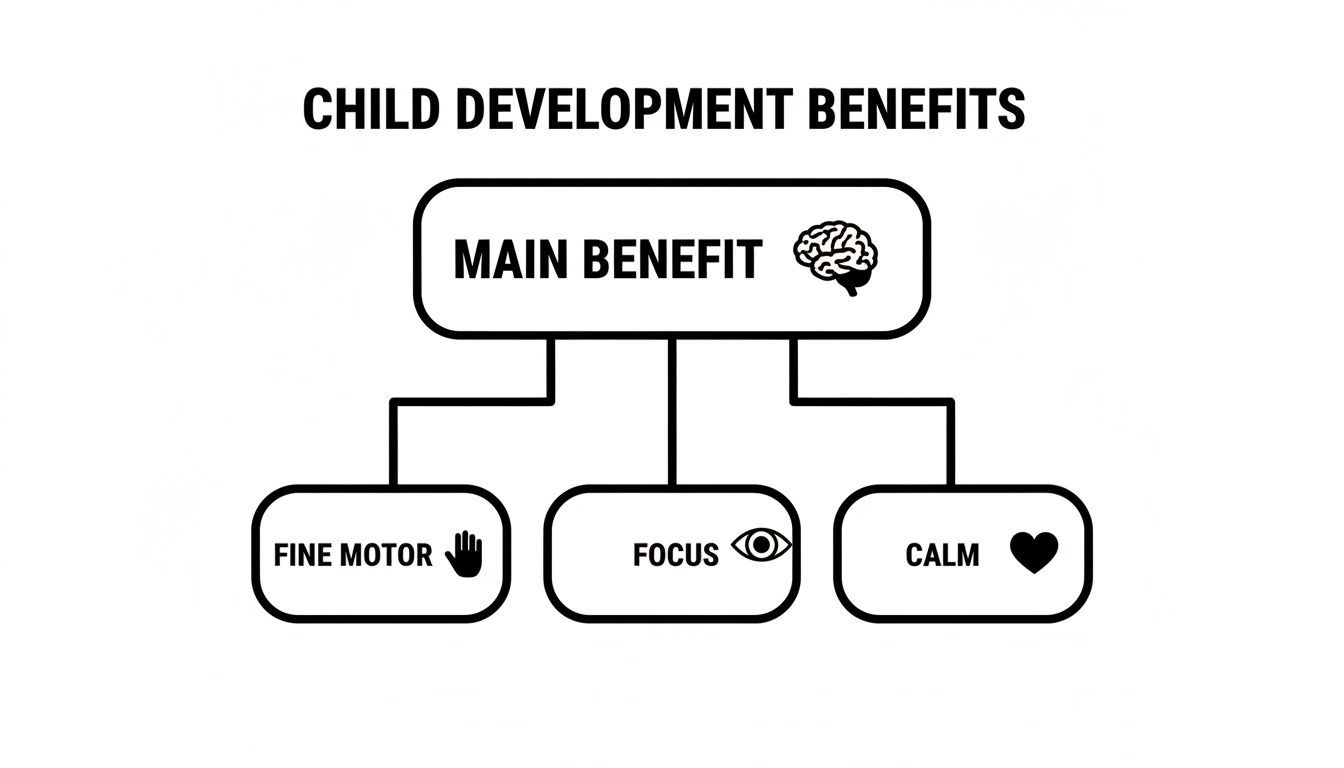
As you can see, a single activity strengthens everything from the tiny muscles in their hands to their ability to focus and calm down. It’s a powerful tool disguised as playtime.
Choosing Coloring Themes by Age Group
To make things even easier, here’s a quick guide to help you pick themes that are just right for your child’s age and developmental stage.
| Age Group | Recommended Themes | Developmental Focus |
|---|---|---|
| 2-3 | Simple shapes, large animals (farm, zoo), basic objects. | Hand-eye coordination, basic color recognition, holding a crayon. |
| 4-5 | Favorite cartoon characters, alphabet/numbers, fairy tales. | Fine motor refinement, following simple lines, pre-writing skills. |
| 6-8 | Detailed movie scenes, intricate patterns, simple maps. | Increased focus and patience, color blending, expressing creativity. |
| 9+ | Mandalas, complex characters, historical scenes, science. | Attention to detail, advanced shading techniques, self-expression, stress relief. |
Picking the right theme ensures the activity is challenging enough to be engaging but not so complex that it becomes frustrating. The goal is always to keep it fun
From Screen to Paper: A Practical Printing Guide
You’ve found the perfect coloring page, and the kids are buzzing with excitement. Now for the most important part: getting that digital image onto a real piece of paper. A few simple tweaks to how you print can make all the difference, ensuring every line is crisp and the page is ready for whatever coloring tools your little artist chooses.
First things first, let's talk paper. Your everyday printer paper is the trusty go-to for crayons and colored pencils. It’s cheap, it’s easy, and it gets the job done. But if markers or watercolors are in the picture, a small upgrade can prevent a lot of headaches.
Choosing Your Canvas: The Right Paper Matters
Picking the right paper is less about rules and more about avoiding frustration. For anything "wet" like a marker, a thicker paper is your best friend—it stops the ink from bleeding through and creating a smudgy mess.
- For Crayons and Pencils: Standard printer paper (20-24 lb) is all you need. It’s got just the right texture to grab wax and graphite without any fuss.
- For Markers and Gel Pens: Step it up a notch with a thicker cardstock (65 lb or higher) or even some matte photo paper. This sturdier base drinks up the ink without letting it seep onto your table.
- For Watercolors: If you’re feeling extra crafty, actual watercolor paper is fantastic. In a pinch, the heaviest cardstock your printer can handle will work for a light wash of paint.
Actionable Tip: Before committing to a full-page print, use your printer's "draft" or "grayscale" setting to print a small test version. Let your child scribble on it with a marker to check for ink bleed. This two-minute check saves paper, expensive color ink, and frustration.
Actionable Coloring Advice: Beyond Staying in the Lines
Once the page is printed, the real fun begins. You can help your child discover a little extra magic in their coloring pages for kids printable with a few simple techniques. It’s all about encouraging them to experiment and see coloring as more than just filling in shapes.
For the little ones, it’s all about texture. Try placing the paper over something with a bumpy surface—a piece of sandpaper, a coin, or even a leaf from the yard. As they color over it with the side of a crayon, the pattern will magically appear, which is always a huge hit.
For older kids, you can start introducing them to shading and blending.
- Shading: Show them how to press harder with a colored pencil in certain spots (like under a character's arm) and lighter in others to create shadows. It’s a simple concept that adds a ton of depth and makes their art really pop off the page.
- Blending: Encourage them to layer colors instead of just putting them side-by-side. Maybe start with a light yellow, then gently add a bit of orange on top to make a perfect sunset. It's a great way to teach them how colors work together.
Setting Up Your Coloring Station
To keep the creative energy from turning into creative chaos, it helps to have a dedicated "coloring station." This sounds fancier than it is—a corner of the kitchen table or a spot on the playroom floor is perfect. The idea is just to make the supplies easy to grab and even easier to clean up.
Here’s a practical checklist for a simple setup:
- Printed Pages: Keep a small stack of different coloring pages for kids printable in a folder so they have choices.
- Coloring Tools: Put crayons, markers, and pencils into separate, wide-mouthed cups or jars. This prevents tipping and makes it easy for kids to find the color they're looking for.
- A Protective Mat: An old placemat, a flattened cardboard box, or a few sheets of newspaper will save your surfaces from those inevitable stray marks.
- A "Finished Art" Box: Have a special box or folder where they can put their completed masterpieces. It shows them you value their work and, just as importantly, keeps the clutter under control.
Transforming Finished Pages into Creative Projects
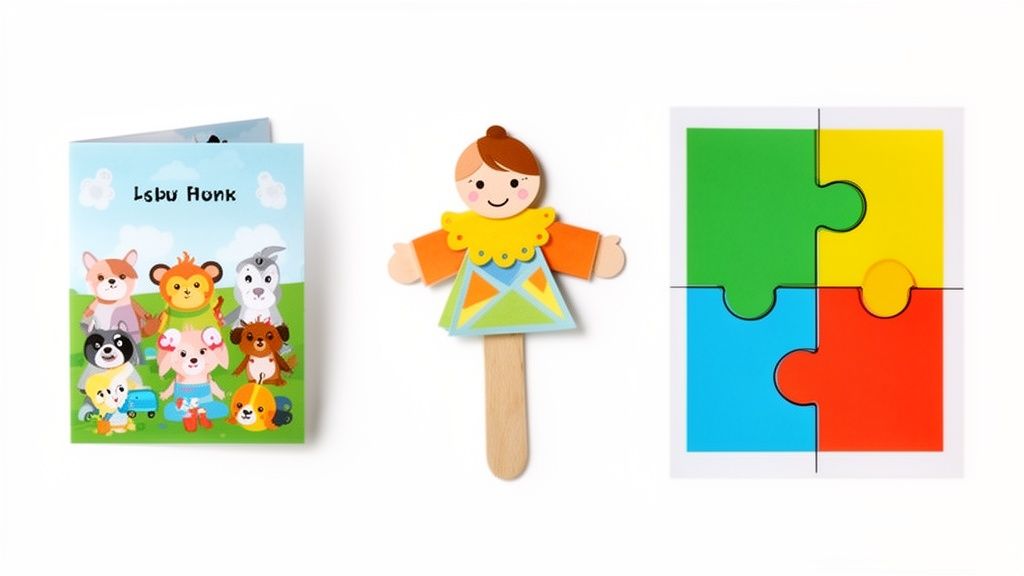
So, the coloring is done. What now? Instead of just sticking that masterpiece on the fridge or tucking it away, think of it as the starting point for a whole new creative adventure. A finished page is the perfect raw material for dozens of other fun crafts.
This mindset really changes the game. It shows kids their art has a life beyond just filling in the lines and can become a tangible part of their world. Best of all, most of these projects are incredibly budget-friendly and use supplies you probably already have lying around the house.
Create Your Own Storybook Illustrations
One of my favorite ways to reuse pages is to help a child create their own storybook. They get to color a series of pages—maybe all featuring the same character or theme—and then string them together to build a real narrative. This is a fantastic way to develop storytelling skills, and the pride they feel from making their very own book is just priceless.
Here’s a simple, actionable plan to make it happen:
- Pick a Theme: Find several coloring pages that follow a character or idea, like an astronaut's journey, a day in the life of a dinosaur, or a princess's adventure.
- Color the Scenes: Let your child bring each page to life, encouraging them to think about what’s happening in each picture.
- Tell the Story: On a separate sheet of paper or right at the bottom of the page, help them write a simple sentence or two describing the action.
- Bind the Book: Punch a few holes along the side of the pages and tie them together with some colorful yarn or ribbon. Voilà—a charming, handmade book!
This kind of hands-on activity has been a childhood staple for generations, and it’s what platforms like Colortada are helping modern families rediscover. It’s no surprise that 78% of parents use coloring to engage kids aged 3-8. It's a proven way to reduce screen time by up to 45% while spending quality time together. You can read more about the enduring popularity of coloring activities on JaneFriedman.com.
More Fun and Easy Craft Ideas
Storybooks are just the beginning. With a little glue and imagination, those finished coloring pages for kids printable can be transformed into decorations, gifts, and even toys. These simple crafts are perfect for a rainy afternoon and bring a wonderfully personal touch to your home.
Pro Tip: If you’re making something that needs to last, like puppets or a puzzle, print the pages on a heavier paper like cardstock. It makes them much easier for little hands to cut out and play with.
- Personalized Greeting Cards: Fold a piece of construction paper in half. Then, have your child cut out their favorite colored character and glue it to the front for a truly one-of-a-kind card for a birthday or holiday.
- DIY Jigsaw Puzzles: Glue a completed coloring page onto a thin piece of cardboard (a cereal box works perfectly). Once it’s completely dry, flip it over, draw some simple puzzle shapes with a thick marker, and let them practice their scissor skills by cutting them out.
- Paper Puppets: After the characters are colored in, carefully cut them out and tape or glue them to popsicle sticks. Suddenly, you have a full cast of characters ready for a puppet show!
- Bedroom Decor: Create a vibrant collage of their best work on a poster board, or string several pages together with some twine and mini clothespins to make a festive garland for their room.
Got Questions About Coloring? We've Got Answers.
When you first dive into the world of printable coloring pages, a few questions always seem to come up. Whether you're a parent looking for a quiet afternoon activity or a teacher stocking up your classroom, getting the right answers can make all the difference. Let's tackle some of the most common questions to help you get started.
After all, a little prep work can turn a good coloring session into a great one.
What's the Best Paper for Printing Coloring Pages?
This is probably the number one question I get, and the answer really comes down to what you'll be coloring with. Matching the paper to the crayons or markers is a simple trick that makes a huge difference.
- For Crayons & Colored Pencils: Your everyday office printer paper is actually perfect. That standard 20-24 lb weight has just enough texture to grab the pigment from pencils and wax from crayons, making it easy for kids to blend colors.
- For Markers & Gel Pens: Uh oh, bleed-through! To keep marker ink from soaking through to your kitchen table, you'll need something beefier. I recommend a thicker paper like cardstock (65 lb or higher) or even a matte photo paper. These options are way more absorbent and hold up well, so the colors stay bright and right where they're supposed to be.
Making this small switch also makes the final artwork feel more special and durable, which kids absolutely love.
Are Free Printable Coloring Pages Actually Safe to Download?
It's smart to be a little cautious when downloading anything for free online. But finding safe coloring pages for kids printable is totally doable once you know what to look for. The trick is sticking with websites you can trust.
Actionable Advice: Stick to dedicated coloring sites, well-known educational blogs, or the official websites of brands your kids already know and love, like Disney or Crayola. These places offer high-quality, safe downloads without a bunch of shady pop-ups or asking you to install weird software.
If a site feels cluttered with ads or seems sketchy, just close the tab. There are plenty of fantastic, safe options out there.
How Can I Make Coloring More Than Just Fun?
This is where the magic really happens. Turning a coloring page into a mini-lesson is incredibly simple and surprisingly effective. It’s all about weaving a little "stealth learning" into the fun.
You don't need a lesson plan; just start a conversation based on what your child is coloring. For example, if they're working on a dinosaur page, you can chat about what it might have eaten or how big it was.
Here are a few practical examples to get you started:
- Practice the Basics: Find pages with letters, numbers, or shapes. While they color a big 'B', you can talk about "ball," "bear," and "banana." It connects the symbol to the sound in a really natural way.
- Get Curious: With an animal or nature scene, ask simple, open-ended questions. "What sound does a cow make?" or "Where do you think this tiger lives?" It gets their little wheels turning.
- Build Their Word Bank: A busy scene is perfect for this. While they color a farm, you can point out the "barn," "tractor," and "silo," introducing new words in a visual, low-pressure setting.
This approach turns a simple creative pastime into a chance to connect and learn together, making it so much more than just coloring inside the lines.
Ready to find the perfect, safe, and engaging coloring pages for your kids? Explore the vast library at Colortada, where you can instantly access thousands of high-quality printable pages from all their favorite shows and characters. Start your creative adventure today.