
On the surface, coloring pages for kindergarten look like a simple way to keep little hands busy. But that humble crayon is actually a powerhouse tool, building critical skills that go far beyond the art table.
Why Coloring Is More Than Just Fun
It’s easy to dismiss a coloring page as just a fun time-filler. For a kindergartener, though, that page is a full-blown developmental playground. Think of each coloring session less as a distraction and more as a crucial workout for their brain and body, getting them ready for school and life.
The act of coloring lays the groundwork for future academic success. When a child grips a crayon and carefully tries to stay within the lines, they’re practicing hand-eye coordination and strengthening the small muscles in their hands. These are the very same muscles they’ll need to hold a pencil correctly and form letters and numbers.
This early muscle training, what we call fine motor skill development, is a direct stepping stone to legible handwriting. Stronger hand muscles lead to less frustration and better control when it’s finally time to start writing.
Building Foundational Skills, One Crayon Stroke at a Time
Beyond the physical benefits, coloring provides a quiet space for kids to stretch their ability to focus and be patient. Finishing a picture, from picking out the perfect colors to filling in that very last spot, gives them a real, tangible sense of accomplishment. This builds confidence and shows them the reward of seeing a task through.
Here’s how this simple activity gets them ready for the classroom:
- Following Instructions: A page that says "color the apple red" is a gentle, low-stakes way to practice following directions. For example, you can gently guide them by saying, "The instructions say the big apple is red. Which crayon should we use for that one?"
- Creative Decision-Making: When they have the freedom to choose any color they want, they’re learning to make their own choices. Deciding to color a dog bright purple isn't wrong; it's a fantastic expression of creativity and independent thinking. For instance, ask, "Why did you choose purple for the dog?" to encourage them to articulate their creative vision.
- Emotional Expression: Coloring can be an incredibly calming activity, giving children a way to process their feelings without words. A quiet coloring session is perfect for helping a child wind down, offering a healthy outlet for self-regulation. As a practical tip, if your child is feeling overwhelmed, try saying, "Let's sit down and color this calm, blue ocean scene together for a few minutes."
That simple sheet of paper is a training ground for writing, making choices, and managing emotions. It’s the perfect starting point for turning a fun activity into a major developmental win.
The Hidden Developmental Superpowers of Coloring
When you see a kindergartener pick up a crayon, you're watching more than just playtime. They're actually firing up a whole suite of developmental superpowers. Every single choice, from the color they pick to how they fill in a shape, is a workout for essential life skills.
Think about the simple act of holding that crayon. It’s a fantastic exercise for the tiny muscles in their hands and fingers. Developing these fine motor skills is the foundation for learning to write. A strong grip today makes it so much easier to hold a pencil, form letters, and proudly sign their own name down the road.
Building Brainpower and Emotional Skills
Coloring does wonders for a child's thinking skills, too. When a kindergartener decides the dinosaur should be purple or the sun should be orange, they're flexing their independence and making choices. This simple decision-making is a building block for tackling more complex problems later on.
And let’s not forget the feeling of finishing a picture! Even if it’s a chaotic masterpiece of scribbles outside the lines, that completed page gives them a real sense of accomplishment. It’s a quiet boost to their self-esteem and a gentle lesson in patience, showing them the reward of seeing something through to the end.
This visual map breaks down how coloring supports everything from writing readiness to emotional balance.
As you can see, what starts with a crayon branches out into major physical, cognitive, and emotional growth.
Parents and educators are clearly catching on. The global coloring book market was valued at over $3.2 billion in 2023 and is still growing. The kindergarten book market specifically is on track to hit $1.19 billion, which shows just how much these simple tools are valued. You can discover more insights about the coloring book business and its surprising growth.
Actionable Coloring Advice for Parents
You can easily make coloring time an even richer learning experience. Try these simple prompts to connect the activity to key developmental milestones.
- Boost Vocabulary: Instead of just watching, ask about their work. "Tell me why you picked blue for the robot!" This gets them talking and using descriptive words. Another example: "That's a vibrant red! What other things can you think of that are vibrant red?"
- Encourage Planning: Get them thinking one step ahead. "What part of the spaceship are you going to color next?" This introduces them to the basics of planning and sequencing. For instance, you could say, "Great job on the rocket flames! Will you color the windows or the wings next?"
- Promote Emotional Regulation: Use coloring pages for kindergarten as a way to calm things down. After a wild playtime, suggesting a quiet coloring session is a great way to help them transition and manage their energy. Practical tip: Keep a "calm-down coloring kit" with soothing colors (blues, greens, purples) and simple mandala-like designs for these moments.
Coloring isn't just a pastime; it's a practice field where kindergarteners build the strength, focus, and confidence they need to thrive. Each colored page is a step forward in their unique developmental journey.
How to Choose the Right Coloring Pages for Your Kindergartener
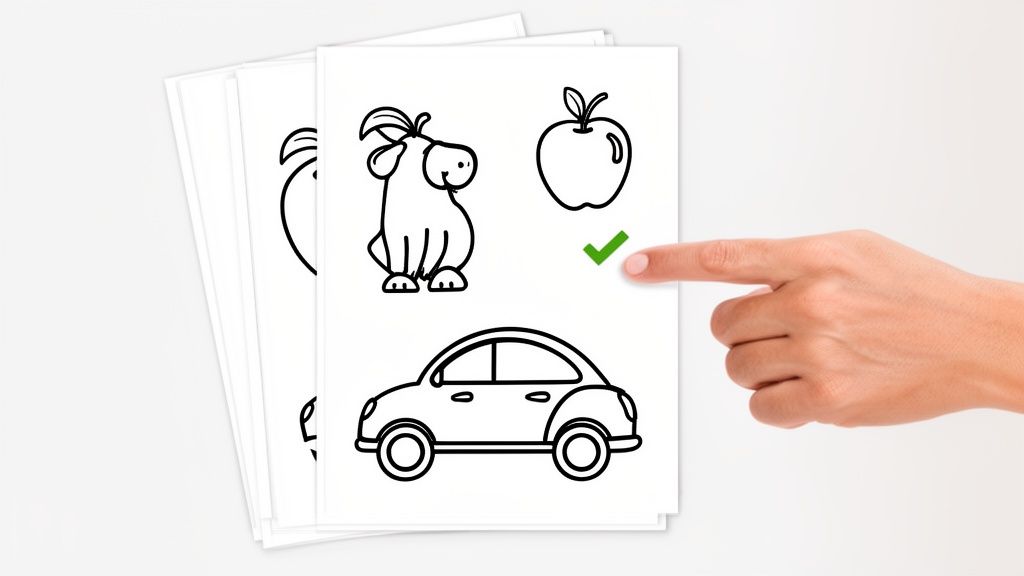
Let's be honest—not all coloring pages for kindergarten are made the same. Giving a five-year-old a super detailed, intricate design is a bit like asking them to run a marathon when they're still mastering a brisk walk. It’s a recipe for frustration, not fun.
The trick is to find that perfect sweet spot: a design that isn't boringly simple but isn't overwhelmingly complex either. When you get it right, you build their confidence and keep them happily absorbed, making coloring a truly positive experience.
Look for Simplicity and Clarity
When picking a coloring page for a kindergartener, the design itself is everything. Your goal is to set them up for a win, and that means choosing clarity over complexity every single time.
Think of it this way: thick, bold outlines are like wide, smooth roads for a crayon, easy for little hands to follow. Thin, delicate lines are more like bumpy, narrow country lanes—it’s just too easy for that crayon to "veer off course" and cause a creative traffic jam.
The best pages have big, simple shapes. A giant apple, a friendly sun, or a basic blocky car are fantastic starting points. These designs encourage those big, satisfying coloring motions that make a child feel proud of their work.
Picking the right page can make or break the experience. Here's a quick guide to help you choose designs that will build skills instead of causing frustration.
Choosing Age-Appropriate Coloring Pages for Kindergarten
| Feature | Ideal for Kindergarteners | What to Avoid |
|---|---|---|
| Outlines | Thick, bold, and clearly defined. | Thin, sketchy, or very light lines. |
| Shapes | Large, simple, and recognizable (circles, squares). | Tiny, complex, or overlapping shapes. |
| Overall Detail | Minimal background clutter; one or two main subjects. | Busy scenes with lots of small background elements. |
| Subject Matter | Familiar objects like animals, toys, and food. | Abstract patterns or overly realistic portraits. |
| Space to Color | Generous, open spaces for broad crayon strokes. | Small, cramped sections that require a fine point. |
Ultimately, a good coloring page should feel inviting, not intimidating. By keeping these simple guidelines in mind, you can ensure your little one has a great time bringing their pictures to life.
Connect with Their Interests
Once you've got the design basics down, the real magic happens when you pick a theme that lights up their imagination. A generic flower is fine, but a page with their favorite roaring dinosaur or a beloved cartoon puppy? Now that's exciting.
When the activity connects to something they already love, it becomes instantly more engaging. Some themes are timeless hits with this age group:
- Animals: Whether it's farm animals, jungle creatures, or household pets, kids adore coloring their favorite critters.
- Seasons: Pages with bright pumpkins in the fall or cheerful snowmen in winter are a great way to tie coloring into the world around them.
- Favorite Characters: Coloring sheets featuring heroes from their favorite books or TV shows feels less like an activity and more like playing with old friends.
The market for children's coloring books totally backs this up. The animal-themed category, in particular, has exploded, consistently topping bestseller lists. If you're curious, you can learn more about profitable kids' coloring book trends and see just how much kids connect with these subjects. Tapping into those familiar, beloved themes is your secret weapon for getting them excited to pick up their crayons.
Simple Tips for a Fun and Productive Coloring Session
Turning coloring time into a genuinely great experience is all about setting the stage for creativity to flourish. With a few small tweaks, you can easily transform a potentially frustrating session into one that’s positive, productive, and just plain fun for your kindergartener.
First things first: create an inviting coloring space. A well-lit table with a comfy, kid-sized chair makes a huge difference. Make sure their feet can touch the floor—it really helps with their posture and focus, making the whole experience more comfortable right from the start.
Equip Them with the Right Tools
The right tools can empower little artists and head off a lot of unnecessary frustration. For most kindergarteners, those fine-tipped markers or skinny pencils are still a bit tricky to handle. Instead, give them supplies designed for their developing hands.
Here are a few great options to consider:
- Chunky Crayons: Their larger size is so much easier for small fingers to grip, letting them make those broad, satisfying strokes of color.
- Triangular Pencils: The unique shape naturally guides their fingers into a proper pencil grasp, which is a fantastic stepping stone to handwriting.
- Washable Markers: You get the bold, vibrant colors kids love, and you get the peace of mind that comes with an easy cleanup. Win-win.
By providing these age-appropriate tools, you’re doing more than just handing over something to color with. You’re building their confidence to create without the struggle.
Spark Their Imagination with Creative Prompts
Once you’re all set up, you can guide the activity to make it even more engaging. Instead of just saying, "Color this picture," try asking open-ended questions that kickstart their imagination and get a story going. This simple trick turns a coloring page into an adventure.
Using creative prompts helps shift the focus from 'getting it right' to pure expression. It gives children permission to be inventive and see the page as a starting point for their own ideas, not a test to be passed.
For instance, if they're working on a car coloring page, you could ask, "What magical powers does this car have?" or "Where is it driving to on its big adventure?" If they're coloring an animal, try something like, "What sound would a silly, purple lion make?" These questions invite them to build a whole world around the picture, making the activity far more personal and memorable.
So what happens when they get upset about coloring outside the lines? This is a perfect moment to teach a little resilience. Reframe the “mistake” as "creative coloring" or a "happy accident." You can celebrate their unique design by saying, "Wow, you gave that butterfly a cool, fuzzy glow around its wings!" This simple shift in perspective praises their effort over perfection, reminding them that the real goal is just to have fun.
Turning Coloring Pages into Powerful Learning Tools
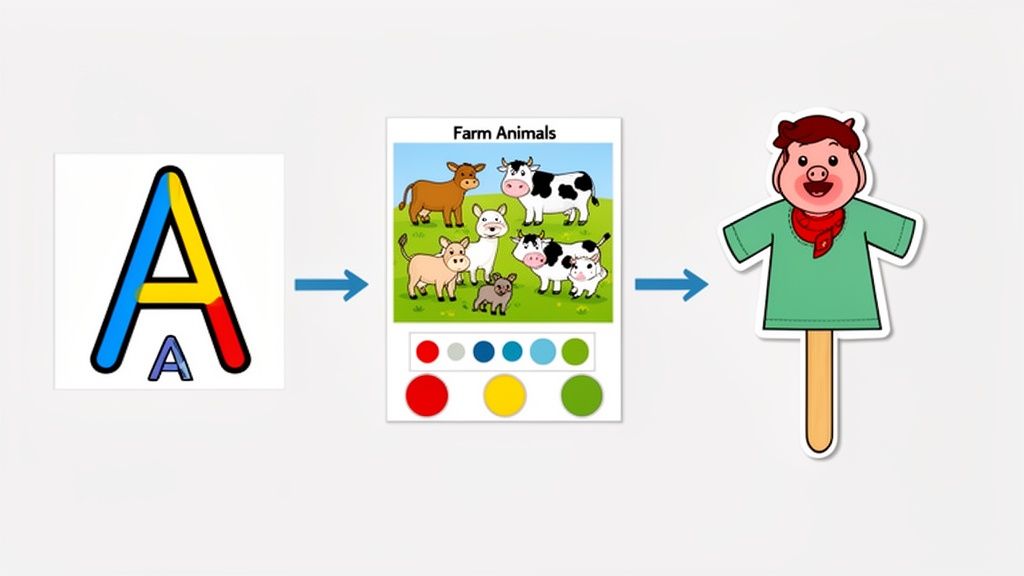
A coloring page isn't just something to keep a kindergartener busy. Think of it as the first step, not the final product. With a bit of imagination, you can turn this simple activity into a fantastic learning opportunity that weaves core skills into an activity they already love.
This shifts coloring from a quiet, solo moment to a fun, interactive experience. By adding a few simple questions or a next-step activity, you can reinforce what they’re learning in the classroom without any pressure. It’s all about making learning feel like a natural part of their playtime.
From Colors to Concepts: A Practical Guide
The trick is to connect the art to a learning goal. Whether you’re a parent at the kitchen table or a teacher managing a classroom, these strategies can transform any coloring sheet into a mini-lesson.
Start with coloring pages for kindergarten that make it easy to add these educational layers. Anything with letters, numbers, animals, or everyday objects is perfect.
1. Literacy and Phonics Fun
An alphabet coloring page is so much more than a letter—it's a sound waiting to be discovered. As your child colors in the letter 'A' next to an apple, you can practice the sound it makes together.
- For example: "That's a great letter A! A is for apple. Can you make the 'ah' sound with me? Let's say 'ah-ah-apple'!" This simple sound game connects the letter's shape to its sound, which is a critical building block for learning to read.
2. Number Recognition and Counting
Use a coloring page filled with multiple objects, like a field of flowers or a sky full of stars, to introduce basic math. The real learning kicks in after the crayons are down.
- For example: Once they’ve finished coloring a farm scene, point to the chickens and say, "You made the chickens yellow! Let's count how many yellow chickens are in the picture. One, two, three!" Just like that, their artwork becomes a hands-on counting tool.
The real magic happens when you take the activity off the page. A finished coloring sheet isn't just a picture for the fridge—it's a prop for a story, a piece for a craft, or a launchpad for more learning.
Bringing Their Creations to Life
Once the coloring is done, the fun doesn't have to stop. This next step is wonderful for building storytelling skills, spatial awareness, and a real sense of pride in their work.
Create Simple Puppets: Carefully cut out the characters they've colored. Tape them onto popsicle sticks or paper straws, and you have instant puppets! You can put on a little show, encouraging your child to give their character a voice and a personality. It’s a brilliant way to boost language development and imaginative play.
Build a Gallery Wall: Set aside a special spot on a wall or a corkboard to display their masterpieces. Having their own "art gallery" is a huge confidence booster. It shows them that you value their creative work and encourages them to feel proud of what they've made.
Make Personalized Cards: A finished coloring page can become a one-of-a-kind birthday or thank-you card for a grandparent or friend. This teaches them about doing thoughtful things for others and connects their creativity to real-world kindness.
This blend of hands-on creativity and interactive learning is part of a bigger picture. The market for interactive children's books, which often includes these kinds of engaging activities, is expected to grow to $1.04 billion. It's clear that parents and educators are looking for entertainment that also offers meaningful engagement. You can read the full research on the children's book market here.
Your Top Kindergarten Coloring Questions Answered
As a parent or teacher, you want to make sure you're getting the most out of every activity. It's only natural to have a few questions about how to best guide your little one's coloring adventures.
Let's clear up some of the most common queries to help you turn a simple pack of crayons into a powerful tool for growth and fun.
What are the best coloring tools for a kindergartener?
The right tools can be a game-changer for tiny hands. The goal is to find supplies that are easy to grip and control, which cuts down on frustration and builds confidence.
Think big and chunky!
- Chunky Crayons: Their thick, sturdy shape is perfect for a full-fist grip, giving kids better control as they learn.
- Triangular Colored Pencils: This clever shape naturally guides their fingers into the proper tripod grasp they’ll need for writing later on.
- Washable Markers: Kids adore the bold, bright colors, and parents love that a stray mark on the table isn't a disaster. It's a win-win.
Should I worry if my child colors outside the lines?
Absolutely not! In fact, you should expect it. Coloring outside the lines is a completely normal and healthy part of a kindergartener's development. Their fine motor skills and hand-eye coordination are still a work in progress.
The real goal here isn't a perfect picture; it's about celebrating their effort and creativity. Focus on the process—the colors they chose, the story they're telling—and you'll keep coloring fun and pressure-free.
Actionable Tip: If your child gets frustrated, turn it into a game. Say, "Oh, the green crayon wanted to go for a little walk outside the leaf! Where will it go next?" This reframes the "mistake" as a creative choice and takes the pressure off.
How can I make coloring more educational?
This is where the real magic happens. Coloring pages are fantastic conversation starters that can sneak in a little learning without ever feeling like a lesson.
- For an animal page: "You colored the lion yellow. What sound does a lion make? Where does a lion live?"
- For a page with shapes: "Let's find all the circles on this page and color them blue. How many did we find?"
- For a food page: "That's a yummy-looking strawberry! Is a strawberry a fruit or a vegetable?"
This simple back-and-forth connects the visual act of coloring to numbers, sounds, and new vocabulary, making learning a natural part of play.
Ready to dive in? Colortada has thousands of free, printable coloring pages for kindergarten, from animals and numbers to their favorite cartoon characters. Find the perfect page to spark your child's imagination today at https://www.colortada.com.