
Coloring pages often get written off as simple time-fillers, but for preschoolers, they are so much more. When used thoughtfully, these simple sheets of paper become powerful tools for learning, helping little ones build the foundational skills they’ll need for kindergarten and beyond. It’s a unique mix of creative fun and structured practice that makes them a staple in any early childhood setting.
More Than Just Fun: Unlocking Developmental Milestones
When you hand a child a coloring page and a fistful of crayons, you're kicking off a whole cascade of developmental benefits. Each scribble and stroke is a mini-workout for fine motor control, strengthening the same small hand muscles they'll soon use to write their name.
This seemingly simple activity is a quiet powerhouse for cognitive growth. It introduces concepts like boundaries, color recognition, and spatial awareness as kids learn to stay (or not stay!) within the lines. There's a reason the global market for coloring books in this age group recently hit USD 1.72 billion—parents and educators are catching on. In fact, some studies show that 85% of toddlers demonstrate better hand-eye coordination after coloring regularly. You can discover more insights about this growing market trend.
Building Foundational Skills
Coloring provides a structured yet creative outlet that supports a child’s development from multiple angles. It’s an incredibly versatile activity that you can easily tweak to fit any child's unique pace and interests.
Here’s a quick look at how it helps:
- Fine Motor Development: Gripping a crayon, marker, or colored pencil is a fantastic workout for little hands. This builds the dexterity needed for buttoning a coat, using a fork, and eventually, holding a pencil correctly for writing.
- Focus and Concentration: Finishing a coloring page—or even just one part of it—requires a child to focus on a single task. This helps stretch their attention span, which is invaluable practice for the more structured learning environments they'll encounter in school.
- Emotional Regulation: Have you ever noticed how a child can get completely absorbed in coloring? It can be an incredibly calming activity. It offers a healthy outlet for expressing feelings and can work as a quiet, meditative tool for a child who feels overwhelmed or anxious.
Actionable Advice: Don't just stick to standard crayons. Offer a variety of tools! Chunky crayons are great for toddlers still developing their grip strength, while triangular pencils can naturally guide older preschoolers toward a proper three-finger grasp. Even breaking a standard crayon in half forces a child to pinch it correctly, strengthening their pincer grasp. This small adjustment can make a big difference.
The trick is to reframe coloring from a mere pastime to a session of purposeful play. When we're intentional, any printable sheet can become a launchpad for learning, creativity, and a healthy dose of self-confidence.
Core Skills Boosted by Preschool Coloring Activities
To see it all at a glance, here’s a quick summary of the key skills preschoolers are developing when they sit down to color.
| Skill Area | How Coloring Helps | Actionable Insight |
|---|---|---|
| Fine Motor Skills | Strengthens hand muscles and improves pincer grasp. | Use broken crayon pieces to encourage a proper grip. |
| Color Recognition | Introduces and reinforces color names and matching. | Say, "This apple is red. Can you find another red thing in the room?" |
| Early Literacy | Builds pre-writing skills and letter/object association. | Use coloring sheets with large, simple letters of the alphabet. |
| Focus & Patience | Encourages children to complete a single-focus task. | Start with simple pictures and praise the effort, not the result. |
| Creativity | Provides a structured outlet for self-expression. | Encourage them to color outside the lines or use silly colors like a purple sun! |
These are just a few examples, but they show how a simple activity can have a compound effect on a child's readiness for school.
How To Choose The Perfect Coloring Pages
Not every coloring page is a winner, especially when you're dealing with little hands just getting the hang of holding a crayon. Picking the right sheet can make the difference between a happy, confident kid and a frustrated one who gives up. It’s all about finding that sweet spot between too easy and too challenging.
For the littlest artists, around two or three years old, think big and bold. I always look for coloring pages for preschool with large, single images—a giant apple, a simple truck, a basic circle. The absolute key here is thick, bold outlines. Those chunky lines act like guardrails, giving them a bigger target and making it way easier to feel successful, even if they're just scribbling.
Match Designs To Skill Level
Once kids hit four or five, their fine motor skills have usually come a long way. They're often ready for a bit more of a challenge. This is when you can introduce pages with a few different objects or a simple scene, like a backyard with a tree and a dog. The lines can be a little thinner, which nudges them toward more precise coloring without being totally overwhelming.
A mistake I see a lot is giving kids pages that are just way too detailed. Those super intricate designs with tiny little spaces? They’re a recipe for frustration. If you notice your child getting upset or quitting, it’s a good sign the page is probably a bit beyond their current ability.
Coloring Advice: Remember, the goal isn't to create a museum-worthy piece of art. It's about the process! A happy scribble all over a simple shape is a huge win. To build confidence, start with a color they love. If purple is their favorite, let them make a purple dog. This ownership makes the activity more engaging and less about "doing it right."
Tap Into Their Interests
Want to know the secret to getting a kid genuinely excited to color? Pick something they're already obsessed with. Seriously, a T-rex coloring page will always beat a generic floral pattern for a dinosaur-loving kid. It’s a simple trick, but it works every time.
Here are a few actionable ways to find themes that really connect:
- Go with their favorites: Is your kid all about Bluey or a specific Disney character right now? Finding a page with a familiar face is an instant attention-grabber. The library at Colortada is a great place to search for popular characters.
- Connect to real life: Tie the activity to something you've just done. After a visit to the aquarium, pull out some fish and octopus pages. If you just baked cookies, find a cookie coloring sheet. This practical connection makes the experience so much more meaningful for them.
- Sneak in some learning: If you're practicing letters and numbers, find pages that feature them. For example, coloring a huge letter 'A' surrounded by pictures of apples and ants makes the lesson stick in a fun, hands-on way.
When you take a moment to think about their skill level and what they're into, you can turn a simple stack of coloring pages for preschool into an activity that feels just like play. It's that little bit of thought that keeps it a positive and enriching part of their day.
Turning Coloring Time Into a Skill-Building Session
A coloring page isn't just a fun way to pass the time; it’s a blank canvas brimming with potential for skill development. With a few creative nudges and simple prompts, you can transform this quiet activity into a rich, multi-sensory learning experience. The trick is to shift from just handing over crayons to guiding the process with intentional, playful instruction.
Making this leap from passive coloring to active learning is much easier than you might think. It doesn't call for complicated lesson plans or a ton of special supplies. It’s really just about asking the right questions and introducing small challenges that connect the dots between coloring and core preschool skills like fine motor control, early literacy, and numeracy.
And this isn't just a hunch—it's a widely recognized practice. Over 70% of US preschools use coloring activities specifically to build motor skills. Data shows that kids who color regularly can master a proper pencil grip 15-20% faster. On top of that, a whopping 92% of preschool educators turn to coloring to improve focus, which has been shown to cut down on group disruptions by as much as 25%. You can dig deeper into the research by exploring the full report on the children's book market.
Boosting Fine Motor Skills With Creative Coloring
One of the biggest wins with coloring pages for preschool is strengthening those tiny muscles in the hands and fingers. But we can push this well beyond basic scribbling to really target specific skills.
Here are a few practical exercises to try:
- Dot Coloring: Ditch the crayons for a moment and hand them a cotton swab with a little washable paint. Challenge your child to fill in a shape by making dots. This simple switch is fantastic for encouraging a pincer grasp—the same one they'll need for writing down the road.
- Pattern Play: For preschoolers who are ready for a little more, bring in some simple patterns. If you have a picture of a caterpillar, you might say, "Let's make the first circle red, the next one blue, and then red again. What do you think comes next?" This brilliantly combines coloring with pattern recognition.
- Texture Rubbings: This one feels like magic. Place something with a cool texture (like a leaf, a piece of burlap, or even a coin) under the coloring page. Then, have your child rub over the top with the side of a crayon. The texture that appears teaches them about pressure control and always gets a "wow!" reaction.
This diagram breaks down what I look for when picking out pages to make sure they’re just right for a child's developmental stage.
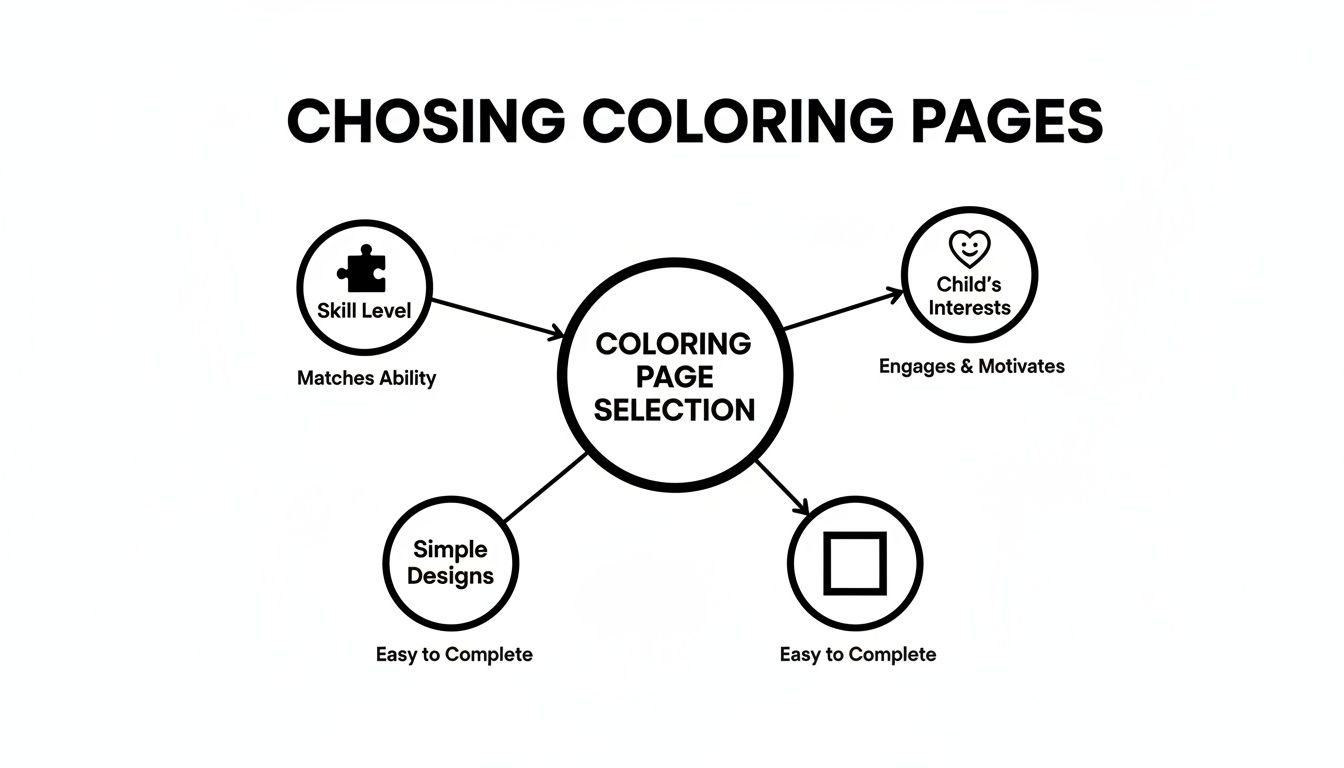
As you can see, that sweet spot where their skill level, personal interests, and a simple design all meet is where the most engaging, frustration-free learning happens.
Weaving In Early Literacy and Numeracy
Believe it or not, every single coloring page is packed with opportunities to practice early academic skills. By layering in some conversation, you can naturally reinforce letters, sounds, and numbers without it ever feeling like a lesson.
Actionable Advice: Don't turn it into a quiz. The goal is to spark curiosity, not to test them. I always frame my questions as a shared exploration, something like, "Hmm, I wonder how many red balloons we can find on this page?" This low-pressure approach keeps the activity fun.
Here are some practical examples to get you started:
For Literacy:
- Sound Practice: Pick a coloring page with an apple. As they color, you can make the short 'A' sound together. Then ask, "What other words start with that 'ah' sound? Ant? Alligator?"
- Storytelling: Once the picture is finished, look at it together and make up a story. "Once upon a time, there was a purple dog who loved to..." This is a fantastic way to build narrative skills and expand their vocabulary.
- Labeling: For older preschoolers, try writing the name of the object on the page (like "SUN") and have them trace the letters with their finger or a crayon.
For Numeracy:
- Simple Counting: Use natural prompts like, "Can you count all the blue flowers for me?" or "Let's see, how many legs does this spider have?"
- DIY Color by Number: You don't need a special worksheet for this. Just create your own instructions on the fly: "Let's color three of the butterflies yellow and two of them orange."
- Size Comparison: If a page has several similar objects, it's perfect for asking questions like, "Which tree do you think is the biggest?" or "Can you find the very smallest star?"
By folding in these simple, interactive moments, you elevate coloring from a fun distraction to a truly powerful educational tool that supports well-rounded development.
Weaving Coloring Into Your Daily Routine
The real magic happens when an activity becomes a habit. When you weave coloring pages into your daily schedule, you create a predictable, calming moment that preschoolers start to count on. It's this consistency that transforms coloring from a random treat into a reliable, comforting part of their day.
A perfect, practical time to pull out a coloring sheet is during transitions. Preschoolers' days are a whirlwind of high-energy play and quiet, focused activities. A coloring page works as a fantastic bridge between the two, helping them gently wind down after roaring around the backyard before settling in for story time.
This isn't just a hunch from experienced parents and teachers. The global market for children's illustration books is on track to hit USD 4.87 billion, and a big driver is the recognized impact on development. In fact, studies show coloring can cut down on preschooler anxiety by up to 28% during classroom transitions. It's a simple tool with a huge impact. You can learn more about these educational market trends and see why it's gaining so much traction.
Creating an Inviting Creation Station
Want to make coloring an easy "yes"? Set up a dedicated "creation station." This special spot encourages kids to be independent and lets them dive in whenever inspiration strikes. It doesn’t have to be anything elaborate—a small, low table or even a designated corner of your living room works wonders.
The goal is to make everything organized and easy for little hands to reach. Use low, open bins or clear jars so they can see all their options at a glance. Think beyond just crayons! Here are some practical examples:
- Coloring Tools: Stock the station with chunky markers, colored pencils, and those fun, mess-free paint sticks.
- Paper Supply: Keep a stack of plain paper right next to a folder filled with their favorite printable coloring pages for preschool.
- Extra Fun: Toss in a small basket of stickers, glitter glue, or stamps they can use to add their own flair.
When the supplies are visible and accessible, you're empowering your child to start creative play all on their own. This actionable setup helps build their confidence and sense of responsibility.
A Sample Themed Weekly Plan
Themed weeks are a fantastic way to keep coloring exciting and tie it into what we're already learning. A theme gives the week a storyline, making each day's activity feel like a piece of a bigger adventure.
Here’s a practical example of an 'Ocean Week' plan:
| Day | Coloring Page | Actionable Connection Activity |
|---|---|---|
| Monday | A simple fish coloring page | Read a book about rainbow fish and chat about all the different colors. |
| Tuesday | An octopus with eight legs | Count the octopus's legs out loud and practice counting to eight. |
| Wednesday | A friendly dolphin jumping | Watch a quick video of dolphins and talk about how they swim and play. |
| Thursday | A crab with big claws | Let's get moving! Do a "crab walk" across the floor for a fun motor break. |
| Friday | A big blue whale | Compare the giant whale to Monday's little fish. Talk about big vs. small. |
This simple framework shows just how easily a coloring page for preschool can launch a whole day of learning, mixing art with science, math, and literacy in a way that feels like pure fun.
Seeing Their Skills Grow and Deciding What's Next
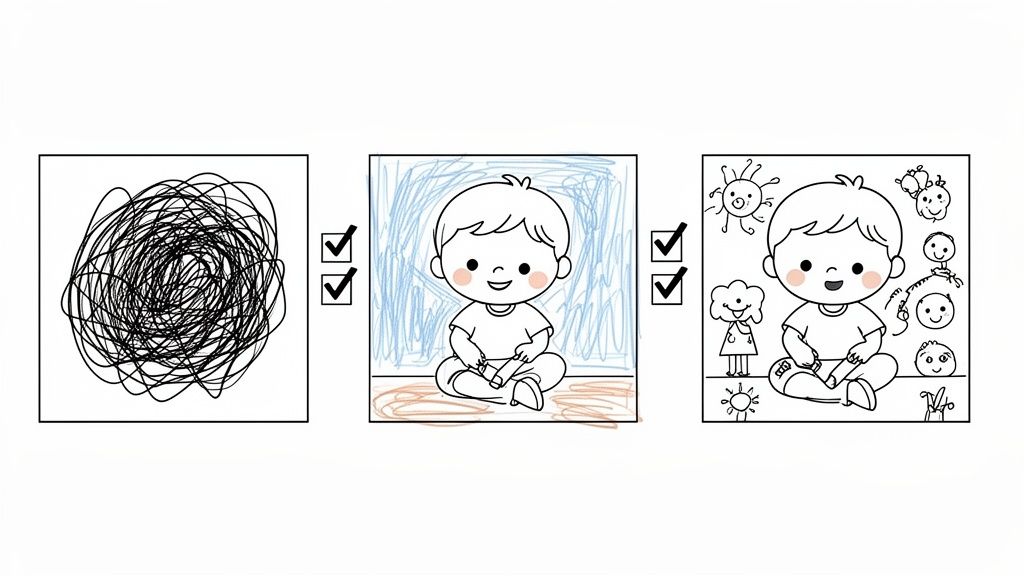
As you consistently use coloring pages, you get a front-row seat to your child's development. It's fascinating to watch their skills grow. This isn't about creating a perfect piece of art; it's about paying attention to the small, meaningful changes that show you they're learning.
Keeping an eye on this progress helps you figure out where they are in their journey and what kinds of creative challenges to introduce next. You don't need any formal assessments to see the value of coloring pages for preschool. Instead, you can spot simple, tangible milestones that connect their playtime to real growth.
Spotting Key Developmental Milestones
Look for the little shifts in how your child handles their coloring activities. These changes are fantastic signs that their fine motor control and understanding are getting stronger.
Here are a few practical milestones to look for:
- A Better Grip: Watch how they hold their crayon. Are they moving from that clunky, full-fist grip to a more precise three-finger (tripod) grasp? That’s a huge indicator of pre-writing readiness.
- Staying in the Lines: You'll probably notice their coloring gets more deliberate. They'll start making a real effort to keep their colors inside the bold outlines of the drawing.
- Knowing Their Colors: Do they pick up the blue crayon when you ask for it? Or even better, can they tell you the names of the colors they're using without any help?
- Finishing the Job: Are they beginning to complete a whole section, or maybe even the entire page? This shows their attention span is growing, and they're starting to feel that sense of accomplishment.
Actionable Insight: One of my favorite ways to check in is simply by talking with them. Instead of a generic, "That's a nice picture," I'll ask, "Can you tell me about what you made?" This kind of open-ended question gets them talking about their ideas, which is great for building vocabulary and storytelling skills.
What Comes After Coloring?
So, your preschooler has mastered staying in the lines and is confidently coloring entire pages. What’s next? The key is to keep them challenged by gently adding new skills and creative twists. The coloring page itself can become the jumping-off point for a whole new activity.
This next stage is all about stretching their creative muscles. It teaches them to see a finished picture not as the end, but as a piece of a bigger project.
Here are a few practical "next-step" activities:
- Add to the Scene: Encourage them to draw their own details. If they just colored a fish, you could ask, "What else lives in the ocean with your fish?" They can add bubbles, seaweed, or other little creatures to the background.
- Practice Scissor Skills: This is a big one. Give them a pair of child-safe scissors and let them try cutting out the shape they colored. It's a fantastic, motivating way to build those tricky scissor skills.
- Make Crafts and Puppets: Glue the cutout onto a craft stick to make a puppet. Suddenly, you have a character for imaginative play or a storytelling session, giving that simple coloring page a whole new life.
By watching their progress and introducing these kinds of follow-up challenges, you ensure that coloring pages for preschool stay a fun, dynamic part of their learning, always adapting as their abilities grow.
Answering Your Top Questions About Preschool Coloring Pages
Even after seeing all the great things coloring can do, you might still have a few questions. That's completely normal! Let's walk through some of the most common things parents and teachers ask, with some practical advice so you can feel great about adding coloring pages for preschool into your day.
When Can My Toddler Actually Start Coloring?
Believe it or not, you can introduce coloring as early as 15 to 18 months old. The secret is managing expectations and using the right supplies. Think jumbo, easy-to-grip crayons and coloring sheets with huge, simple shapes and super thick lines.
At this age, it's not about staying in the lines—not even close! It’s all about the sensory experience of making marks on paper, feeling the waxy crayon in their hand, and building up that crucial hand strength. Don't worry, their interest in actually filling in a shape will start to show up on its own as they get closer to age three.
What If My Preschooler Just Gets Frustrated and Gives Up?
This happens all the time, so don't panic. First, take a look at the coloring page. Is it too detailed? If so, swap it out immediately for something with bigger, more open spaces.
Next, shift your praise from perfection to participation. Instead of saying, "Try to stay in the lines," try something like, "Wow, I love the bright red you picked for that apple!" It celebrates their choices and takes the pressure off.
Practical Tip: I love using "partner coloring." You color one part of the picture, then they color another. It turns it into a fun, shared activity and models that it's okay to take breaks. Above all, keep it short and sweet. A happy five-minute coloring session is infinitely better than a tearful 20-minute battle.
What’s Good to Use Besides Crayons?
Switching up the tools is a fantastic way to keep kids engaged and work different hand muscles. Moving beyond the standard crayon box opens up a whole new world of textures and challenges.
Here are a few favorite examples to add to your art caddy:
- Washable Markers: Kids love them because they deliver bold, vibrant color without much effort.
- Triangular Pencils: The shape is a game-changer; it naturally guides little fingers into a proper pencil grip.
- Paint Sticks: These give you that fun, paint-like look without the mess. They feel like a special treat.
Different tools also teach kids about pressure. You can guide them by saying, "Let's see how light we can make this part with the pencil, and then make this part really bold with a marker!"
How Can I Make Our Favorite Coloring Pages Reusable?
If you want to save paper and ink (and who doesn't?), turning a printable into a reusable activity is easy. Just print the page on something sturdy, like cardstock, and run it through a laminator.
Now, your child can color on the laminated sheet with dry-erase markers. When they're done, a quick wipe with a paper towel gets it clean, and it's ready to go for next time. This is a great, practical trick for both the classroom and at home.
Ready to find that perfect page to get started? Colortada has a huge library of free, printable coloring sheets with all the characters and themes your kids adore. Explore our collection and kick off your next creative adventure today