
Remember the simple magic of bringing Mickey Mouse or Cinderella to life with a fresh box of crayons? That same joy is easier than ever to share with your kids. A whole world of free disney coloring sheets is just a click away, offering a perfect screen-free activity that gets those creative juices and fine motor skills flowing.
The Timeless Joy of Disney Coloring Sheets
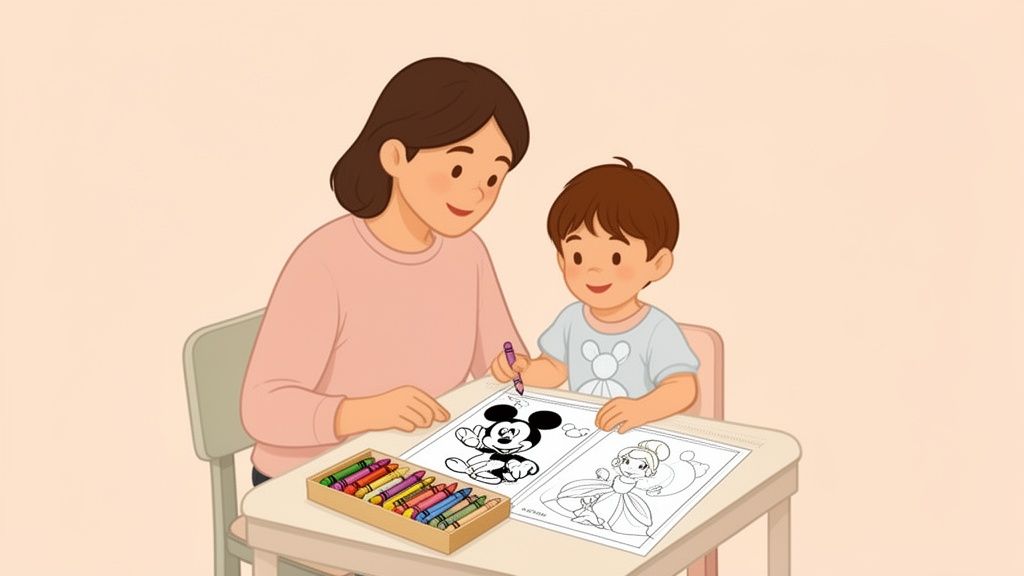
From classic pals like Donald Duck to modern heroes like Moana, Disney stories have a way of sticking with us for generations. This magic really comes alive when kids get to color, letting them step into the worlds they adore. It's so much more than just staying inside the lines—it's about giving them a chance to create their own version of a story they love.
This isn't just about killing time, either. Coloring is a fantastic way to help kids develop focus, express themselves, and, best of all, create some really sweet family memories.
Why Coloring Remains a Family Favorite
It's no surprise that demand for these kinds of activities has shot up, especially with parents on the hunt for engaging, no-cost resources. Ever since printable PDFs became a thing in the early 2000s, free Disney coloring sheets have become a go-to in households everywhere.
And it’s not just a niche hobby. These printables are part of a massive market. The global adult coloring book market was valued at USD 152.57 million and is expected to keep climbing. This shows a real appreciation for coloring as a genuinely relaxing and creative outlet for everyone, not just kids.
Just how popular is it? Searches for "free Disney coloring pages" now top 1 million queries a month in major markets. That’s a lot of people looking for a simple, fun pastime. You can discover more insights about the coloring book market growth to see the full picture.
Coloring advice: Want to add a little sparkle to a princess dress? Before coloring, have your child draw patterns on the dress with a white crayon. When they color over it with a light-colored marker, the white patterns will magically appear, creating a beautiful, subtle design.
This guide is all about helping you find that magic. We’ll show you where to find the best-quality sheets, share some creative tips, and help you turn a simple printable into a memorable artistic adventure.
How to Find and Print Perfect Disney Pages
Ready to bring a little bit of that Disney magic home? Finding great free disney coloring sheets is actually pretty easy once you know where to look. While a generic search works, you'll often get buried in low-quality, pixelated images. A more actionable approach is to use dedicated platforms like Colortada, which curate high-resolution sheets perfect for printing.
Instead of endless scrolling, use their search filters to your advantage. For example, if your child is obsessed with Toy Story, search for "Buzz Lightyear" or "Woody." If you're planning a Moana-themed birthday party, a specific search will pull up relevant pages from her ocean adventures. This targeted approach saves time and guarantees you get crisp, clear images that print beautifully.
Getting Your Printing Just Right
You've found the perfect page, now what? The printing part is where you can really elevate the experience. An actionable tip is to consider your child’s favorite coloring tools before you print. This simple step can prevent common frustrations like marker bleed-through.
- For Markers: Use a heavier paper like cardstock (at least 65 lb / 176 gsm). Its thickness is key to stopping the ink from seeping through to the other side, which keeps the artwork looking clean and vibrant.
- For Crayons and Pencils: Standard printer paper (20-24 lb / 75-90 gsm) is perfectly fine. It’s affordable and has a smooth surface that’s ideal for wax crayons and colored pencils.
Another pro tip is to adjust your printer settings. Before hitting "Print," open the print dialogue box and look for the quality settings. Select "High Quality" or "Best." This tells your printer to use more ink, resulting in sharper, darker lines—a perfect canvas for your child’s masterpiece.
Coloring Advice: Create a "rainy day binder." Print a variety of your kids' favorite Disney characters—like Elsa, Spider-Man, and Mickey—and organize them in a binder with sheet protectors. When boredom strikes, you have an instant, screen-free activity ready to go without any setup.
Before we move on, let's talk about pairing your tools with the right paper. Getting this right is a game-changer for the final look of your colored page.
Best Paper and Tool Pairings for Disney Coloring
Here's a quick, actionable guide to match your coloring tools with the right type of paper for the best artistic results.
| Coloring Tool | Recommended Paper | Pro Tip |
|---|---|---|
| Crayons | Standard Printer Paper (20-24 lb) | The slight texture of basic paper helps the wax adhere, making colors pop. For a fun effect, place a textured object (like a leaf) under the paper and color over it. |
| Colored Pencils | Medium-Weight Drawing Paper (60-80 lb) | This paper allows for layering and blending. To blend, have your child color an area with one color, then add a second color on top with lighter pressure. |
| Washable Markers | Cardstock or Bristol Board (100 lb+) | The thick, smooth surface prevents bleeding and buckling from the marker ink. Test markers on a scrap piece of the same paper first to check for bleeding. |
| Watercolors | Watercolor Paper (140 lb) | Essential for preventing the paper from warping when it gets wet. Tape the edges of the paper to a flat surface before painting to minimize curling as it dries. |
| Gel Pens | Smooth Cardstock (80-110 lb) | A smooth surface ensures the gel ink glides on without skipping. Remind kids to let the ink dry for a minute to avoid smudging. |
Ultimately, a well-printed sheet on the right kind of paper doesn't just look better; it stands up to some seriously enthusiastic coloring, making the whole thing way more fun for your little artist.
Creative Coloring Techniques for Young Artists
So, you’ve tracked down the perfect free disney coloring sheets. Now, the real fun begins! Let's move beyond just trying to stay inside the lines and help your little one turn a simple printable into a masterpiece. These ideas are all about sparking creativity and building artistic confidence.
The Magic Crayon Trick
Here's a technique that never fails to get a "wow!" from the kids: the magic white crayon. Before they start coloring, have them use a white crayon to draw secret patterns on the page. For a practical example, they could add frosty swirls to Elsa's dress or draw hidden stars in a Buzz Lightyear night sky.
When they color over that spot with a light-colored marker or a wash of watercolor paint, the wax from the crayon resists the color, and their invisible designs will magically appear. It’s a fantastic little trick that adds a layer of surprise and discovery to coloring time.
Adding Depth and Texture
Blending is another great skill that can make any picture pop. Instead of using a single shade of orange for that sunset behind Simba, show your child how to layer a lighter orange with a soft yellow and maybe even a hint of pink. For colored pencils, the key is to start with the lightest color and build up darker shades, letting them overlap to create a smooth, beautiful gradient.
This simple blending technique transforms a flat background into something dynamic and alive. You can also get creative with textures using things you probably already have at home.
- Fluffy Clouds: Dip a cotton swab or a tiny piece of a cotton ball in some light blue or white paint. Gently dabbing it onto the sky in a Winnie the Pooh scene creates the most amazing, soft-looking clouds.
- A Touch of Sparkle: You can never go wrong with a little glitter glue. A practical use is adding shimmer to a princess's tiara or the magical trail of dust behind Tinker Bell.
- Feathery Friends: For characters like Donald Duck or Zazu, try this: after coloring with a crayon, lightly rub a tissue over the area. This softens and smudges the color just enough to give it a gentle, feathery look.
The goal isn't about making it perfect; it's about encouraging them to play and experiment. When kids get to mix media—crayons with markers, or paint with glitter—they really start to develop their own artistic style. It makes the whole process so much more engaging.
This visual has some great reminders for getting your coloring sheets print-ready before you start adding all these creative touches.
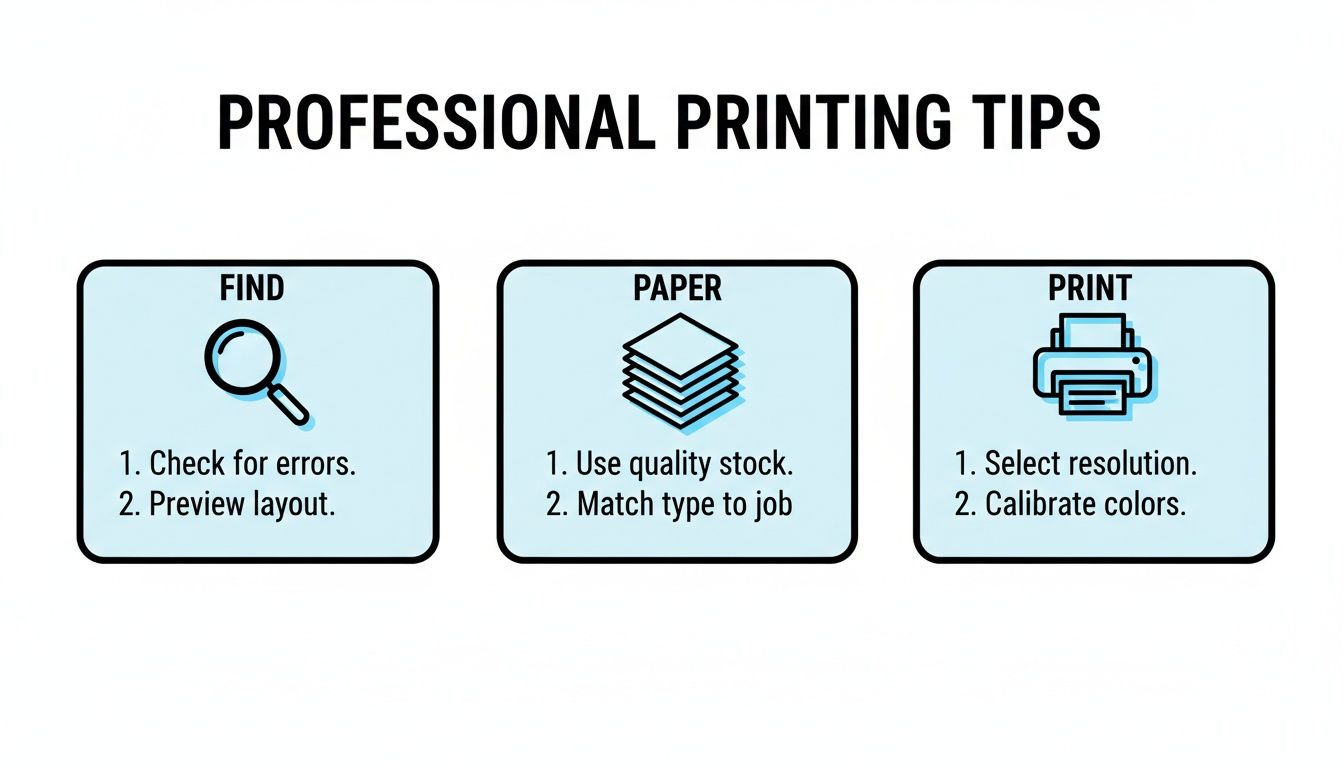
Taking a moment to get the printing right—finding a clean image, choosing decent paper, and checking your settings—really sets the stage for a great coloring session.
Turn Colored Pages into Creative Crafts
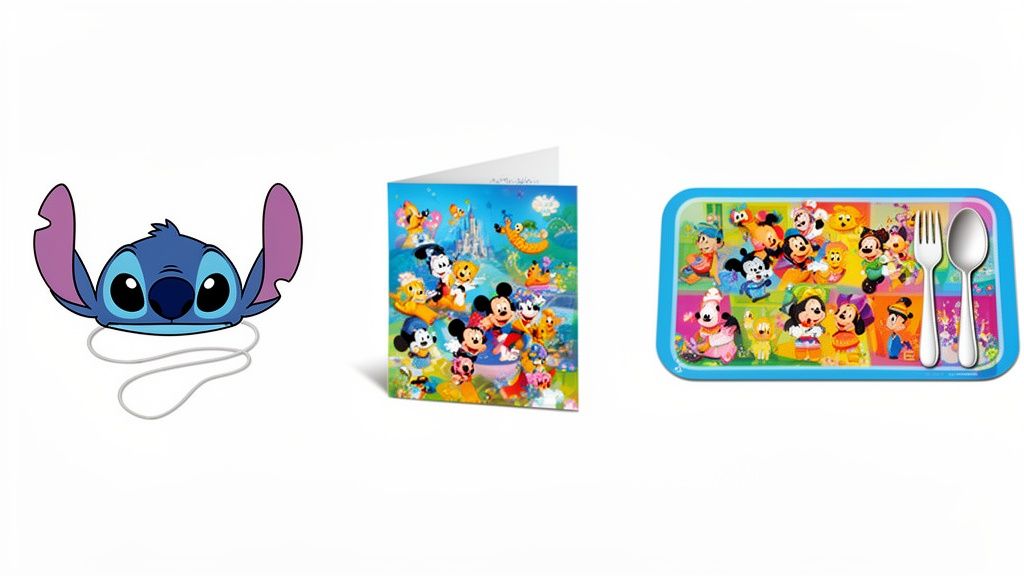
The masterpiece is colored, signed, and hanging proudly on the fridge. So, what happens to the next one? Instead of letting that beautiful artwork get tucked away in a drawer, you can give it a second life with just a little creativity. Repurposing those free disney coloring sheets extends the fun and shows your kids just how valuable their art really is.
Turning a finished page into a new treasure is surprisingly simple. Most of these projects don't require fancy supplies—just a bit of imagination, some scissors, and a glue stick. You’re not just making a craft; you’re creating a keepsake.
Easy Upcycling Ideas for Finished Pages
A brightly colored picture of Stitch can quickly become a playful character mask. A practical example: have your child color in their favorite character, carefully cut out the face, and attach a piece of string or an elastic band. It’s an instant costume piece ready for hours of imaginative play.
Another heartfelt idea is to create one-of-a-kind greeting cards. Simply fold a piece of construction paper in half and glue a colored picture of Mickey Mouse or a Disney Princess onto the front. This turns their artwork into a thoughtful gift for grandparents or a sweet thank you note for a friend.
Pro Tip: For crafts that need to be a bit sturdier, like masks or gift tags, print your coloring sheets on cardstock instead of regular paper. It holds up much better to all the cutting, gluing, and handling.
More Durable Disney Craft Projects
For a more lasting creation, why not make a vibrant collage? Gather a few finished coloring pages, cut out favorite characters and scenes, and let your child arrange them on a larger piece of poster board. It’s a fantastic way to display a whole collection of their art at once.
If you have access to a laminator, the possibilities really open up. An actionable project is to laminate a finished page to create a durable, wipe-clean placemat for mealtime. This makes every dinner a little more magical and, best of all, protects their art from inevitable spills.
It’s clear that creative play is a huge part of childhood. You can see it in the popularity of apps like Disney Coloring World, which offers over 1,000+ interactive pages. With 45k rating votes on Google Play alone, it’s a global hit. This just goes to show that simple, creative activities—like turning a coloring page into a craft—are as beloved as ever. You can actually explore more app statistics and trends here to see for yourself.
The Hidden Power in a Box of Crayons
It’s easy to see coloring as just a way to keep kids busy, but it's so much more than that. Think about it: when your child grabs a crayon to fill in Rapunzel’s long hair, they’re actually building up the tiny muscles in their hands. Every single stroke is practice, getting them ready for the day they’ll learn to write their own name.
This seemingly simple activity is also a workout for their brain. It sharpens hand-eye coordination and, believe it or not, builds patience. Even choosing whether Mickey’s shorts should be the classic red or a zany new color is a small lesson in decision-making. It’s a low-pressure way for them to practice focusing on one task, a skill that's incredibly important once they get to school.
More Than Just Motor Skills
Coloring is also a fantastic way for kids to navigate their feelings. A quiet afternoon with some free disney coloring sheets can be surprisingly calming, giving them a safe space to work through their emotions without having to talk about them. For example, if a child is feeling a little grumpy, spending some time coloring a ferocious-looking Scar might be just what they need to process that frustration.
This is why so many parents are turning to coloring as a tool for Social-Emotional Learning (SEL). It's a natural way to start conversations about feelings by discussing why a hero looks so happy or a villain seems sad. The trend reflects a bigger shift toward valuing mental well-being from a young age, and the numbers back it up. The Disney Coloring World app, for example, pulled in a staggering 100k US App Store downloads in just one month. You can see the data behind developmental coloring app trends for yourself.
Actionable Advice: Next time your child is coloring, sit down with them for a few minutes. Ask simple, open-ended questions like, "Why do you think Elsa looks like that in this picture?" This simple act can transform coloring time into a powerful conversation about empathy and emotions.
At the end of the day, that finished coloring page isn't just a pretty picture for the fridge. It’s proof of your child building their dexterity, their ability to focus, and their emotional intelligence—all with a simple box of crayons.
Answering Your Top Disney Coloring Questions
Diving into the world of free Disney coloring sheets is a blast, but it's natural for a few questions to come up. From hunting down the best pages to figuring out the right crayons for your toddler, let's get you some answers so you can get straight to the fun.
Where Can I Find the Best Quality Pages?
You'll find the sharpest, cleanest printouts on dedicated coloring websites. These sites are run by people who love this stuff, so they gather huge collections of characters with crisp, clear lines that are perfect for coloring.
While you might find a few printables on official Disney sites, the specialized platforms offer a much bigger, better-organized library without all the corporate noise. My best actionable tip? Always look for a direct "Download PDF" button—it’s your ticket to a high-quality print every time, avoiding low-resolution screenshots.
What Are the Best Coloring Tools for Young Kids?
The right tools can make or break the experience, especially for little ones still developing their motor skills.
Here’s a quick breakdown with practical examples:
- For Toddlers (Ages 2-4): Go for the big, chunky crayons and washable markers. They’re much easier for small hands to grip, and believe me, the "washable" part is a lifesaver for parents. Look for egg-shaped or triangular crayons which promote a proper pencil grip early on.
- For Older Kids (Ages 5+): This is when you can introduce colored pencils for more detailed work. Fine-tip markers are also great for creating those bold, vibrant pictures they’re so proud of. Make sure everything is labeled non-toxic.
A Pro Coloring Tip: Want to teach a simple blending trick? Have your child color a section with one crayon, then lightly layer a second color over part of it. They can use their finger or a bit of tissue to gently smudge the two colors together where they meet. This works great for creating a sunset behind Cinderella's castle!
How Can I Make Coloring More Than Just Fun?
Coloring time is a fantastic, low-key way to slip in some learning. It doesn't have to feel like a lesson.
As your child is picking out their colors, just ask them to name them. If they're working on a scene from Snow White, you can casually count the seven dwarfs together.
You can also spark their imagination by asking them to tell you a story about what’s happening in the picture. An actionable question could be, "What do you think Buzz and Woody are talking about in this picture?" or "Why do you think Ariel looks so excited here?" It’s a simple way to start a conversation about empathy and emotions.
Ready to find the perfect coloring adventure for your child? At Colortada, we have a huge library of high-quality, free Disney coloring sheets that are easy to print and ready for fun. Explore our collection at Colortada today and start creating