
When you hand a preschooler a coloring sheet and some crayons, you're giving them more than just a fun way to pass the time. You're actually handing them a powerful, and wonderfully affordable, tool for building a whole set of foundational skills. Let's explore how to turn these simple pages into truly meaningful learning experiences, from sharpening motor skills to sparking a lifelong love for creativity.
The Creative Power of Printable Coloring Sheets
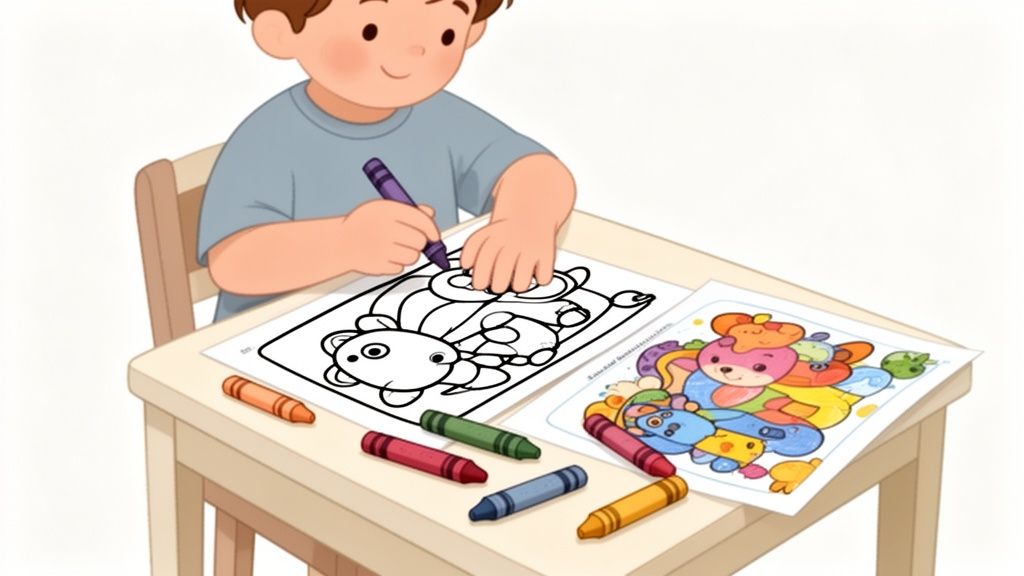
There’s a special kind of magic in watching a child transform a blank piece of paper into a vibrant world of their own making. For little ones, printable coloring sheets serve as the perfect bridge between simple playtime and hitting those crucial developmental milestones. They offer a structured yet wonderfully creative outlet that parents and teachers can access in an instant.
Think of each coloring page as a mini-workout for a child's hands and mind. That simple act of gripping a crayon and trying their best to stay within the lines is actively building the fine motor control they'll need for writing their name a few years down the road.
More Than Just Fun
The benefits go well beyond the physical, too. Coloring introduces core concepts like colors, shapes, and even storytelling in a playful, low-pressure way. When a child decides the sky should be orange and the grass should be purple, they're making conscious choices and expressing how they see the world. It’s learning in its most natural form.
This kind of hands-on creative activity is getting more and more recognition for its developmental impact. In fact, the global arts and crafts market for kids, which includes these essential printables, is expected to grow to USD 19.54 billion by 2031. That growth is fueled by parents and educators who see the clear benefits firsthand. You can read more about the arts and crafts market trends to get the bigger picture.
Coloring Advice: Don't worry if their color choices aren't "realistic." A purple dog or a rainbow-striped lion is a sign of creativity, not a mistake. Encourage this imaginative thinking by asking, "Wow, tell me about this amazing purple dog!"
With fantastic resources like Colortada available, finding engaging sheets with beloved characters from Bluey to Disney princesses has never been easier. This guide is all about giving you practical, actionable advice to help you turn every coloring session into a rich learning opportunity.
Unlocking Your Child's Potential, One Crayon at a Time
When you see a preschooler deep in concentration with a crayon, it’s easy to think of it as just a way to pass the time. But what’s really happening is a powerful, behind-the-scenes workout for their developing brain and hands, laying the groundwork for skills they'll use for the rest of their lives. The real magic isn't just in the finished, colorful page, but in the process itself.
Think about the tiny muscles in their hands and fingers. Every time they grip a crayon—whether it's a chunky one for little fists or a slimmer pencil—they're strengthening the exact muscles they'll need to hold a pencil and eventually write their name. This simple, repetitive motion builds the fine motor skills and endurance that make the leap to formal writing so much easier down the road.
From Scribbles to Focus and Self-Expression
Beyond the physical workout, coloring is a fantastic way to build mental stamina. The simple act of trying to stay within the lines of a printable coloring sheet for preschoolers is actually an early exercise in focus and patience. It teaches them to pay attention to detail and see a task through to the end, giving them a little boost of self-confidence with every completed picture.
And what about choosing the colors? That’s where their personality really shines through. When they decide a dinosaur should be bright purple or a lion needs a rainbow-colored mane, they're not just being silly; they're making decisions and expressing their unique creativity. It’s their first real dip into artistic self-expression, a world where there are no wrong answers.
Actionable Insight: Every finished page represents a series of small, successful choices. This simple activity empowers a child, showing them that their decisions create a real, visible result—a core concept for building confidence.
Turning a Fun Activity into a Learning Opportunity
The learning doesn’t have to stop with colors and motor skills. The theme of the coloring sheet itself is a perfect launchpad for a mini-lesson. A simple page from Colortada with farm animals can easily spark a chat about animal sounds, what they eat, or where they live. You’re effortlessly growing their vocabulary and their understanding of the world.
The same goes for pages with numbers and letters, which introduce early math and literacy concepts in a totally fun, no-pressure way. The best thing you can do is just talk about the picture with them. Here are a few practical examples to get the conversation started:
- For an animal sheet: Ask things like, "What sound does a cow make?" or "Can you count how many spots this giraffe has?"
- For a character sheet: Get their imagination going. "What kind of adventure do you think Bluey is on today?"
- For a nature scene: Point out different parts of the picture. "Let's make the sun a bright, happy yellow and the leaves a nice dark green. Can you find all the leaves?"
When you start seeing each printable coloring sheet for preschoolers as a small stepping stone, you can truly appreciate how this simple, joyful activity is actively shaping your child’s mind and body, one colorful stroke at a time.
How to Choose the Perfect Coloring Sheets
Not all printable coloring sheets are created equal, especially when you’re trying to find one for a preschooler. The whole point is to give them a fun challenge, not an impossible task that ends in frustration. Getting this choice right is what keeps coloring a joyful activity instead of a meltdown trigger.
Think of it like picking out a puzzle. You wouldn't hand a three-year-old a 500-piece jigsaw, right? The same idea applies here. The right coloring page builds confidence and makes them feel accomplished, while one that’s too complicated can feel overwhelming and shut them down.
Start with Simple and Familiar Shapes
For the younger crowd, usually around age three, the best coloring sheets are the ones with bold, simple outlines and big, open spaces. Their little hands are still figuring out how to hold a crayon steady, so tiny, detailed areas are just going to be frustrating. Stick to things they recognize instantly—a giant sun, a simple car, or a basic animal shape.
As they get older and closer to five, you can start to level up. This is when you can bring in pages with more detail, like a character wearing clothes they can color, a scene with a simple background, or patterns with slightly smaller sections. It’s all about a gradual build, helping them master new skills without even realizing it.
The infographic below really drives home how coloring supports these essential developmental milestones.
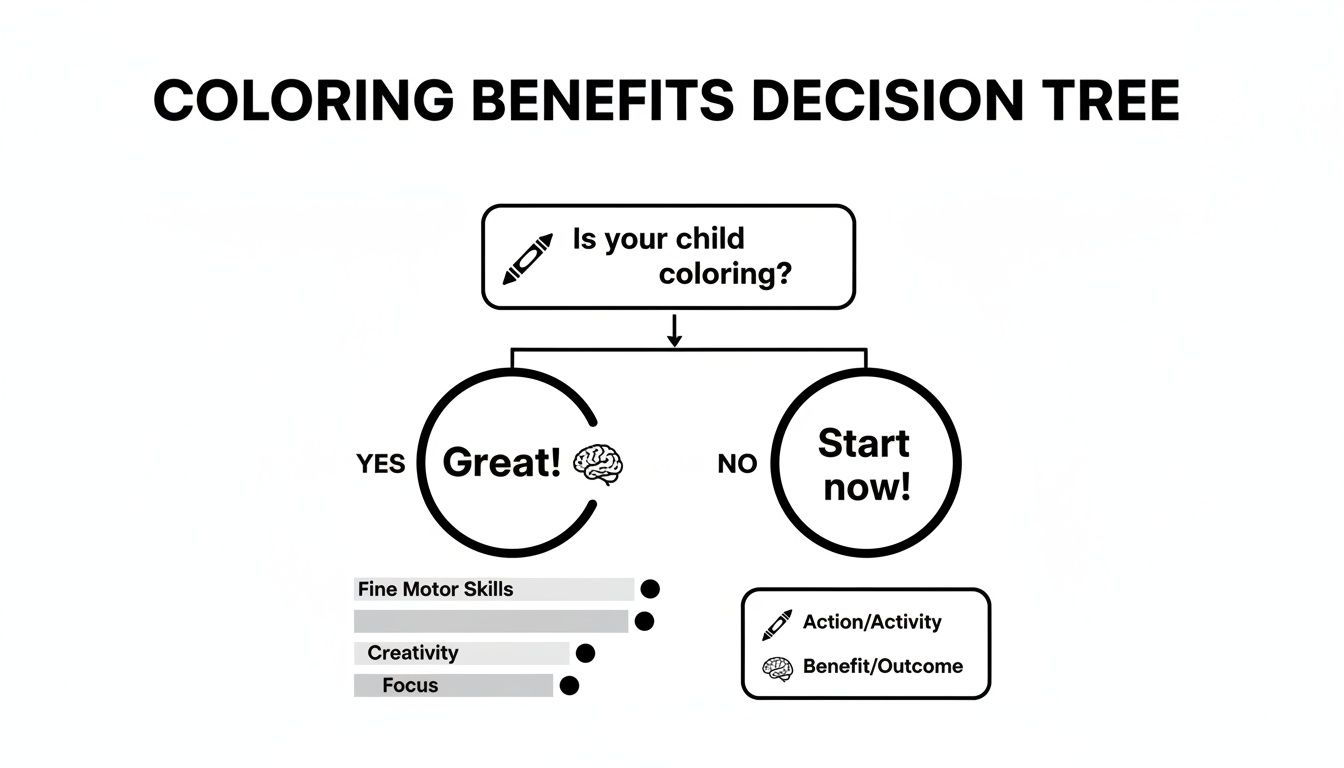
This visual guide shows that whether a child is just getting started or is already a little coloring pro, the benefits for their brain and motor skills are huge.
To help you match the coloring sheet to the child, here’s a quick guide that breaks down what to look for at each stage.
Age-Appropriate Coloring Sheet Guide for Preschoolers
This table helps parents and educators select the right level of complexity in printable coloring sheets based on a child's age and developmental stage.
| Age Group | Recommended Sheet Features | Developmental Goal |
|---|---|---|
| 2-3 Years | Very large, simple shapes (circles, squares) with extra-thick lines. Minimal detail. | Develop basic grip strength and practice making marks on paper. |
| 3-4 Years | Large, recognizable objects (animals, fruits, cars) with bold lines and a few distinct sections. | Improve hand-eye coordination and begin to stay within larger lines. |
| 4-5 Years | More complex scenes with backgrounds, multiple characters, and smaller sections. | Refine fine motor control, learn color separation, and express creativity. |
Using this as a reference can take the guesswork out of picking a page and ensure the activity is both fun and beneficial.
Leverage the Power of Their Favorite Themes
Want to know the secret to getting a kid instantly excited about coloring? Pick a theme they’re already obsessed with. This is where a massive library like Colortada really shines. If they can’t stop talking about a character from a TV show or a video game, finding a coloring page of that hero is a guaranteed win.
Actionable Insight: Pay attention to what your child is into right now. If it's a dinosaur week, print out a T-Rex. If they just watched Frozen for the tenth time, an Elsa coloring sheet will be a huge hit.
When you tap into what they already love, you’re not just giving them an activity; you’re giving them a chance to connect with their passions. That kind of motivation is powerful.
Before you hit "print," run through this quick mental checklist:
- Clear Lines: Are the outlines thick and easy for little eyes to follow?
- Recognizable Subject: Will your child know exactly what they're coloring?
- Creative Space: Is there plenty of room for them to color freely without feeling boxed in?
Choosing the perfect printable coloring sheets for preschoolers is much more about finding the right picture for their specific stage and interests than it is about finding the prettiest one. This thoughtful little step makes all the difference, ensuring coloring stays a positive and confidence-boosting part of their day.
Your Guide to Perfect Prints and Coloring Tools
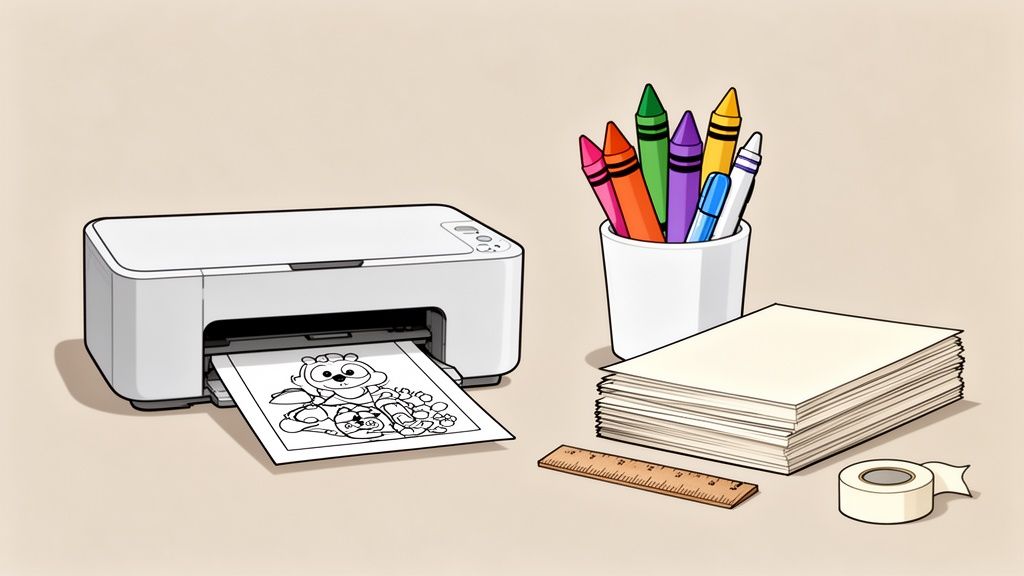
A great coloring experience starts well before the first crayon ever touches the page. It's all in the setup. The right paper, printer settings, and coloring tools can turn a simple activity into a truly engaging and frustration-free creative session.
Don't worry, setting up the ideal coloring station is easy and doesn't require a big budget. With just a few simple tweaks, you can make sure your printable coloring sheets for preschoolers are primed and ready for your child’s artistic energy.
Mastering Your Printer and Paper Choices
You absolutely don't need a high-end printer to get beautiful coloring pages. The real secret is in the settings. For a quick, everyday coloring session—or if your little one is obsessed with coloring the same dinosaur five times in a row—just switch your printer to ‘draft’ or ‘eco’ mode. You'll be amazed at how much ink you save.
Then, when they create a masterpiece they're really proud of, you can reprint that same page using the ‘high quality’ setting. This gives you a bold, crisp outline that looks fantastic on the fridge. It’s a simple way to balance saving ink with creating frame-worthy art.
Actionable Insight: Keep a small stack of both standard copy paper and slightly thicker cardstock on hand. Use the regular paper for daily practice, but save the cardstock for special projects. Cardstock is especially great for washable markers, as it keeps the colors from bleeding through to the table.
Choosing the Best Coloring Tools for Little Hands
Walking down the art supply aisle can be overwhelming, but for preschoolers, a few tools stand out as clear winners. Crayons are still number one for a reason: they're non-toxic, safe, and the mess is minimal. In fact, the crayon market in Europe is expected to grow to $607.05 million by 2029, driven by innovations that make them even better for young artists. If you're curious about the industry, you can discover more insights about crayon industry trends and see what's new.
When you're picking out supplies, think about how each tool can help your child's development. Here's a quick look at the best options for this age group:
- Chunky, Triangular Crayons: These are my go-to for encouraging a proper pencil grip. The ergonomic shape naturally guides their little fingers into the right position, and they don't snap as easily under pressure.
- Washable Markers: A lifesaver when you want bold, vibrant colors without the stress. The easy cleanup is a huge plus for both kids and parents. No more panic over a stray mark on the table!
- Colored Pencils: These are best suited for older preschoolers, usually around ages four and five, who have developed a bit more fine motor control. They're perfect for more detailed work and teach kids how to use different amounts of pressure to create lighter or darker shades.
By simply providing the right kind of paper and a small, thoughtful selection of tools, you create an inviting space where your preschooler can truly dive in and let their creativity flow.
Turn Coloring Time into a Learning Adventure
Just because the last crayon has been put away doesn't mean the fun—or the learning—is over. A finished coloring page is actually the perfect launchpad for all sorts of developmental activities. With a bit of imagination, that simple printable coloring sheet for preschoolers becomes a powerful tool for building vocabulary, telling stories, and even exploring new textures.
Think of each coloring sheet as a visual conversation starter. If your child just finished coloring a vibrant jungle animal from Colortada, you can use it to kick off a mini-lesson. Ask simple questions like, "What sound does a monkey make?" or "Where do tigers live?" This easy back-and-forth helps them connect words to pictures and build a richer understanding of the world around them.
From Coloring to Storytelling
Once the masterpiece is complete, the page can take on a whole new life as a story prompt. This is a fantastic way to stretch their imagination and help their language skills blossom.
Try asking your child open-ended questions about their drawing. "What kind of adventure is this dinosaur on?" or "Tell me the story of what's happening in this picture." Since there are no right or wrong answers, it gives them the freedom to express themselves and practice building a narrative from start to finish.
Coloring Advice: This simple trick of turning a picture into a story helps preschoolers build the foundation for reading comprehension. It teaches them that images and words are connected, and every picture can tell a story.
Adding Sensory and Motor Skills Practice
Why stop at crayons? You can easily weave in new textures and hands-on skills to make the experience even more engaging and reinforce other developmental milestones.
- Practice Scissor Skills: After coloring, let them practice cutting out their character with a pair of child-safe scissors. This is an excellent way to refine the same fine motor control they just used for coloring.
- Create a Sensory Experience: Get tactile with their artwork! For example, glue fluffy cotton balls onto a sheep, sprinkle some glitter on a fairy's dress, or stick on crinkled leaves for an autumn scene.
These small additions make the activity so much more memorable and effective. It's no wonder the market for kids' art supplies is projected to reach USD 3,200.2 million by 2033. Better yet, studies have shown that having themed discussions around coloring can boost a child's vocabulary by as much as 15%. It's a clear win-win.
These simple extensions layer valuable learning opportunities onto an activity they already love. For more great ideas, check out these other fun and beneficial age-appropriate activities for preschoolers to keep your little one learning and growing.
How to Find and Print Free Sheets in Seconds
Alright, let's get you set up. Finding the perfect printable coloring sheet shouldn't be a chore. With a resource like Colortada, you can go from searching to printing in literally seconds, leaving you more time for the fun part: coloring with your preschooler.
The fastest way to get started is to just use the search bar. Does your little one have a current obsession? Type it in—whether it's "dinosaur," "cat," or "Spider-Man"—and you'll see a bunch of options pop up instantly. You can also wander through popular categories like ‘Kids TV Shows’ or ‘Video Games’ if you’re looking for a little inspiration.
Your Simple Three-Step Printing Guide
Once you've spotted a picture you know they'll love, getting it onto paper is a piece of cake. It’s designed to be just a couple of clicks.
- Click Your Favorite Image: From all the little pictures on the results page, just click the one you want. That’ll take you to its own page.
- Select the ‘Print’ Button: You'll see a big, obvious ‘Print’ button. Give that a click, and your computer’s normal print menu will appear.
- Confirm and Print: Check that your printer is connected, hit the final print button, and you’re good to go. A fresh, high-quality coloring page will be waiting for you.
Actionable Insight: If your kid is all about dinosaurs or Disney princesses, bookmark that category page on Colortada. It saves you a step and makes it even quicker to grab a new sheet the next time they ask.
Don't forget that exploring different themes can be a great way to talk about new ideas. You can even find resources for things like free emotions colouring sheets that help little ones understand their feelings. When the process is this easy, you can have an endless supply of activities ready for any moment.
Answering Your Top Coloring Questions
It’s just coloring, right? How complicated can it be? But as any parent or teacher knows, even simple activities can bring up a lot of questions. From navigating a preschooler’s creative chaos to keeping a wiggly kid engaged, a few practical answers can go a long way.
Let’s tackle some of the most common questions I hear from parents and educators about using printable coloring sheets with preschoolers.
What If My Child Colors Outside the Lines?
This is, without a doubt, the number one question. The short answer? It’s not just okay—it's completely normal and expected! For a preschooler, coloring is about exploring how their hands and a crayon work together, not about creating a perfect masterpiece.
Scribbling over the lines is a natural step in developing hand-eye coordination. Instead of pointing it out, focus on what they did do. Try saying something like, “I love how you used that bright blue on the flower!” Positive encouragement celebrates their effort, not their precision, which motivates them to keep at it. Over time, that practice is exactly what will help them gain more control.
Coloring Advice: Think of it this way: staying inside the lines isn't the rule of coloring; it's a result of it. The messy, joyful practice is what builds the very skills needed for neater work down the road.
How Do I Keep a Restless Child Interested in Coloring?
Got a kid who’d rather be running in circles? It’s tough to get them to sit still. The key is to make coloring a dynamic and exciting invitation, not a long, quiet chore. Short, engaging bursts of creativity often work far better than one marathon session.
Here are some practical ideas to hold their attention:
- Switch Up the Tools: If crayons aren't working today, try something new. Bring out some chunky, washable markers, colored pencils, or even dab-a-dot painters for a different sensory feel.
- Add a Third Dimension: Once the coloring is done, break out the glue and craft supplies. Let them stick cotton balls on a cloud, sparkly glitter on a wand, or crinkled tissue paper on a butterfly's wings.
- Turn It Into a Game: Give them a fun little mission. For example, say, "Can you find all the triangles on this page and color them green?" or "Let's see if we can color this whole dinosaur using only red and blue!"
- Color With Them: Never underestimate the power of joining in. When you pull up a chair and start coloring your own sheet, it transforms the activity from a solo task into shared quality time.
At the end of the day, the goal is to keep things light, fun, and free of pressure. When you offer variety and celebrate their process, you're not just keeping them busy—you're nurturing a genuine love for creating.
Ready to find the perfect coloring page for your little artist? Explore the endless creative possibilities at Colortada and download your next adventure for free today. Visit us at https://www.colortada.com.