
When gray skies keep little feet indoors, it's easy to feel cooped up. But a rainy day doesn't have to mean boredom. It’s a perfect opportunity to spark imagination, develop new skills, and create lasting memories. This guide provides a treasure trove of engaging, screen-free, and educational rainy day activities for preschoolers. We’ll move beyond the obvious, offering practical, step-by-step ideas that are easy to set up at home or in a classroom.
Forget defaulting to passive screen time. This playbook is designed to transform a gloomy day into a vibrant canvas for creativity and learning. Each activity is structured to be both entertaining and developmental, focusing on fine motor skills, color recognition, storytelling, and even emotional regulation. You won't find vague suggestions here, but rather a curated collection of actionable projects complete with materials lists, setup tips, and learning objectives.
Inside, you will discover how to:
- Turn simple printable coloring pages from Colortada into multi-sensory art projects.
- Foster collaborative play by creating large-scale coloring murals.
- Integrate learning with color-by-number challenges that build foundational math skills.
- Use coloring as a tool for mindfulness and relaxation for energetic little ones.
This article serves as your go-to resource for turning a potential challenge into a cherished opportunity for connection and growth. We provide everything you need to transform a downpour into a dynamic, hands-on experience. Let's embrace the rain as a chance for creativity to flourish, starting with a classic that never fails: a fresh stack of coloring pages.
1. Printable Coloring Pages
Printable coloring pages are a fantastic and accessible option for rainy day activities for preschoolers. This classic activity involves downloading and printing illustrations for children to color, offering a simple yet powerful way to engage their creativity and refine crucial developmental skills. It’s an ideal screen-free solution that can be tailored to any child's interests, from beloved cartoon characters to educational themes like numbers and letters.
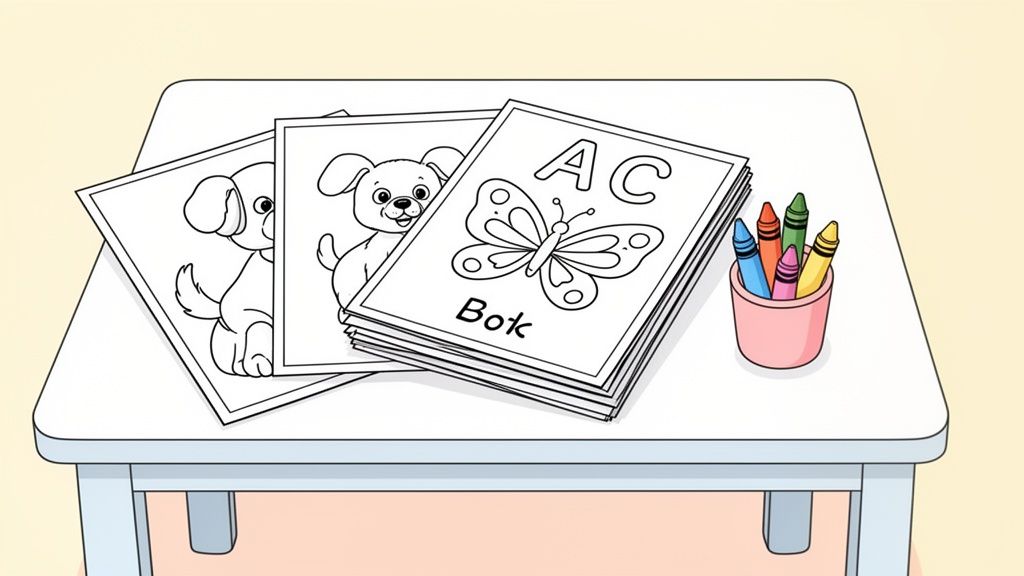
This activity shines on days when you need a low-prep, high-engagement option. It requires minimal setup but delivers significant benefits, including enhanced fine motor control, improved hand-eye coordination, and color recognition.
How to Get the Most Out of Coloring
To elevate the experience, go beyond just handing over a crayon. Encourage your preschooler to experiment with different tools, like chunky markers for bold strokes or colored pencils for detailed work. This helps them understand pressure control and texture.
- Prepare in Advance: Curate a "rainy day" folder filled with a variety of printed pages. Include themes you know your child loves, such as pages from Colortada's collection of Bluey or Disney characters, alongside seasonal options like pumpkins for fall. For more information, you can find a great selection of Printable Coloring Pages on colortada.com.
- Coloring Advice: Teach them to outline a section first before coloring it in. For example, trace the circle of a sun with yellow and then fill it in with back-and-forth strokes. This small tip greatly improves their ability to stay within the lines.
- Make it Reusable: Laminate a few favorite pages. Your child can color them with dry-erase markers, wipe them clean, and start over.
- Boost Confidence: Display the finished artwork proudly on the fridge or a dedicated art wall. This simple act validates their effort and builds self-esteem.
- Connect and Create: Use the coloring session as a springboard for storytelling. Ask questions like, "What adventure is this character on?" or "What sounds does this animal make?" to stimulate their imagination and language skills.
2. Character-Based Storytelling and Role Play
Transform a simple coloring session into an imaginative adventure with character-based storytelling and role play. This activity uses finished coloring pages as puppets or props, merging the quiet focus of art with the dynamic energy of dramatic play. It’s an excellent way to extend the life of a coloring activity and tap into a preschooler’s natural love for stories and make-believe.
This approach is perfect for rainy days when energy levels are high but outdoor play isn't an option. It beautifully channels that creative spirit into a structured yet flexible activity that boosts language development, social-emotional skills, and narrative thinking. By turning colored characters into the stars of their own show, children learn to express ideas and emotions in a safe, playful environment.
How to Get the Most Out of Storytelling
To bring this activity to life, focus on creating an environment that encourages improvisation and expression. After your child colors a favorite character, carefully cut it out, leaving a small tab at the bottom to hold or glue it to a craft stick.
- Create a Cast of Characters: Print and color several characters from a single story or show, like Bluey or Disney's Frozen. This allows for interactive dialogue and more complex plots as children act out familiar scenes or invent new ones. For a practical example, have them color Bluey, Bingo, and Bandit, then re-enact a scene from the show.
- Set the Stage: Designate a "stage" area, like behind a couch or under a table draped with a blanket. A simple backdrop can make the performance feel special and encourage kids to fully immerse themselves in their roles. A shoebox can be turned into a puppet theater with a simple rectangular cutout.
- Prompt with Questions: Spark their imagination with open-ended questions. Ask, "Where is this character going today?" or "What problem does this character need to solve?" This helps them build a narrative and think creatively.
- Embrace Play-Based Learning: This activity is a core example of how children learn best through play. By embodying a character, they explore different perspectives and practice communication. To better understand its benefits, you can learn more about play-based learning and its impact on development.
3. Coloring with Mixed Media and Sensory Tools
Elevate traditional coloring into a multisensory art adventure by introducing a variety of materials beyond standard crayons. This approach involves using different mediums and sensory elements on printable coloring pages, transforming a simple activity into a rich, tactile experience. It’s an exceptional way to expand your child’s artistic horizons and make rainy day activities for preschoolers more dynamic and memorable.
This activity is perfect for engaging preschoolers who are ready for more texture and variety. It helps develop sensory processing skills, encourages experimentation, and teaches cause and effect as children see how different materials interact with paper.
How to Get the Most Out of Mixed Media Coloring
The key is to introduce new tools gradually to keep the activity exciting without being overwhelming. Start by demonstrating a new medium, like showing how watercolors blend or how glitter pens add sparkle.
- Prepare a Sensory Art Station: Designate a space with organized options. Lay out washable watercolors, chunky glitter pens, colored pencils, and metallic markers. This setup empowers your child to make creative choices independently.
- Try Crayon Resist Art: Have your child draw patterns on a coloring page with a white or light-colored crayon. When they paint over it with watercolors, the wax-covered areas will "magically" resist the paint, revealing the hidden design. A great example is drawing white stars on a night sky page before painting over it with dark blue.
- Add Tactile Elements: Go beyond coloring tools. Offer cotton balls to create fluffy clouds on a weather-themed page, or glue sand onto an ocean scene for a textured beach. This deepens the sensory exploration.
- Combine for Effect: Encourage combining mediums. A preschooler might color a character with markers and then use colored pencils to add soft shading in the background. This introduces basic art concepts like layering and contrast. For more inspiration, explore these sensory activities for preschoolers on colortada.com.
4. Collaborative Coloring Murals
Collaborative coloring murals transform a simple solo activity into a dynamic group project, making it one of the best rainy day activities for preschoolers. This approach involves taping several large coloring pages together to create an oversized canvas that multiple children can work on simultaneously. It’s a powerful way to foster teamwork, communication, and shared creative expression, turning a quiet afternoon into a vibrant, interactive art session.
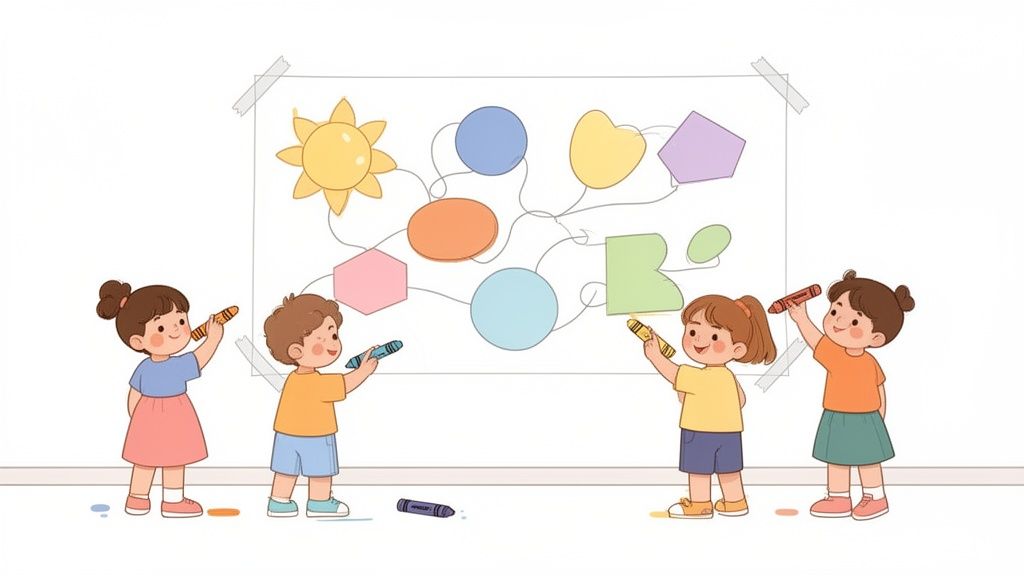
This activity is perfect for larger groups, playdates, or classroom settings where you need to engage multiple children at once. The shared goal of completing the mural encourages negotiation and cooperation, helping preschoolers learn to navigate social dynamics in a fun, low-pressure environment.
How to Get the Most Out of Your Mural
To ensure a smooth and successful mural session, focus on preparation and clear communication. The goal is to facilitate teamwork, not frustration, so setting the stage for cooperation is key.
- Plan Your Canvas: Print multiple related pages to create a cohesive scene. You could connect several Bluey pages to build a neighborhood or use various Disney character sheets for a "character parade." Tape the pages together securely from the back before mounting the mural on a wall or a large floor space.
- Organize the Space: Designate specific zones for each child to start in to prevent crowding and initial squabbles over the "best" spot. Provide multiple sets of coloring tools, ensuring there are several of each primary color to minimize waiting and encourage sharing. For example, give each child a cup with a red, blue, and yellow crayon to start.
- Establish Guidelines: Before starting, have a brief chat about working together. Use simple terms to explain sharing space and supplies, like "We take turns with the blue marker" or "Let's make sure everyone has room to color their part."
- Celebrate the Process: Photograph the mural at different stages of completion. Afterward, display the finished masterpiece prominently in a hallway or on a main wall. This validates the group's collective effort and gives them a huge sense of shared accomplishment.
5. Color-by-Number Educational Activities
Color-by-number pages offer a brilliant blend of creativity and early math practice, making them one of the most effective rainy day activities for preschoolers. This activity involves a printed illustration divided into numbered sections, where each number corresponds to a specific color. Children follow the key to reveal a hidden picture, transforming a simple coloring task into a rewarding puzzle.
This activity is perfect for a quiet afternoon indoors, as it builds number recognition, improves concentration, and enhances fine motor skills. It provides a structured yet fun way for preschoolers to practice following directions while expressing themselves artistically. The sense of accomplishment they feel upon completing the image is a fantastic confidence booster.
How to Get the Most Out of Color-by-Number
To make this educational activity even more impactful, focus on the process rather than just the final product. Guide your child through the numbers and colors, celebrating their ability to match them correctly.
- Start Simple: Begin with worksheets that use only 3-4 numbers and colors to avoid overwhelming younger preschoolers. As they gain confidence, you can introduce pages with more complex designs and a wider range of numbers.
- Coloring Advice: An actionable tip is to have them find and color all of one number at a time. For instance, say "Let's find all the number 1s and color them blue first." This turns it into a scavenger hunt and helps them focus.
- Make Them Reusable: Laminate a few favorite color-by-number pages. Provide dry-erase markers so your child can complete the puzzle, wipe it clean, and enjoy it again and again. This is also great for practicing number recognition repeatedly.
- Praise the Effort: Focus on their hard work in finding the numbers and matching the colors. Say things like, "I love how you found all the number 2s!" This reinforces the learning aspect and encourages persistence.
- Extend the Learning: After the coloring is done, use the activity as a jumping-off point for other learning opportunities. To further support this, you can explore a comprehensive guide on educational toys for 3 and 4 year olds, which offers more options for enriching playtime.
6. Cut, Color, and Create Craft Combinations
Cut, Color, and Create Craft Combinations elevate a simple coloring session into a dynamic, multi-step creative project. This activity involves having preschoolers color printed pages and then use scissors to cut out specific elements, which are then assembled into a new piece of art. It’s an excellent way to blend artistic expression with the development of crucial practical skills.
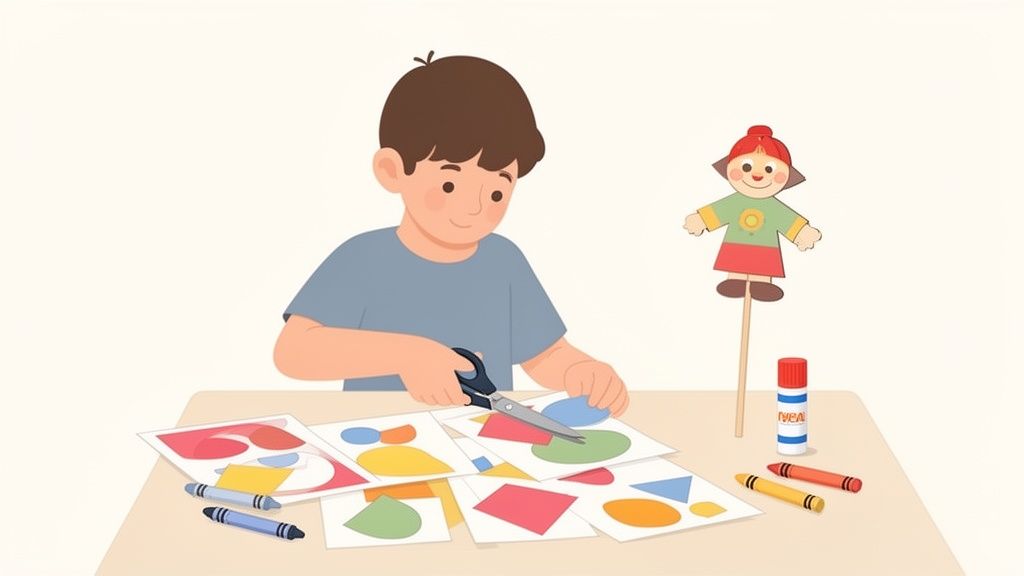
This process is perfect for preschoolers who are ready for a more complex challenge beyond basic coloring. It transforms a two-dimensional activity into a three-dimensional one, building fine motor skills, spatial reasoning, and the ability to follow a sequence of steps. This makes it one of the most engaging rainy day activities for preschoolers, as it keeps them focused from coloring to final assembly.
How to Get the Most Out of Craft Combinations
Success with this activity lies in thoughtful preparation and guiding your child through each stage of the creative process.
- Plan the Project First: Before coloring begins, decide on the final craft. Will you be making character puppets, a collage, or a diorama? This helps your child understand the goal and choose colors accordingly. For instance, color animals to cut out and glue onto a jungle background.
- Demonstrate Scissor Safety: Always use child-safe scissors. Before they start, show your preschooler how to hold the scissors and paper correctly. For beginners, start with straight lines or large, simple shapes. A great first step is cutting out simple squares or circles you've drawn.
- Organize the Workspace: Set up distinct stations or containers for coloring tools, cut-out pieces, glue, and the background paper. This teaches organizational skills and keeps the mess manageable.
- Encourage Creative Assembly: Let your child decide where to place their cutouts. They can make paper chains from colored strips or create masks from character faces. This freedom fosters creativity and ownership of the final product. For families looking to expand their creative horizons beyond the home, you can discover various arts and crafts days out that offer wonderful, structured artistic experiences.
7. Themed Coloring Series and Story Progression
Transform a simple coloring session into an ongoing narrative adventure with a themed coloring series. This approach involves using a set of related coloring pages that tell a story or explore a theme over time. Instead of a one-off picture, your preschooler engages with a progression, where each new page builds upon the last, creating a sense of continuity and anticipation. It’s a brilliant screen-free way to foster long-term engagement and narrative thinking skills.
This method is perfect for extending an activity across multiple rainy days, giving children a project to return to. It nurtures skills like memory, sequencing, and comprehension, as they recall previous parts of the story to understand the current one. It’s one of the most effective rainy day activities for preschoolers to build focus and a sense of accomplishment.
How to Get the Most Out of a Coloring Series
To make this a captivating experience, focus on the storytelling aspect. Before each new page, recap what has happened so far in the "story." This reinforces the narrative and gets your child excited for the next chapter.
- Prepare the Narrative: Plan your series in advance. Print a full set of pages that follow a clear sequence, like pages from Colortada that chronicle a Bluey episode or a seasonal progression from spring to winter. For an extensive collection of character-based stories perfect for this, explore the Printable Coloring Pages on colortada.com.
- Organize for Adventure: Store the pages in a dedicated folder, organized by their sequence. Present only one or two pages at a time to maintain suspense and focus. For a practical example, label envelopes "Day 1," "Day 2," etc., to build excitement.
- Display the Story: Create a "story wall" where you hang the completed pages in chronological order. This visual timeline helps your preschooler see the entire narrative unfold and appreciate their progress.
- Boost Comprehension: Connect the series to other media. If you're coloring a story, read the book it’s based on. If it’s a character series, watch a related episode and discuss how the coloring page fits into the plot.
8. Coloring as Mindfulness and Relaxation Practice
Transforming coloring from a simple pastime into a mindfulness practice is a powerful way to help preschoolers manage their big emotions on a cooped-up rainy day. This approach uses the act of coloring to anchor a child's attention in the present moment, teaching them to focus on the sensory experience of the crayon on paper. It's an effective, gentle introduction to emotional regulation and a perfect calming activity.
This activity is particularly beneficial during moments of overstimulation or as a wind-down routine before a nap or bedtime. By shifting focus from the outcome to the process, coloring becomes a tool for reducing anxiety and promoting a sense of inner peace, making it one of the most restorative rainy day activities for preschoolers.
How to Guide Mindful Coloring
To introduce mindfulness, create a serene atmosphere that encourages quiet focus. The goal is not to create a masterpiece but to enjoy the simple, repetitive motions and the feeling of calm they bring.
- Create a Calm-Down Corner: Designate a quiet, cozy space for this activity. Add a soft cushion, a small blanket, and play gentle, instrumental music in the background to signal that it's time for relaxation.
- Focus on the Senses: Before starting, encourage your child to take a few deep "balloon breaths" (inhale to fill the belly, exhale slowly). Ask them to notice the smoothness of the crayon, the sound it makes on the paper, and the bright color it leaves behind.
- Use Soothing Designs: Opt for pages with flowing lines, simple nature scenes, or mandalas. These patterns are less about character recognition and more about engaging in repetitive, calming motions.
- Talk About Feelings: Use gentle prompts to connect the activity to emotions. Ask, "How does it feel to move the crayon slowly?" or "Does this calm, blue color make you feel peaceful?" This helps build their emotional vocabulary and self-awareness.
9. Technology-Free Digital Display of Artwork
Transforming a collection of finished coloring pages into a tangible art gallery is a wonderful, screen-free way to celebrate your preschooler's creativity. This activity involves creating a dedicated, rotating physical display of their artwork, allowing children to participate in curating, arranging, and discussing their creations in a real-world setting. It fosters immense pride in their work and develops an early appreciation for art without any digital dependency.
This hands-on approach is perfect for building self-esteem and making your child feel like a valued artist. Instead of finished pages getting lost in a pile, they become the centerpiece of a home or classroom gallery, turning a simple coloring session into a meaningful exhibition. This is one of the most rewarding rainy day activities for preschoolers because it extends the life of the creative process.
How to Curate Your Child's Art Gallery
Elevate the display from a simple act of pinning to an engaging curatorial experience. Involve your preschooler in every step, from choosing which pieces to feature to deciding where they should hang. This involvement empowers them and teaches basic organizational and aesthetic skills.
- Create a Clothesline Gallery: String a piece of twine along a wall and use colorful clothespins to hang artwork. This makes it incredibly easy for little hands to clip up their own masterpieces and rotate them out as new ones are completed.
- Establish a "Featured Artist" Spot: Dedicate a prominent spot, like the front of the refrigerator or a special corkboard, for a rotating "featured artwork." Change it weekly to keep the display fresh and exciting.
- Involve Them in the Curation: Ask your child to select their favorite pieces for the "exhibition." Talk about their choices by asking open-ended questions like, "What do you love most about this picture?" or "Tell me the story of what's happening here."
- Label and Date Everything: Add a small label with your child's name and the date to each piece. This simple practice validates their work as important and creates a wonderful timeline of their artistic development.
10. Themed Coloring Challenges and Friendly Competitions
Transform a simple coloring session into an exciting event by introducing themed challenges. This activity frames coloring as a fun, low-pressure goal-oriented task where children complete themed pages based on specific creative prompts. It adds a layer of playful structure that can motivate and engage preschoolers who thrive on clear objectives, turning a solitary activity into a shared, dynamic experience.
This approach is perfect for rainy day activities for preschoolers because it channels their natural energy and excitement into a constructive, creative outlet. It helps build focus, introduces the concept of following directions in a playful context, and encourages them to think more strategically about their color choices and artistic decisions.
How to Get the Most Out of Coloring Challenges
The key is to keep the atmosphere light and focus on participation over winning. The goal is to boost engagement, not to create a high-stakes competition. Frame it as a fun game everyone plays together.
- Set a Themed Goal: Introduce a simple challenge. For example, say, "Let's see who can color this dinosaur using only warm colors like red, orange, and yellow!" or "Can we all finish coloring our PAW Patrol pup before the timer dings?"
- Emphasize Fun Over Speed: Use a timer as a gentle guide, not a strict rule. Celebrate everyone’s effort when time is up, regardless of how much they’ve completed. This teaches time management skills without adding pressure.
- Create Inclusive Challenges: Offer different levels of difficulty. A younger child might get a simple shape, while an older sibling gets a more detailed character. The challenge can be adapted to their individual skill level, ensuring everyone feels successful.
- Reward Participation: Give every participant a "Super Colorist" sticker or a high-five for their great work. The reward is for trying your best and having fun, which reinforces a positive attitude toward creative tasks and builds confidence.
Rainy Day Activities for Preschoolers — 10-Point Comparison
| Activity | 🔄 Implementation Complexity | ⚡ Resource & Setup | 📊 Expected Outcomes | Ideal Use Cases | ⭐ Key Advantages / 💡 Tips |
|---|---|---|---|---|---|
| Printable Coloring Pages | Low 🔄 | Minimal — printer, paper, crayons; ⚡ Quick setup | Fine motor development, color recognition, sustained engagement 📊 | Home, preschool, quiet indoor days | ⭐⭐⭐⭐ Affordable & accessible. 💡 Print/laminate pages for reuse |
| Character-Based Storytelling & Role Play | Medium 🔄🔄 | Low — printed props, some space; may need adult facilitation | Language development, narrative skills, emotional expression 📊 | Group play, dramatic play sessions, guided learning | ⭐⭐⭐⭐ Builds vocabulary & imagination. 💡 Laminate characters; set a performance area |
| Coloring with Mixed Media & Sensory Tools | Medium–High 🔄🔄🔄 | Higher — multiple art supplies, protection, cleanup | Multi‑sensory engagement, enhanced creativity, fine motor refinement 📊 | Art sessions, sensory exploration, differentiated learners | ⭐⭐⭐⭐ High engagement and quality results. 💡 Introduce one medium at a time; use washable materials |
| Collaborative Coloring Murals | Medium 🔄🔄 | Moderate — large paper, many supplies, open space | Social skills, cooperation, large displayable artwork 📊 | Classrooms, parties, community projects | ⭐⭐⭐⭐ Encourages teamwork & pride. 💡 Divide mural into sections and provide multiple supplies |
| Color‑by‑Number Educational Activities | Low–Medium 🔄🔄 | Minimal — pre‑printed numbered pages, coloring tools; ⚡ Fast to start | Number recognition, early math confidence, self‑checking success 📊 | Individual practice, transitions, math reinforcement | ⭐⭐⭐ Structured learning with clear success. 💡 Start with few colors; laminate for reuse |
| Cut, Color & Create Craft Combinations | Medium–High 🔄🔄🔄 | Moderate — scissors, glue, planning, supervision | Scissor skills, spatial reasoning, multi‑step project completion 📊 | Extended projects, mixed‑age groups, keepsake crafts | ⭐⭐⭐⭐ Multi‑skill development. 💡 Pre‑cut for young children; use child‑safe scissors |
| Themed Coloring Series & Story Progression | Medium 🔄🔄 | Moderate — sequence planning, printing, storage | Narrative comprehension, repeat engagement, portfolio building 📊 | Weekly programs, subscription series, long‑term engagement | ⭐⭐⭐⭐ Promotes continuity and anticipation. 💡 Organize pages by sequence; link to stories |
| Coloring as Mindfulness & Relaxation | Low 🔄 | Minimal — calm space, optional soft music | Emotional regulation, reduced anxiety, improved focus 📊 | Wind‑down routines, sensitive children, transition times | ⭐⭐⭐ Effective for regulation. 💡 Use quiet space, slow pacing, no time pressure |
| Technology‑Free Display of Artwork | Low–Medium 🔄🔄 | Minimal — wall/line, clips, rotating plan | Increased confidence, art appreciation, motivation to create 📊 | Home galleries, classroom displays, exhibitions | ⭐⭐⭐⭐ Boosts pride & curation skills. 💡 Use removable hangers and involve children in selection |
| Themed Coloring Challenges & Friendly Competitions | Medium 🔄🔄 | Low–Moderate — timers, varied pages, facilitation | Higher engagement, motivation, focus, goal completion 📊 | Group events, parties, fundraising, family activities | ⭐⭐⭐ Increases participation. 💡 Emphasize fun, set inclusive goals and celebrate effort |
Making Every Rainy Day a Creative Adventure
A rainy day no longer needs to signal boredom or endless screen time. As we've explored through these ten dynamic activities, a simple downpour can be the perfect catalyst for a world of creativity, learning, and connection. By reframing a gloomy forecast as an invitation to play, you transform your home or classroom into a vibrant studio where imagination thrives. The key takeaway is that a stack of coloring pages, when combined with a little ingenuity, becomes an incredibly versatile tool for holistic child development.
We've moved beyond just filling in the lines. We've seen how a coloring page can be the first chapter of a grand story, the blueprint for a mixed-media masterpiece, or a collaborative mural that teaches teamwork. The true value lies not in the finished product, but in the process. It's in the careful selection of a crayon, the focused effort of cutting along a dotted line, and the shared laughter during a storytelling session. These moments are the building blocks of essential preschool skills.
Key Takeaways for Your Next Rainy Day
To make these ideas truly stick, let's recap the core principles that turn simple coloring into powerful rainy day activities for preschoolers:
- Preparation is Paramount: The most successful rainy day adventures begin before the first drop falls. Curate a "rainy day box" filled with pre-printed coloring sheets, assorted art supplies like cotton balls, glitter, and pipe cleaners, and a list of your favorite ideas from this article. When inspiration is needed most, everything will be at your fingertips.
- Process Over Perfection: Encourage experimentation and focus on the joy of creating. If your preschooler wants to color a lion purple or use their fingers to smudge chalk pastels, celebrate it. This mindset fosters creativity, reduces anxiety, and builds confidence in their artistic choices.
- Integrate Multiple Skills: A coloring activity is rarely just about coloring. As we've seen, you can seamlessly weave in other learning objectives.
- Fine Motor Skills: Practiced through cutting, gluing, and holding different tools.
- Literacy: Developed through character-based storytelling and creating narratives.
- Numeracy: Reinforced with color-by-number pages and counting elements.
- Social-Emotional Learning: Fostered via collaborative murals and mindfulness coloring.
Actionable Steps for Parents and Educators
Thinking ahead is the secret to transforming a potentially stressful indoor day into a memorable one. Don't wait for the storm clouds to gather; take these proactive steps now to ensure you're always ready for a creative session.
First, diversify your coloring toolkit. Go beyond standard crayons. Gather washable paints, textured paper, child-safe scissors, glue sticks, and recycled materials like fabric scraps or old buttons. This variety empowers children to think outside the box, as demonstrated in our mixed-media activity. For example, have them color a picture of a sheep and then glue cotton balls onto the body for a wonderful sensory experience.
Next, plan for different energy levels. Not every rainy day activity needs to be high-energy. Have a quiet, focused option like a mindfulness coloring page ready for when a child needs to calm down. Conversely, have a large-scale project like the collaborative mural prepared for when the wiggles need a constructive outlet. This adaptability makes your collection of rainy day activities for preschoolers far more effective.
Finally, create a dedicated display area. Designating a "gallery wall" on a refrigerator, corkboard, or a stretch of wall validates a child's artistic efforts. It communicates that their work is valued and cherished. This simple act of displaying their creations, as mentioned in our technology-free display idea, builds immense pride and encourages them to continue exploring their creativity.
The beauty of these strategies is their simplicity and profound impact. You are not just keeping a child busy; you are actively nurturing their cognitive, emotional, and physical development. You are building a foundation of problem-solving, self-expression, and a love for learning that will benefit them for years to come. So, the next time the sky turns grey, smile. You have a comprehensive playbook ready to unlock a world of colorful, engaging, and educational fun.
Ready to build your ultimate rainy day toolkit? Colortada offers a vast and growing library of high-quality, printable coloring pages designed specifically to spark the imagination of preschoolers. Visit Colortada to download endless themes and characters that are perfect for bringing these creative activities to life.