
Welcome, creative parents and educators! Are you searching for engaging, hands-on activities that not only entertain but also develop crucial skills in your little ones? This guide is your ultimate co-pilot for exploring the exciting world of airplane craft for preschoolers. We provide a curated collection of projects that move beyond simple cut-and-paste activities, offering actionable insights and practical examples for each high-flying idea.
From simple paper plate gliders to sturdy clothespin flyers, each craft is designed to boost fine motor skills, encourage imaginative play, and introduce basic concepts in a fun, accessible way. You will find everything you need to get started, including material lists, step-by-step instructions, and difficulty ratings. To truly ignite creativity, consider tips for establishing a stimulating, safe area for your child by exploring ideas on how to foster creating the perfect play environment.
We also include special coloring advice for each craft, with links to amazing printable coloring pages from Colortada to extend the fun and artistic expression. Let's prepare for a creative journey and watch your preschooler's imagination soar to new heights
1. Paper Plate Airplane
The Paper Plate Airplane is a classic and beloved craft, transforming a simple, everyday household item into a soaring toy. This activity is perfect for preschoolers because it combines fine motor skill development, creative expression, and the excitement of creating something that actually flies. Children get to personalize their own aircraft from a flat "canvas" before folding it into a three-dimensional shape, offering a satisfying and tangible result.
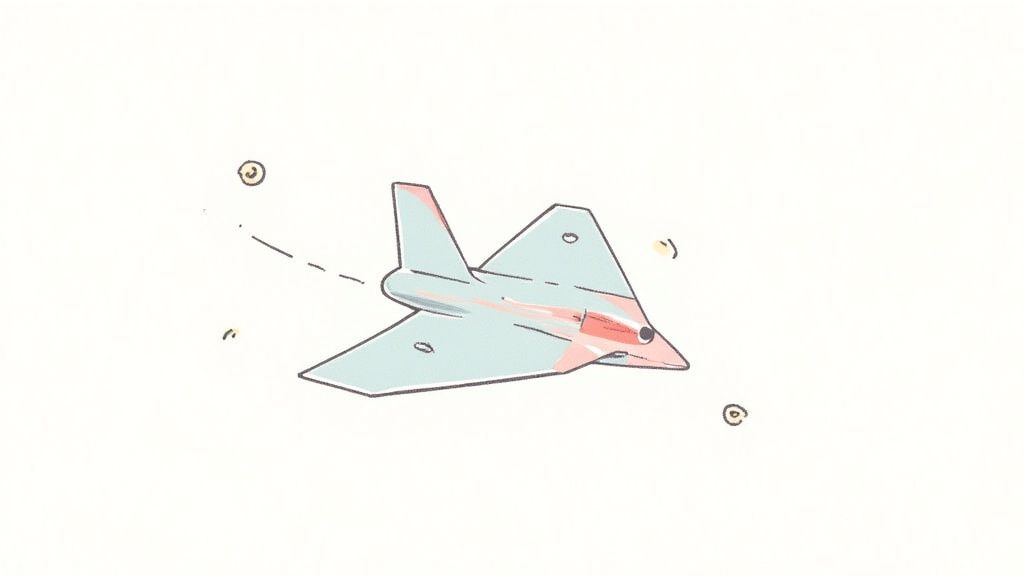
This particular airplane craft for preschoolers is a staple in many early childhood classrooms and summer camps for its low cost and high engagement. The process teaches children about symmetry and basic folding techniques, laying a foundation for more complex projects later on.
Actionable Tips for a Perfect Flight
To ensure a smooth and fun crafting session, follow these practical steps:
- Decorate First, Fold Later: Always have the children color and decorate their paper plates while they are still flat. This makes it much easier for little hands to draw, paint, or add stickers without navigating awkward folds. A practical example is drawing the cockpit and passenger windows before making any cuts or folds.
- Coloring Advice: Encourage the use of crayons or colored pencils for vibrant designs, as they won't make the paper plate soggy. For example, have them draw a cool lightning bolt on the wings or create a rainbow pattern across the body of the plane. Let kids draw windows with passengers or design a cool logo for the tail.
- Pre-Crease the Folds: For younger preschoolers (ages 3-4), an adult can gently pre-fold the major lines. This provides a clear guide, helping them complete the folds independently and building their confidence. You can even draw a dotted line with a pencil to show them exactly where to fold.
- Test Flights: Once assembled, find a clear, open indoor space like a hallway or living room for test flights. Make a game out of it by creating a "runway" with masking tape and seeing whose plane can land on it. This prevents the airplane from getting lost or damaged outside and makes retrieval easy.
This project is not just about making an airplane; it's about the entire creative journey. You can find more simple and engaging projects perfect for this age group, similar to the Paper Plate Airplane, by exploring these fun crafts for toddlers.
2. Paper Towel Tube Airplane
The Paper Towel Tube Airplane transforms a common recyclable item into a fantastic, sturdy toy perfect for imaginative play. This craft is a hit with preschoolers because it introduces them to 3D construction in a simple, accessible way. Children use the cardboard tube as the main body of the plane (the fuselage) and add paper wings and a tail, watching a familiar object take on an entirely new form.
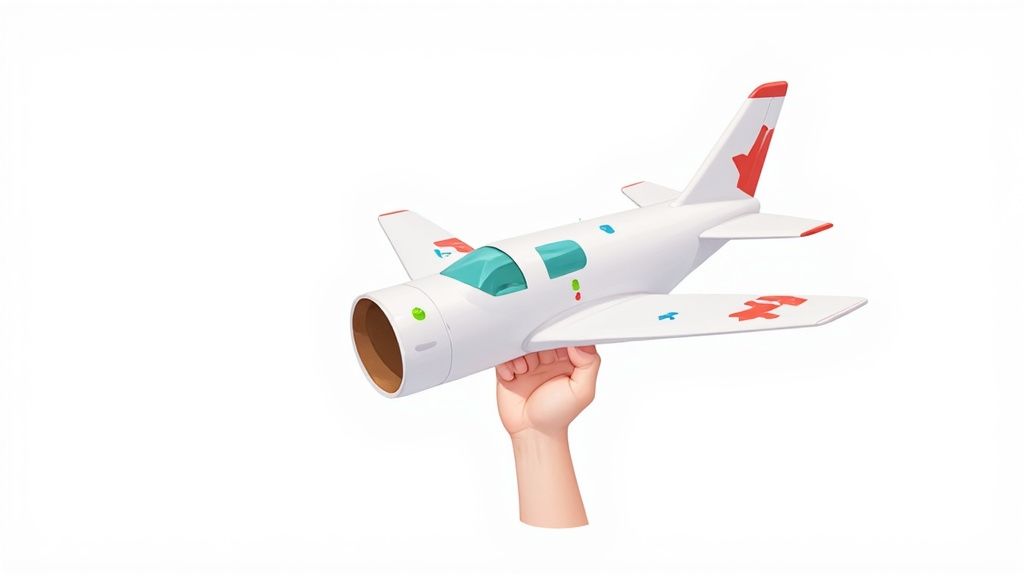
This particular airplane craft for preschoolers is frequently featured in environmental education programs and is popular in Montessori and Waldorf classrooms due to its emphasis on using natural and recycled materials. The activity helps develop spatial awareness and fine motor skills as children attach the various components to the central tube.
Actionable Tips for a Perfect Flight
To ensure a smooth and fun crafting session, follow these practical steps:
- Decorate First, Assemble Later: Have children paint the cardboard tube and decorate the wing and tail pieces while they are still separate. This avoids messy smudges and allows the paint to dry completely before assembly. For example, they can paint the tube blue for the sky and draw clouds on it.
- Coloring Advice: Tempera or acrylic paints work wonderfully for covering the cardboard tube. For the paper wings, crayons and markers are great choices. Encourage kids to draw stripes, stars, or even little windows with passengers peeking out. A great practical idea is to have them use a sponge with paint to create a textured, camouflage look on their plane.
- Pre-Cut for Younger Kids: For children ages 3-4, it's helpful for an adult to pre-cut the wing and tail shapes from construction paper. This allows them to focus on the fun part: decorating and assembling their creation. You can even offer a few different wing shapes (e.g., long and skinny, short and wide) for them to choose from.
- Smart Assembly: Instead of glue, an adult can carefully use a craft knife to cut two parallel slits into the cardboard tube. Then, the child can slide the wings right through. This creates a secure, glue-free fit that holds up well during play.
This project is fantastic for teaching about recycling and building 3D objects. To add more creative fun, you can pair this activity with these free airplane coloring pages to design your aircraft's look before you build it.
3. Styrofoam Cup Airplanes
The Styrofoam Cup Airplane is a fantastic STEM-based craft that uses a lightweight, disposable cup as the main fuselage. This activity is perfect for preschoolers as it introduces them to basic concepts of aerodynamics and balance in a very hands-on, intuitive way. Children love transforming an ordinary cup into a cool aircraft, and the process of attaching wings and a tail fin provides a satisfying construction challenge.
This particular airplane craft for preschoolers is a favorite for rainy-day activities and classroom "Cup Plane Challenge" competitions. The cup's inherent shape provides a solid, easy-to-grip base for small hands, making it simpler to assemble than crafts requiring complex folding. The project encourages problem-solving as kids figure out the best placement for wings to achieve a good glide.
Actionable Tips for a Perfect Flight
To ensure a smooth and fun crafting session, follow these practical steps:
- Decorate the Fuselage First: Have children decorate the foam cup before attaching any other parts. This gives them a stable, round surface to work on. They can draw windows, a pilot, or stripes around the cup's body.
- Coloring Advice: Permanent markers work best on the smooth surface of a foam cup and create bright, vivid designs. Provide good ventilation when using them. For a mess-free option, use stickers! For example, star-shaped stickers can decorate the tail, while small circular stickers can serve as windows.
- Secure Wings Firmly: Use a strong adhesive to attach the paper or foam wings. For a practical and safe option, double-sided tape is perfect for preschoolers. An adult can place strips on the cup, and the child can press the wings firmly in place.
- Balance is Key: During assembly, help your child place the wings directly opposite each other on the cup. A great practical tip is to draw a small dot on each side of the cup as a guide. After building, conduct a few test glides and adjust the wing angles slightly up or down to see how it affects the plane's path.
4. Origami Paper Airplane (Simple Fold)
The Origami Paper Airplane is the quintessential paper-folding activity, introducing preschoolers to the art of transforming a flat sheet of paper into a flying machine. While traditional origami can be complex, this simplified version uses just a few basic folds, making it an ideal introduction for young children. It’s a powerful activity for developing fine motor skills, sequencing, and spatial awareness.
This particular airplane craft for preschoolers is a fantastic, screen-free activity that requires only a single piece of paper. The immediate satisfaction of watching their creation glide through the air provides a powerful sense of accomplishment, encouraging persistence and problem-solving as they adjust their folds for better flights.
Actionable Tips for a Perfect Flight
To ensure a smooth and fun folding session, follow these practical steps:
- Decorate Before Folding: Give children the paper to decorate before any folds are made. This allows them to create colorful designs, add windows, or draw pilots with ease. Their unique art makes each airplane special.
- Coloring Advice: Lightweight materials are key. Use crayons, colored pencils, or thin markers. For a fun effect, have them color one side of the paper blue and the other red, so the airplane has a different color on its top and bottom. Avoid heavy embellishments like glitter glue, as the added weight can unbalance the plane and prevent it from flying properly.
- Fold Together, Side-by-Side: The best way to teach is by doing. Sit next to the child and fold your own airplane at the same time, demonstrating each step slowly. Use simple language like, "Now, let's fold the corner to meet the middle line." This visual guidance is much more effective than verbal instructions alone.
- Pre-Crease the Center Line: For the youngest crafters, folding the paper in half lengthwise to create a center crease provides an essential guide for all subsequent folds. This simple action is a practical way to make the entire folding process much more manageable for them.
5. Clothespin Airplane
The Clothespin Airplane is a delightful craft that uses a simple wooden clothespin as the body, or fuselage, of the aircraft. This activity is fantastic for preschoolers as it introduces them to assembling a three-dimensional object from separate parts and offers a wonderful sensory experience through the clothespin's spring mechanism. Children can attach popsicle stick or foam wings to create a sturdy, grabbable toy they can be proud of.
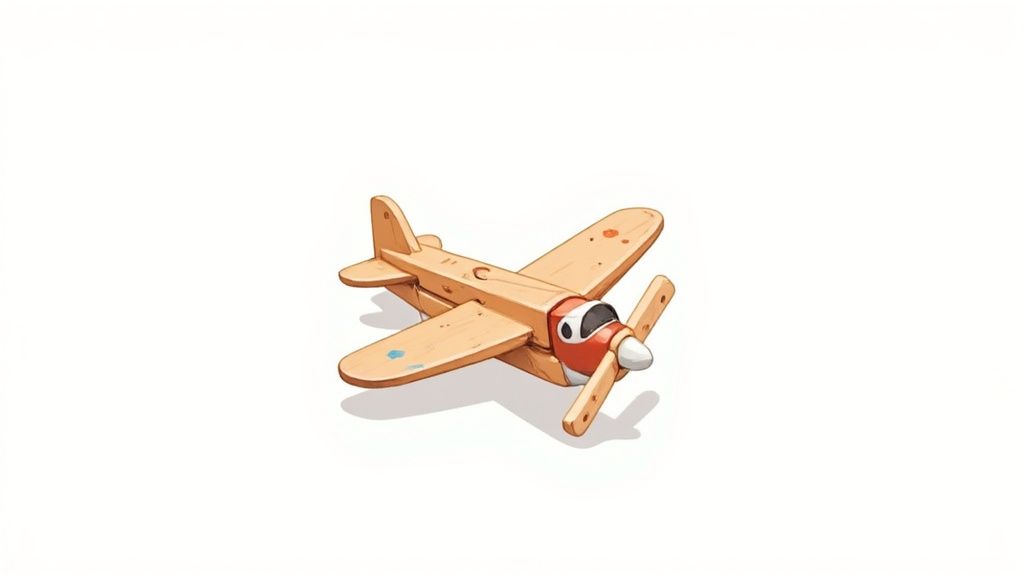
This particular airplane craft for preschoolers is a favorite in DIY parenting blogs and sensory activity plans. The process of painting the small clothespin and carefully placing the wings helps build precision and hand-eye coordination. The finished product is a durable little plane perfect for imaginative play scenarios.
Actionable Tips for a Perfect Flight
To ensure a smooth and fun crafting session, follow these practical steps:
- Decorate First, Assemble Later: Have children paint or color the wooden clothespin and popsicle stick wings before gluing them together. This prevents smudging and allows for more detailed designs on each individual part.
- Coloring Advice: Acrylic paint works wonderfully on wood, providing vibrant, opaque coverage. For a fun design, encourage kids to paint the clothespin a solid color like red, and then use the end of a paintbrush to add yellow polka dots. Markers also work well for adding details like windows or logos on the popsicle stick wings.
- Wing Material Matters: While standard popsicle sticks work great, using craft foam for the wings makes the airplane lighter. For a permanent and strong bond, an adult should use a hot glue gun to attach the wings. A practical tip is to glue one wing on top and another on the bottom of the clothespin's "mouth" to create a biplane effect.
- Add Personality: Bring the airplane to life by gluing small googly eyes near the front of the clothespin. A small bead or a tiny button can be glued to the front to look like a propeller hub, giving it a charming, finished look.
This project is not just about making a toy; it's about the fine motor practice involved. You can find more activities like the Clothespin Airplane by exploring these tips to help improve fine motor skills.
6. Straw and Paper Airplane
The Straw and Paper Airplane is a fantastic STEM-inspired craft that introduces preschoolers to basic engineering concepts. This activity uses simple drinking straws to create a lightweight frame, with paper serving as the wings and fuselage. It’s a wonderful way for children to explore concepts like structure, balance, and aerodynamics in a hands-on, creative manner.
This particular airplane craft for preschoolers is a popular choice in maker spaces and early childhood education programs focused on engineering. Children are not just decorating; they are actively building the structure of their aircraft, leading to a deeper understanding of how things are put together and a great sense of accomplishment.
Actionable Tips for a Perfect Flight
To ensure a smooth and fun crafting session, follow these practical steps:
- Build First, Decorate Later: Unlike other crafts, it's best to assemble the straw frame first. Once the basic structure is secure, children can add the decorated paper wings and body, ensuring the core of the airplane is stable.
- Coloring Advice: Use lightweight materials like colored pencils or crayons on the paper components. For a practical design idea, have kids color stripes on a rectangular piece of paper before you tape it into a loop to become the wings. This is easier than trying to color a curved surface.
- Tape with Ease: Use colorful washi tape or painter's tape instead of clear tape. It's much easier for little fingers to tear and reposition, reducing frustration. For a clear guide, you can draw small dots on the straws with a marker to show them exactly where to place the tape.
- Balance is Key: Before finalizing the decorations, do a quick balance test. A great practical tip is to slide a small paperclip onto the front straw. You can move it forward or backward to adjust the plane's center of gravity, which helps it fly much more smoothly during test flights.
7. Flying Fish/Airplane Hybrid Craft
The Flying Fish/Airplane Hybrid Craft is a wonderfully imaginative project that stretches the boundaries of a typical airplane craft for preschoolers. Instead of just building a plane, children are encouraged to merge the concept of flight with animals and mythical creatures. This activity is perfect for fostering creativity and out-of-the-box thinking, as it transforms a standard craft into an exercise in character design and storytelling.
This particular craft is a favorite in fantasy-themed lesson plans and arts integration programs because it connects engineering with biology and literature. Children might create a "dragon-plane" with fiery wings or a "butterfly-jet" with colorful, patterned wings, turning a simple construction project into a unique piece of art with its own personality.
Actionable Tips for Imaginative Hybrids
To ensure a smooth and fun crafting session, follow these practical steps:
- Brainstorm First, Build Second: Before handing out supplies, talk with the children about flying creatures. A fun practical example is to ask, "If a ladybug were an airplane, what color would its wings be?" This sparks ideas for their hybrid designs.
- Coloring Advice: Encourage bold patterns and textures. For a "fish-plane," suggest using metallic crayons or glitter glue to mimic shiny scales. For a "bird-plane," children can draw feather patterns with markers. A great practical tip is to have them dip a craft feather in paint and press it onto the paper wings to create a realistic feather texture.
- Provide Varied Materials: Offer more than just paper. Supplies like pipe cleaners for antennae, googly eyes for a creature face, and crinkled tissue paper for fiery dragon breath can help bring their fantastical creations to life.
- Encourage Storytelling: Once the crafts are complete, ask each child to share a story about their creation. A great actionable prompt is, "Tell me about one adventure your butterfly-plane went on today." This adds a rich layer of imaginative play to the activity.
This project is not just about making an airplane; it's about creating a character. You can find more simple and engaging projects perfect for this age group, similar to this hybrid craft, by exploring these free printable airplane coloring pages.
8. Foam Plate and Popsicle Stick Airplane
The Foam Plate and Popsicle Stick Airplane offers a sturdier alternative to paper-based crafts, combining the lightweight nature of foam with the rigid structure of wooden craft sticks. This project is ideal for preschoolers who want a more durable toy to play with after the crafting is complete. It introduces children to basic engineering concepts, as they see how different materials work together to create a solid, three-dimensional object.
This specific airplane craft for preschoolers is a popular choice in extended art programs and seasonal classroom projects due to its robust final product. The process helps develop fine motor skills through gluing and assembly, while also allowing for plenty of creative expression on the foam "wings" and "body."
Actionable Tips for a Perfect Assembly
To ensure a smooth and successful crafting experience, here are some practical steps:
- Decorate the Foam First: Have children decorate the foam plate pieces while they are flat. This is the easiest stage for them to add color and designs without having to work around the attached popsicle sticks.
- Coloring Advice: Permanent markers or acrylic paint work best on foam plates. For a fun, practical technique, have kids use dot markers to create patterns on the wings. They can make polka dots, create a rainbow, or spell out their initials. Allow paint to dry completely before assembly to avoid smudges.
- Use Strong Glue: While school glue can work, a low-temp hot glue gun (operated by an adult) or a strong craft glue will create a much more durable bond. A helpful tip is to apply glue to the popsicle stick, not the foam, to prevent the foam from melting or warping.
- Create a Visual Guide: For younger children, a simple diagram or a pre-assembled example can be incredibly helpful. An actionable insight is to draw the shape of the popsicle sticks on a piece of paper, creating a "blueprint" where they can place the pieces before gluing. This empowers them to build their plane with more independence.
This project is fantastic for a multi-day activity, allowing decoration one day and assembly the next. You can find other sturdy and engaging projects perfect for the season by exploring these spring arts and crafts for preschoolers.
8 Preschool Airplane Crafts Comparison
| Item | 🔄 Implementation Complexity | ⚡ Resource Requirements | ⭐ Expected Outcomes | 📊 Ideal Use Cases | 💡 Key Advantages |
|---|---|---|---|---|---|
| Paper Plate Airplane | Low — simple folds, preschool-friendly | Very low — paper plates, markers, stickers | ⭐⭐ — immediate play; fine-motor practice | Quick circle-time craft, low-prep activities | Extremely affordable; customizable; minimal supervision |
| Paper Towel Tube Airplane | Medium — cutting/gluing; some adult help | Low — recycled tube, paper, glue, scissors | ⭐⭐⭐ — sturdy, easy to grip; durable play | Recycling lessons, Montessori, library crafts | Promotes sustainability; ergonomic; robust |
| Styrofoam Cup Airplanes | Low — minimal assembly (attach wings) | Very low — foam cups, tape/glue, paper/foam | ⭐⭐⭐ — flies well; safe and modifiable | Classroom STEM, indoor/outdoor flight tests | Good flight performance; soft and inexpensive |
| Origami Paper Airplane (Simple Fold) | Medium — sequential folding; model needed | Minimal — single sheet of paper | ⭐⭐ — teaches sequencing and spatial reasoning | Fine-motor development, short lessons | No extra materials; quick; teaches instructions-following |
| Clothespin Airplane | Medium — small parts, adhesive required | Low — clothespin, popsicle sticks/paper, glue, paint | ⭐⭐ — tactile and durable but less flight-focused | Sensory crafts, hand-strengthening activities | Durable; sensory engagement; reusable supply |
| Straw and Paper Airplane | Medium–High — frame building and taping | Low — straws, tape, paper, light fasteners | ⭐⭐⭐ — lightweight; flies well; STEM learning | Maker spaces, engineering-focused preschool programs | Teaches basic structural engineering; highly modifiable |
| Flying Fish / Airplane Hybrid | Low–Medium — decoration-driven on any base | Low — depends on base craft; lots of decoration supplies | ⭐⭐ — high creativity and storytelling value | Arts-integration, imaginative play, thematic units | Encourages imagination; works with any airplane base |
| Foam Plate & Popsicle Stick Airplane | High — multi-step assembly, adult prep advised | Medium — foam plates, popsicle sticks, glue, tools | ⭐⭐ — durable and impressive but heavier (less flight) | Multi-session art projects, seasonal classroom builds | Sturdy for rough play; larger scale; teaches mixed-media use |
Bringing Your High-Flying Creations to a Smooth Landing
We've explored a hangar full of creative projects, from the simple and sturdy Paper Plate Airplane to the surprisingly aerodynamic Straw and Paper Airplane. Each of these activities provides a fantastic launchpad for your child's imagination and developmental skills. As we bring our crafting journey to a smooth landing, let's revisit the core principles that make any airplane craft for preschoolers a soaring success. The true value isn't just in the finished product, but in the hands-on process of creation, problem-solving, and imaginative play that follows.
The variety of materials we've used, from paper towel tubes and clothespins to foam plates and straws, demonstrates a key takeaway: you don't need expensive or complicated supplies to foster creativity. The most engaging activities often come from repurposing everyday household items. This approach not only makes crafting accessible but also teaches valuable lessons about resourcefulness and seeing the potential in the ordinary.
Key Takeaways for Your Next Crafting Adventure
Remembering these key insights will help you make every crafting session a positive and enriching experience for your little co-pilot:
- Process Over Perfection: The primary goal is the joy of making. A lopsided wing or a crooked tail is a mark of a child's unique effort. Celebrate their work and focus on the fun they had while creating.
- Skill-Appropriate Scaffolding: Choose crafts that align with your preschooler's current abilities. For a younger child, the Clothespin Airplane is a perfect starting point. For one who is ready for a challenge, the simple Origami Paper Airplane introduces the basics of following sequential steps.
- Extend the Play: The craft is just the beginning. Encourage storytelling, set up a runway on the living room floor, or hold flight contests in the backyard. This transforms a simple art project into a springboard for hours of imaginative play.
Actionable Next Steps: From Craft Table to Play Zone
Once the glue has dried and the propellers are in place, the real fun begins. To maximize the educational and entertainment value of your new fleet of aircraft, consider these next steps:
- Host a "Fly-In" Event: Gather all the different airplane crafts you've made. Create a starting line with masking tape and see which one flies the farthest. This introduces basic concepts of physics in a playful, hands-on manner. For example, ask, "Does the heavier clothespin plane fly as far as the light paper one?"
- Incorporate Coloring and Decoration: Before or after assembly, use crayons, markers, or paint to add personality to each plane. A great practical tip is to provide a "design station" with stickers, dot markers, and googly eyes. For the Paper Plate Airplane, encourage your child to draw passengers in the "windows," giving their creation a story.
- Organize Your Air Traffic Control Tower: After a productive session, turn cleanup into a game. Label bins with pictures of supplies (e.g., a picture of a crayon, a picture of a popsicle stick) and have your child sort the leftover materials into the correct "hangars." If you're looking for clever ways to manage your growing collection of supplies, learning how to organize your craft supplies efficiently can be a game-changer.
Ultimately, each airplane craft for preschoolers is more than just an activity; it's an opportunity to connect, learn, and create lasting memories. You are not just building paper planes; you are building confidence, nurturing creativity, and giving your child's imagination wings to fly.
Ready to add even more artistic detail to your high-flying adventures? Visit Colortada for a fantastic collection of airplane-themed coloring pages and printable templates. They are the perfect complement to any airplane craft, offering a fun way to design your plane's look before you build or a relaxing activity after the crafting is done. Explore the full runway of creative possibilities at Colortada today