
Ever found yourself needing a quick, engaging activity for your child that doesn't involve a screen? Something that can calm them down while also secretly sharpening their skills? That's exactly where printable coloring pages for kids come in. They're basically digital drawings you can download and print right at home, giving you instant access to a creative outlet without having to run to the store.
What Are Printable Coloring Pages
Printable coloring pages are one of the most flexible tools a parent or teacher can have. Think of them as an endless digital library of line art, just waiting for a splash of color from crayons, markers, or even paint. Unlike a physical coloring book, if your child becomes obsessed with a certain dinosaur or fairy, you can print that same page over and over again.
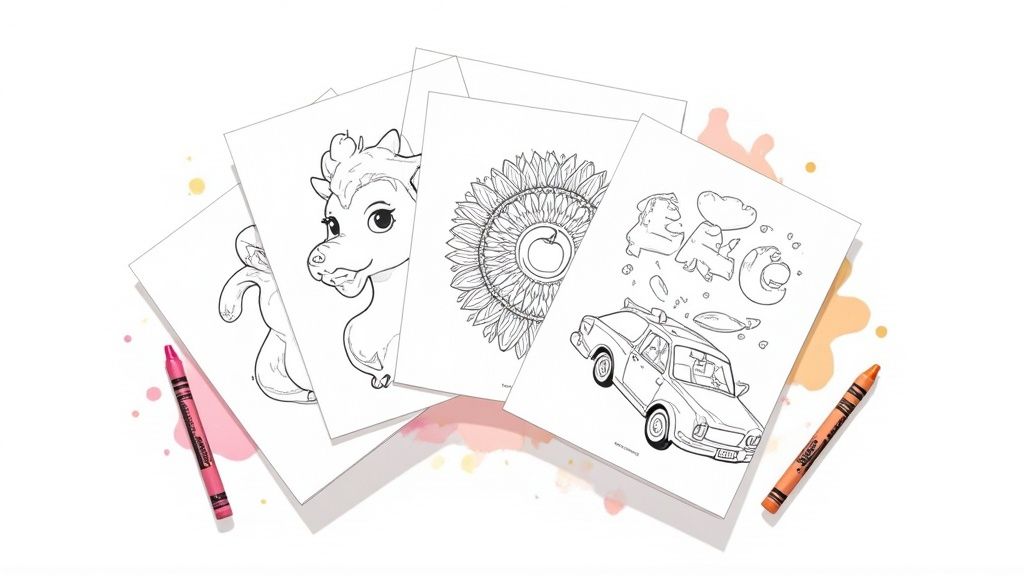
It’s this on-demand nature that has made them so popular. The print-on-demand market, which these pages are a part of, has seen some serious growth, jumping from about USD 3.94 billion in 2022 to USD 6.25 billion by 2024. That huge leap shows just how many families are turning to this simple but powerful activity. You can dig into the market trends over at colorpage.ai.
A World of Options at Your Fingertips
What really makes printable coloring pages a game-changer is the incredible variety. You can find anything you can imagine, from basic shapes for toddlers just learning to hold a crayon to intricate mandalas that even older kids (and adults!) will find challenging. It means you can find the perfect activity to match your child’s mood, interests, and skill level in seconds.
- For the Animal Lover: You can find pages with safari animals, farm friends, or deep-sea creatures. A practical example is printing a lion page and encouraging your child to use different shades of yellow and brown to give it a realistic mane.
- For the Future Builder: Sheets covered in cool cars, soaring rockets, and busy construction sites are always a hit. Try printing a rocket ship and challenging them to color the flames with a blend of red, orange, and yellow for a fiery effect.
- For the Dreamer: There are endless designs of princesses, magical unicorns, and enchanted castles. A great actionable insight here is to add glitter glue to a princess's dress after coloring to make it sparkle.
Actionable Tip: Don't limit yourself to just crayons! Encourage your kids to mix it up. Hand them some colored pencils to tackle the fine details in a complex pattern, or print a landscape on thicker paper and break out the watercolor paints to see how the colors blend. For example, have them paint the sky first, then add details with markers once it's dry.
This flexibility is what turns a simple coloring session into a full-blown creative adventure. Whether you need a ten-minute quiet time filler or a more involved art project for a rainy afternoon, printable coloring pages for kids are an immediate, engaging solution. You can find huge, reliable collections at places like Colortada, so you'll never run out of fresh ideas to spark your child's imagination.
How Coloring Builds Essential Skills
Let's be honest, sometimes we hand our kids a coloring page just to get a few quiet minutes. But what if I told you that simple act is one of the most powerful developmental tools you have? It’s far more than a way to pass the time; it’s a foundational activity that builds a surprising range of skills they'll need for life. Every time your child picks up a crayon, they're firing up connections in their brain and body that pave the way for bigger tasks, especially handwriting.
This isn't just a hunch parents have. The secret is out, and the demand for these creative tools is booming. As more people recognize how much coloring helps kids grow, sales of printable coloring pages for kids have shot up by 40% on major online stores between 2022 and 2024. If you're curious about the numbers, you can dig into the market trends in this global industry analysis.
Strengthening Fine Motor Skills
The most obvious win from coloring is the development of fine motor skills. We're talking about those small, precise movements in the hands, fingers, and wrists. The simple act of grasping a crayon, holding it steady, and figuring out how much pressure to use is a mini-workout for all those little hand muscles.
Think of it as strength training for their future. This "workout" is exactly what they need to learn to write their name, tie their shoelaces, and button up a coat. By practicing how to control a crayon, they are literally building the muscle memory and dexterity needed to hold a pencil correctly down the road. If you want to dive deeper, check out our guide on how to improve fine motor skills through coloring activities.
Coloring Advice: For the little ones, start with chunky crayons or markers that are easier for small hands to grip. As they get better at controlling their movements, you can introduce colored pencils. A practical step is to show them how to hold the pencil with a tripod grip (thumb, index, and middle finger). This requires a more refined pincer grasp and a lighter touch, getting them ready for more detailed work and writing.
Boosting Cognitive Abilities
Coloring isn't just a physical activity—it's a serious mental workout, too. Staying within the lines of a drawing requires a ton of focus and concentration. That simple challenge trains their brain to pay attention to detail and see a task through from beginning to end.
It also quietly teaches them about planning and making decisions. That moment when a child pauses, crayon in hand, trying to decide if the dinosaur should be green or purple? That's strategic thinking in its earliest form. They're learning to picture a final result and make choices to get there.
Here are just a few of the brain-building skills coloring nurtures:
- Color Recognition: They actively learn to identify and name different colors. Actionable insight: Call out the colors as they use them. "Wow, you're using a beautiful bright red for that flower!"
- Spatial Awareness: Working to stay inside the lines gives them a concrete understanding of boundaries. Practical example: Point out small enclosed areas and challenge them to fill just that spot without going over the line.
- Patience and Focus: Finishing a whole page, especially a tricky one, teaches them the value of sticking with something. Coloring advice: If they get frustrated, suggest coloring just one small part, like a single leaf on a tree, and then taking a break.
Finally, coloring can be a wonderful and safe outlet for big feelings. A child might reach for bright, happy colors when they’re excited, or use darker, scribbly shades to work through frustration. It gives them a way to express emotions they might not have the words for yet, turning a blank piece of paper into a window into their world.
Choosing The Right Pages For Every Age
Ever tried giving a complex mandala to a toddler? It’s a bit like asking them to run a marathon before they can crawl. It just leads to frustration. On the flip side, a simple circle won't hold a ten-year-old's attention for more than a few seconds.
The secret to a great coloring session is matching the page's complexity to the child's developmental stage. You want to offer a challenge that feels exciting and achievable, not overwhelming. This way, coloring stays fun and becomes a real confidence-booster.
Toddlers (Ages 1-3): Simplicity Is Best
For our youngest artists, just holding a crayon and making a mark on paper is a huge accomplishment. Their little hands are still figuring out, so the goal is all about exploring cause and effect.
Stick with pages that have large, simple images and super-thick outlines. Think of a single, big apple or a chunky cartoon car. Those bold lines act as a friendly guide, giving them a big target to aim for and helping them feel successful as their coordination blossoms.
Coloring Advice: At this age, it's all about the process, not the final product. Every scribble is a victory! A practical tip is to tape the paper to the table or a high-chair tray to keep it from sliding around while they color. Celebrate the sheer joy of putting color on paper—that’s how they build hand strength and learn, "Hey, when I move this thing, color appears!"
Preschoolers (Ages 3-5): Recognizing Their World
Preschoolers have much better hand-eye coordination and are starting to connect pictures with the world they know. They’re ready for pages that have a little more going on, but still feature familiar, friendly subjects.
Look for scenes with characters from their favorite shows, animals from the zoo, or simple settings like a day at the park. These images help them practice object recognition and build their vocabulary, all while letting them bring their own experiences to the page.
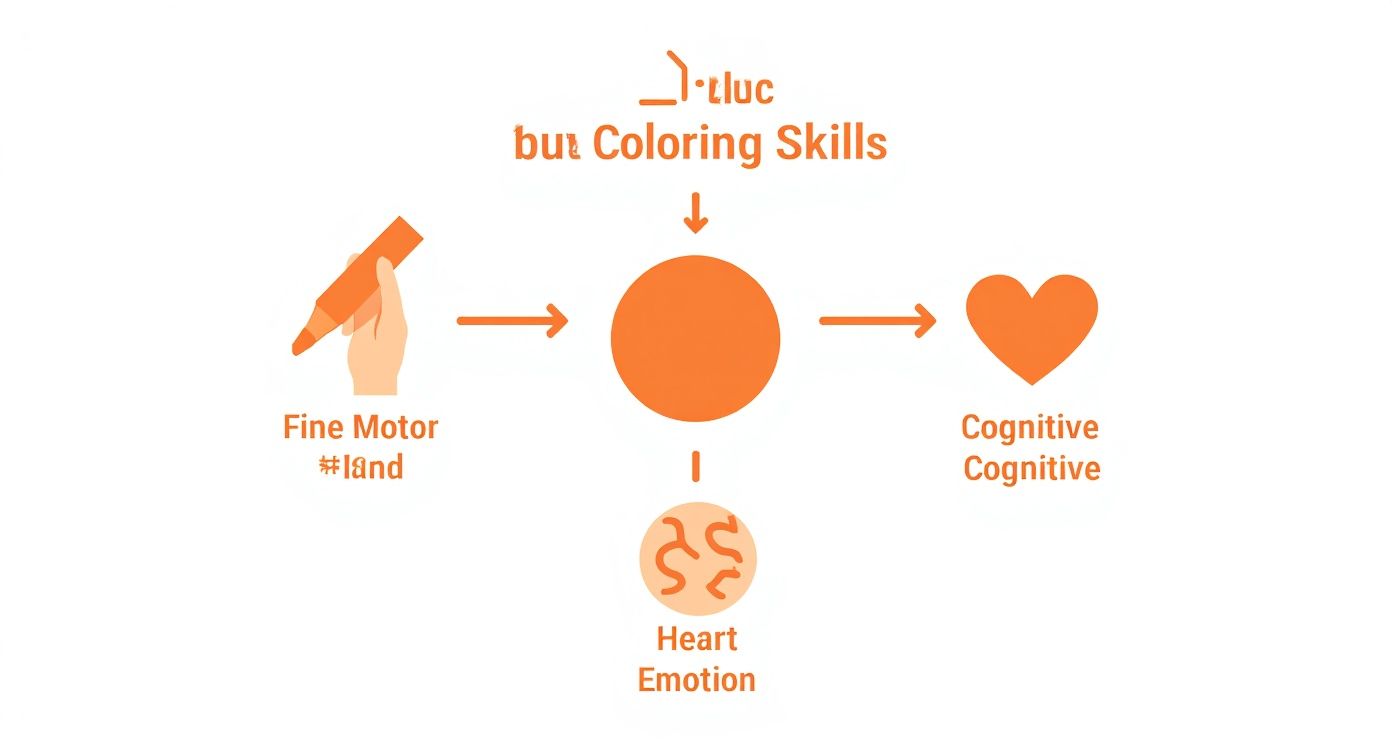
As you can see, a simple activity like coloring really does nurture a child's core developmental skills, from strengthening their fingers to helping them process their feelings.
To make it even easier to pick the right page, here’s a quick-reference guide.
Age-Appropriate Coloring Page Guide
| Age Group | Recommended Page Features | Developmental Focus | Example Themes |
|---|---|---|---|
| Toddlers (1-3) | Extra-large images, thick bold lines, single objects | Hand strength, grip development, cause-and-effect learning | Big shapes, simple animals (cat, dog), basic fruits (apple, banana) |
| Preschoolers (3-5) | Recognizable objects, clear outlines, simple scenes | Hand-eye coordination, color and object recognition, staying in lines | Favorite cartoon characters, farm animals, vehicles, holiday themes |
| School-Aged (6+) | Detailed scenes, patterns, educational content, smaller areas | Fine motor precision, focus and patience, creativity, self-expression | Intricate mandalas, fantasy scenes (dragons, castles), science diagrams |
This table should help you quickly find a coloring page that not only entertains your child but also supports them right where they are in their development.
School-Aged Kids (Ages 6+): Embracing Complexity
Once kids hit school age, their fine motor skills are much more polished and their attention spans have grown. They're ready to tackle pages that tell a story or demand a bit more precision.
This is the perfect time to introduce more intricate designs and themes:
- Detailed Scenes: Look for pages with interesting backgrounds and multiple characters that can spark their imagination and storytelling. Actionable insight: Encourage them to color the background first to make the main characters stand out.
- Educational Content: Pages featuring maps, the solar system, or the life cycle of a butterfly turn coloring into a fun, interactive learning session.
- Mandalas and Patterns: These are fantastic for building focus and patience. Coloring advice: Suggest they pick just three or four colors and use them to create a repeating pattern within the mandala for a cool, cohesive look.
By this age, children start using coloring to show off their personality, experimenting with shading, blending, and unique color palettes. If you're looking for more great advice, check out this ultimate guide to choosing the perfect children's coloring book.
Your Simple Guide to Printing and Preparing Pages
https://www.youtube.com/embed/Y5qVIR2XGLY
Turning a digital design into a real-life coloring page for your kid should be fun, not frustrating. It's all about a few simple tricks to get a great print without wasting a bunch of paper and ink. Of course, it all starts with finding a high-quality image. A good source, like the library at Colortada, ensures the lines are sharp and ready for coloring right from the get-go.
Once you’ve picked out the perfect picture, the next decision is the paper. It seems like a small detail, but it can completely change the coloring experience.
Paper and Printer Settings
Think of the paper as the canvas for your child’s next masterpiece. For everyday fun with crayons or colored pencils, standard A4 printer paper (around 80 gsm) is perfectly fine. It's cheap, easy, and gets the job done.
But if your kids are breaking out the markers or even watercolors, you’ll want to level up. A thicker cardstock or mixed-media paper (160 gsm or higher) is your best bet. It’s sturdy enough to stop markers from bleeding through and won't get all warped and wrinkly from a little water, which means fewer frustrations and more creative fun.
Coloring Advice: Before you hit that "Print" button, always peek at your printer settings. Look for an option like 'fit to page' or 'scale to fit.' This tells your printer to shrink the image just enough to make sure no part of the drawing gets chopped off at the edges. Also, for a quick scribble session or a practice run, printing in 'draft' mode saves a ton of ink.
Actionable Printing Tips
With a few quick tweaks, you can get a perfect print every single time. These little adjustments make sure your printable coloring pages for kids come out looking fantastic and ready for action.
- Go High-Quality: For a special page that might end up on the fridge, set your printer to its 'high quality' or 'best' setting. It uses a bit more ink, but you get incredibly crisp, dark lines that make it easier for little hands to stay inside them.
- Try Borderless Printing: Does your printer have a 'borderless' option? Use it! This is awesome for full-page designs you might want to frame later, giving the finished art a polished, professional feel.
- Get Organized: A little organization goes a long way. On your computer, create folders for different themes—"Animals," "Holidays," "Dinosaurs," you name it. For the printed pages, a simple binder with clear sleeves keeps a stash of favorites ready for a rainy day.
For a more detailed walkthrough, you can find in-depth guidance on how to print coloring pages perfectly every time. And if you're looking to branch out, the web is full of free downloadable patterns for other crafts, too.
Beyond the Lines: Creative Coloring Techniques
So, your little one has mastered holding a crayon and (mostly) staying within the lines. That's fantastic! Now the real fun begins. It's time to move beyond just filling in spaces and turn coloring into a full-blown creative adventure. With just a few simple nudges, you can help them make their printable coloring pages for kids absolutely pop with personality.
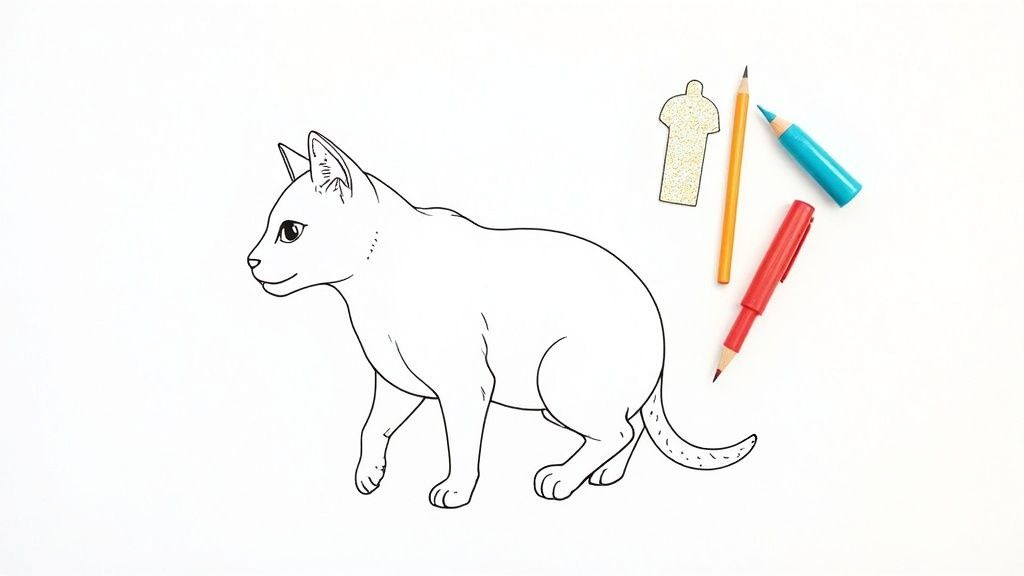
The idea here is to shift their thinking from "filling in the blank" to "how can I make this my own?" This isn't about formal art lessons or fancy supplies. It's about encouraging experimentation and showing them that there are no wrong answers in creativity.
Simple Tricks for a Big Impact
You'd be surprised how easily you can introduce some pretty cool artistic concepts to kids. These techniques help them see how color and texture can breathe life into a flat drawing, making their work look far more dynamic and interesting.
Here are a few of my favorites to start with:
- Shading: Show them how to press a little harder with a crayon on one side of an object (like the bottom of an apple) and then color much lighter on the other side. A practical example is to pretend the sun is in one corner of the page and then add shadows to the opposite side of every object. That simple trick instantly creates a shadow, making the apple look round and real.
- Blending: This one is pure magic for kids. Pick two similar colors, like light blue and dark blue. Have them color a patch of sky with the light blue, then color the section next to it with the dark blue, letting them overlap in the middle. They'll be amazed when a brand-new shade appears right before their eyes. This also works great for sunsets with red, orange, and yellow.
- Pattern Fills: Got a huge, empty space like a dinosaur's body or a princess's dress? Instead of one solid color, challenge them to fill it with a pattern. Polka dots, zig-zags, stripes, or even tiny hearts—it's a fantastic way to add a personal touch and a ton of visual texture.
Coloring Advice: The best way to teach these techniques is to do them with your child. Print two copies of the same page from a site like Colortada—one for you, one for them. As you demonstrate shading or blending on your sheet, they can follow along on theirs. It becomes a fun, collaborative activity instead of a formal lesson.
Time to Experiment with Different Materials
Crayons are a classic for a reason, but swapping in new tools can completely change the game and spark fresh ideas. Different materials create different effects, which gets kids thinking about texture and detail in totally new ways.
A few easy swaps can make a big difference:
- Colored Pencils: These are perfect when you hit a page with lots of tiny details. Think intricate flowers or a complex mandala. Actionable insight: Show them how to keep the pencils sharp for crisp lines and use a duller point for soft, smooth color fills.
- Markers: Want big, bold, vibrant color? Grab the markers. They deliver that rich, saturated look that really makes a picture pop. Just a quick tip: use a heavier paper like cardstock to keep the ink from bleeding through and place a scrap piece of paper underneath as an extra precaution.
- Glitter Glue or Puffy Paint: Time to add some bling! A few dots of glitter glue on a fairy's wings or some puffy paint on a snowman brings a tactile, 3D element to their art that kids absolutely love.
Turning Coloring Pages into Creative Projects
The fun doesn't have to end once the last spot is colored in. In fact, a finished page can be the starting point for all sorts of other creative projects. This teaches kids to see their art not as a final product, but as raw material for their next great idea.
For example, after they finish coloring an animal page, help them carefully cut it out. Tape the cutout to a craft stick, and you've got an instant stick puppet. Color a few more, and suddenly you have a full cast for an impromptu puppet show!
Another fun one is to have them color several characters and objects from different pages. Once everything is colored, they can cut them out and glue them onto a fresh sheet of paper to create a totally new scene—a story that's 100% their own.
Using Coloring Pages for Learning and Holidays
Printable coloring pages are so much more than a way to keep the kids busy. When you get a little strategic, they become fantastic tools for teaching new concepts and celebrating the holidays in a hands-on, creative way.
Think about it: instead of just drilling the alphabet, you can give a child a page with a giant "A" and an apple to color. Or a "B" with a bouncy ball. This simple act forges a powerful visual link between the letter, its sound, and something they recognize from their own world. It makes learning feel like play.
Weaving Education into Play
The real magic happens when learning and creativity are seamlessly blended. Number pages are a perfect example—kids can count the objects on the sheet before they even pick up a crayon. Shape-themed pages turn identifying circles, squares, and triangles into a fun little game.
You can easily expand this into all sorts of subjects:
- Science Lessons: A coloring page of the solar system can kick off a great conversation about the planets. Practical tip: Have them color each planet correctly and then arrange them in order on a large piece of black construction paper.
- Geography Practice: Coloring a world map is a surprisingly effective way to introduce continents and oceans. Actionable insight: Focus on one continent at a time and color in the different countries as you learn about them.
- Vocabulary Building: Hand them a busy farm scene or a cityscape and have them name (and color!) everything they see.
This approach transforms abstract concepts into something tangible and colorful. It's a low-pressure way to support what they're learning in school, making education a natural extension of their creative time.
It’s easy to see why this has become so popular. Educational sites have noted that over 10 million printable coloring pages are downloaded around the world every month. The numbers really jump during school holidays and festive seasons, which you can read more about in this coloring book market research.
Bringing Holidays and Seasons to Life
Themed pages are also a wonderful way to build excitement for special occasions and mark the changing of the seasons. Think about starting a new family tradition: creating a stack of spooky coloring sheets for a Halloween party or using festive designs to make homemade Christmas cards for relatives.
These seasonal activities help children connect with cultural traditions and get a better sense of the passage of time. For a great place to start, you can explore these beautiful seasons coloring pages that perfectly capture the feel of autumn, winter, spring, and summer. With resources like Colortada offering an endless variety of themes, you’ll always find the right page for any holiday or lesson plan.
Your Top Coloring Questions, Answered
Let's dive into some of the questions I hear most often from parents and teachers about getting started with printable coloring pages.
Where Can I Find Good, Free Pages?
You're in luck—the internet is full of amazing options! My go-to is always a well-curated site like Colortada, which has a massive library of high-quality, free pages that are easy to browse by theme or age.
Beyond dedicated coloring sites, don't forget about educational blogs and, of course, Pinterest. They can be fantastic treasure troves for finding unique and seasonal coloring sheets. Just a quick tip: stick to reputable websites to make sure you're downloading a safe file and not any unwanted extras.
What’s the Best Paper for Printing?
For everyday coloring with crayons or colored pencils, you don't need anything fancy. Standard office printer paper (usually 20-24 lb weight) is perfect. It's inexpensive, easy to find, and gets the job done beautifully.
A Quick Tip for Markers and Paint: If your little one loves markers or wants to break out the watercolors, I'd recommend upgrading your paper. Markers can easily bleed through standard paper. A practical solution is to use a thicker paper like cardstock or mixed-media paper (at least 65 lb / 175 gsm), which will hold the ink much better, preventing messes and keeping the colors bright and crisp.
Are Coloring Pages Really That Good for Kids?
They absolutely are. Think of coloring as a fun-filled workout for your child's brain and hands. It's one of the best ways to develop the fine motor skills and hand-eye coordination they'll need for writing.
But it's not just about the physical skills. Coloring helps children build focus and patience, and it gives them a wonderful, screen-free way to express themselves. Plus, when you use pages with letters, numbers, or animals, you're sneakily reinforcing important learning concepts in a way that feels like pure play.
Ready to dive in? You can find thousands of high-quality, free printable coloring pages for kids at Colortada to get your creative adventure started. Find your child's next favorite design at https://www.colortada.com.